


Listen to the article
HHS Secretary Kennedy Clashes with Congresswoman Over Past Remarks on Black Children
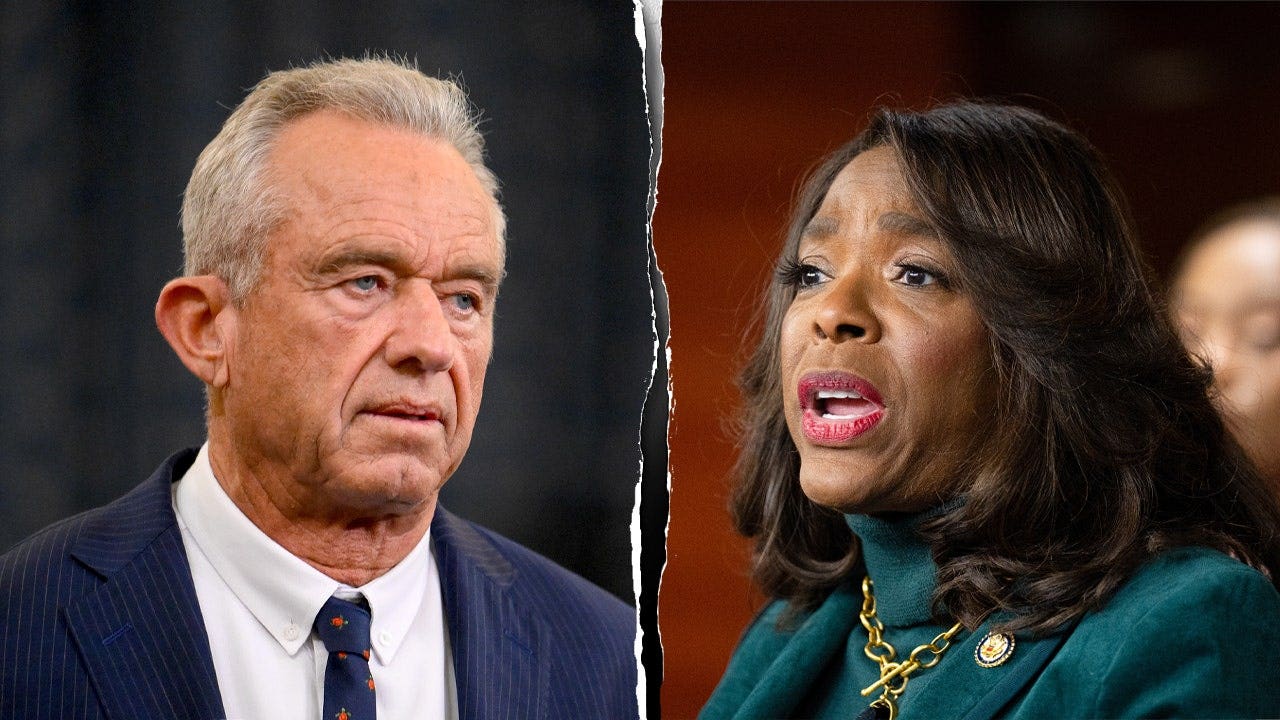
Health and Human Services Secretary Robert F. Kennedy Jr. engaged in a heated exchange with Representative Terri Sewell (D-Ala.) during a budget hearing Thursday after she confronted him about controversial comments he made regarding Black children and medication.
The confrontation centered on remarks Kennedy made during a 2024 podcast interview when he was still a presidential candidate. During that interview, Kennedy discussed plans to create “rehabilitation facilities” in rural areas that would mirror “wellness farms” he had encountered during his Peace Corps service.
“Rehabilitation facilities that I’m going to start in rural areas all over the country — where any American can go for free, anyone who is dependent on drugs, either legal drugs or illegal drugs, psychiatric drugs — which every Black kid is now just standardly put on Adderall, SSRIs, benzos, which are known to induce violence,” Kennedy said on the “Earn Your Leisure” podcast at that time.
He added that “those kids are going to have a chance to go somewhere and get reparented — to live in a community where there’ll be no cellphones, no screens. You’ll actually have to talk to people.”
At Thursday’s hearing, Rep. Sewell directly challenged Kennedy about these statements, asking, “Mr. Secretary, you’ve already admitted that you are not a board-certified physician, and you’ve already admitted you did not go to medical school. Have you ever reparented or parented, I should say, a Black child?”
The exchange quickly escalated into a contentious back-and-forth. An aide standing behind Sewell held up a poster board displaying Kennedy’s remarks from the podcast, but Kennedy denied making the statements. He claimed not to know what the phrase “reparented” meant, despite having used the term in the recorded interview.
“You absolutely said it,” Sewell insisted during their exchange.
Kennedy refused to answer Sewell’s question about whether he had ever parented a Black child and accused the congresswoman of “making up” the remarks, despite the visual evidence presented during the hearing.
“I am absolutely not making this up,” Sewell responded. “Mr. Secretary, in your opinion, what factors should the federal government consider when reparenting a Black child who has been on ADHD or ADD [medication]? That’s rhetorical, sir.”
Following the hearing, an HHS spokesperson told Fox News Digital that Kennedy’s comments from the podcast had been taken “out of context.” The spokesperson explained that “prior to his time as secretary, he described these communities as spaces where individuals, particularly young people facing alienation, mental health challenges, and rising rates of despair could undergo a form of ‘reparenting.'”
The statement went on to define the term in psychotherapy context, saying “reparenting involves developing the emotional regulation, discipline, boundaries and self-worth that may not have been established in childhood, through consistent care, accountability and supportive relationships.”
This clash comes amid broader scrutiny of Kennedy’s qualifications since his appointment to lead HHS. Critics have pointed to his lack of medical credentials and history of controversial health-related statements as concerns for someone leading the nation’s primary health agency.
Kennedy’s appointment as HHS Secretary was one of several surprising cabinet choices made following the 2024 presidential election. His transition from presidential candidate to cabinet secretary marked a significant shift in his political career, particularly after endorsing the winning candidate in the later stages of the campaign.
The heated exchange highlights ongoing tensions between the administration and congressional Democrats, particularly around issues of race and healthcare policy. As Kennedy continues to implement his vision at HHS, his past statements and policy positions are likely to face continued scrutiny from lawmakers on Capitol Hill.
Fact Checker
Verify the accuracy of this article using The Disinformation Commission analysis and real-time sources.

9 Comments
Glad to see representatives from both parties engaging on this issue, even if the exchange got heated. These are complex societal challenges that require open, fact-based dialogue to find the best ways to support vulnerable communities.
Interesting clash over sensitive remarks. Curious to hear both sides and understand the full context around Kennedy’s comments on medication use in the Black community. These are complex issues that deserve thoughtful, nuanced discussion.
Rehabilitation facilities focused on holistic wellness could be a positive step, but concerning if they promote unproven treatments or discriminate by race. Needs to be a balanced, inclusive approach grounded in science and human rights.
Medicating children, especially along racial lines, is a very sensitive topic that requires extreme care and nuance. Curious to see if Kennedy can clarify and defend his earlier remarks in a way that demonstrates real understanding of the concerns.
Kennedy’s remarks raise valid concerns about over-medication of certain groups, but his language seems problematic. Important to find ways to improve access to quality mental healthcare for all, not segregate communities.
Agree, the rhetoric around “reparenting” and banning cell phones raises red flags. Any proposed solutions need to respect individual rights and dignity.
Appreciate the Democratic lawmaker pressing for accountability on those controversial comments. Curious to see if Kennedy can move the discussion in a more thoughtful, solutions-oriented direction or if it will remain confrontational.
This exchange highlights ongoing tensions around race, healthcare, and government policy. While there may be legitimate issues to address, the tone and framing will be crucial in finding constructive solutions that unite rather than divide.
Glad to see representatives holding each other accountable, but hope the debate stays focused on facts and solutions rather than turning personal. Mental health and addiction are critical challenges that affect all communities and require evidence-based, compassionate approaches.