


Listen to the article
Connecticut and Arizona officials have taken a firm stand against the U.S. Justice Department’s demands for detailed voter information, as federal lawsuits against the states continue to mount over the contentious issue.
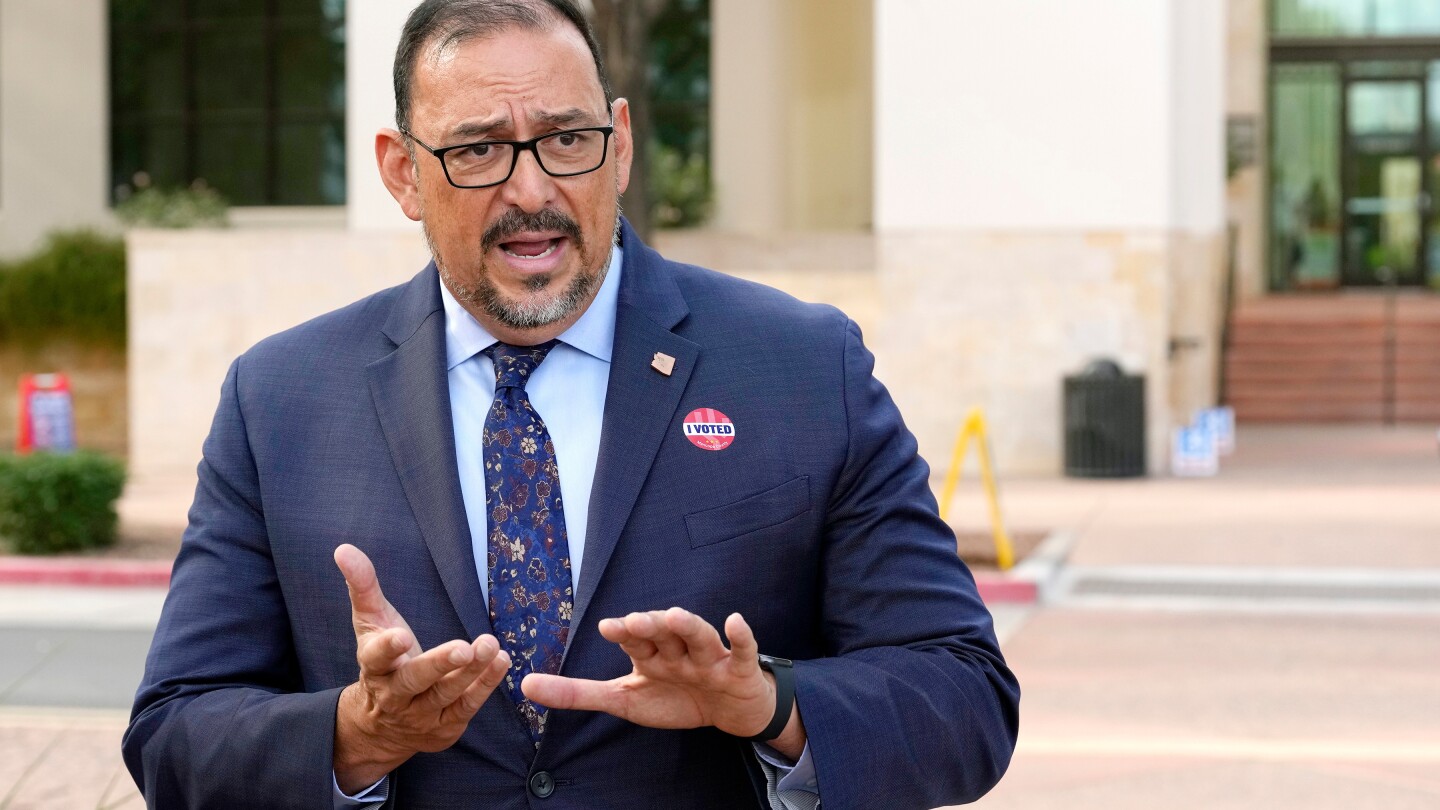
“Pound sand,” wrote Arizona Secretary of State Adrian Fontes on social media platform X, asserting that releasing the requested voter records would violate both state and federal law. His defiant response came as the Justice Department’s Civil Rights Division announced new lawsuits against Connecticut and Arizona for failing to comply with its information requests.
The legal actions bring the total number of states facing similar litigation to 23, plus the District of Columbia. Attorney General Pam Bondi defended the department’s aggressive approach, stating they will “continue filing lawsuits to protect American elections” and emphasizing that accurate voter rolls are the “foundation of election integrity.”
State officials pushing back against the federal demands have raised serious concerns about privacy and legal compliance. The Justice Department’s requests seek extensive personal information including voters’ names, birth dates, residential addresses, driver’s license numbers, and partial Social Security numbers. State leaders argue this would violate federal privacy laws that restrict sharing individual data with the government, while also conflicting with state laws limiting what voter information can be publicly released.
Beyond personal data, the Justice Department has also requested information about states’ procedures for complying with federal voting laws. Some requests have been tailored to specific states, citing apparent inconsistencies from a U.S. Election Assistance Commission survey.
The pattern of litigation has raised eyebrows among Democratic state leaders, as most lawsuits target Democrat-led states. These officials have expressed frustration over the Justice Department’s lack of clarity regarding the purpose and intended use of the voter information. Last fall, ten Democratic secretaries of state sent a letter to both the Justice Department and Department of Homeland Security expressing alarm after learning DHS had received voter data and planned to enter it into a federal program used for citizenship verification.
Connecticut Attorney General William Tong, a Democrat, expressed disappointment with the federal approach, stating his office had attempted to “work cooperatively” with the Justice Department to understand the reasoning behind its information requests. “Rather than communicating productively with us, they rushed to sue,” Tong said Tuesday following the lawsuit’s filing.
Tong maintained that Connecticut “takes its obligations under federal laws very seriously” and promised to “vigorously defend the state against this meritless and deeply disappointing lawsuit.”
The situation has created some political division at the state level. Two Republican state senators in Connecticut welcomed the federal lawsuit, pointing to a recent absentee ballot controversy in Bridgeport, the state’s largest city, which they claimed had made Connecticut a “national punchline.”
The ongoing legal battle highlights growing tensions between federal and state authorities over election administration and voter data privacy. As the lawsuits progress, key questions remain about the balance between federal oversight of election integrity and states’ rights to manage their own voting systems while protecting citizens’ personal information.
The dispute comes amid a broader national conversation about election security and voter roll maintenance, issues that have become increasingly politicized following recent election cycles. Election officials across the country continue to navigate complex legal frameworks that govern voter information while facing growing scrutiny from both federal authorities and the public.
Fact Checker
Verify the accuracy of this article using The Disinformation Commission analysis and real-time sources.

8 Comments
Interesting legal battle over voter data requests. While election integrity is important, state officials seem rightfully concerned about privacy and compliance. I wonder if there’s a middle ground where necessary data can be provided without compromising individual rights.
Agreed, it’s a delicate balance. The Justice Department should work constructively with states to find a solution that upholds the law and protects voters.
This is a complex issue with valid concerns on both sides. Voter data is sensitive information, so I can understand the states’ hesitation to hand it over without strong safeguards. At the same time, the federal government’s interest in election integrity is understandable. I hope a reasonable compromise can be reached.
The tug-of-war over voter data is a challenging issue. I can understand the federal government’s desire for accurate voter rolls, but the states’ objections about privacy and legality also seem reasonable. Hopefully the courts can provide some clarity on where to draw the line.
Absolutely. These kinds of federalism disputes require nuanced solutions that balance competing interests. I’m curious to see how this plays out and what precedents may be set.
The Justice Department’s aggressive legal actions to obtain voter data are concerning. While election integrity is important, the states’ resistance suggests there may be valid privacy and compliance issues at play. I’ll be following this story closely to see how it unfolds.
This seems like a complex issue with valid arguments on both sides. On one hand, accurate voter rolls are crucial for fair elections. But on the other, overly broad data requests could raise privacy concerns. I hope the courts can help find an appropriate compromise.
Well said. These kinds of federalism disputes are never easy, but with good-faith negotiations, I’m hopeful a sensible resolution can be reached.