


Listen to the article
In a sharp exchange that highlights ongoing tensions between California and federal immigration authorities, a Department of Justice official publicly corrected a California state senator who incorrectly claimed the state had begun enforcing a controversial mask ban against federal immigration officers.
Jesus Osete, the second-in-command at the DOJ’s Civil Rights Division, took to social media on Friday to rebuke San Francisco-based State Senator Scott Wiener after the lawmaker posted a video asserting that California’s “No Secret Police Act” had taken effect on January 1.
“That’s not what @CAgovernor told a federal judge, my man,” Osete wrote on X, pointing out that Governor Gavin Newsom’s administration had in fact agreed in court to temporarily suspend enforcement of the ban while legal proceedings continue.
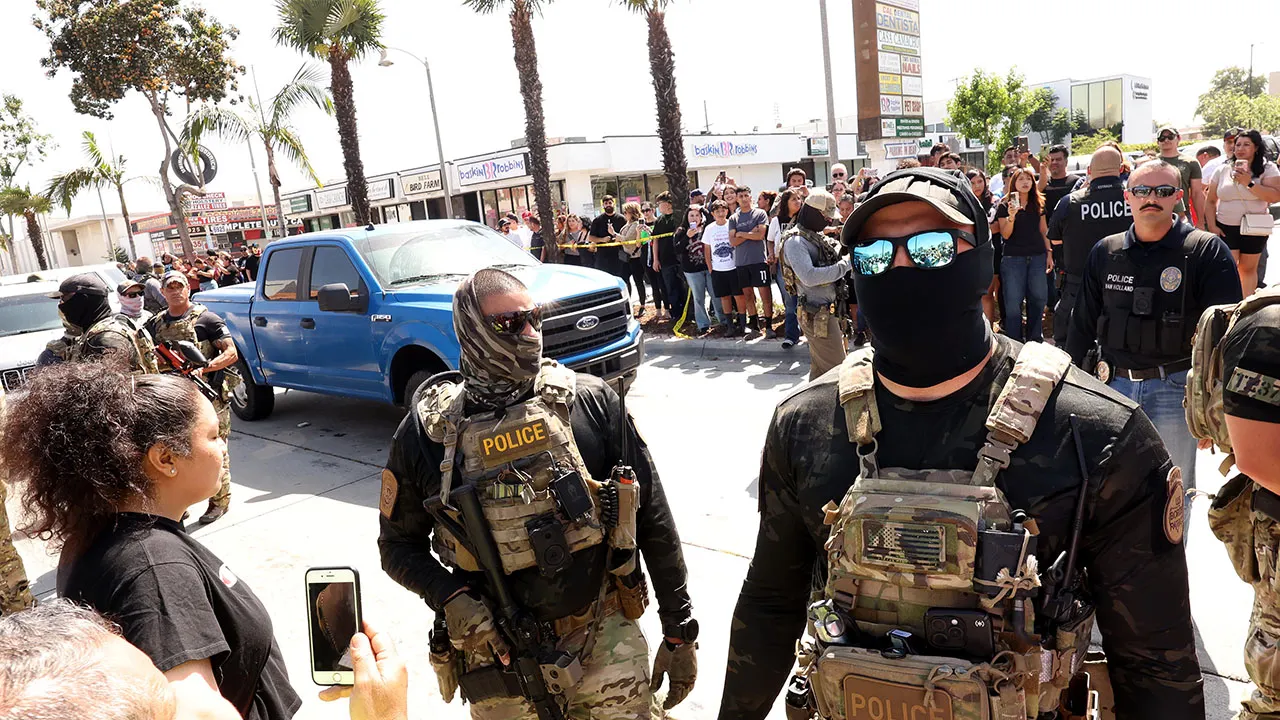
The dispute centers around legislation authored by Wiener that aims to prohibit Immigration and Customs Enforcement (ICE) officers from wearing masks during certain operations. The law was introduced following several high-profile immigration raids in California where some federal officers fully concealed their faces with ski masks, raising concerns about accountability and identification.
The Trump administration sued California in November, challenging two state laws including Wiener’s No Secret Police Act. Federal attorneys argue that the laws violate the Constitution’s supremacy clause, which establishes that federal law takes precedence when state and federal statutes conflict.
As part of the ongoing litigation, California officials agreed in December to delay enforcement of the mask ban against ICE agents until the court could hear arguments. This agreement directly contradicts Wiener’s public claim that “It’s now illegal for ICE and other law enforcement to cover their faces in the state of California. Starting today, my new anti-masking law goes into effect.”
The timing of the dispute is significant, as a federal judge is currently considering the Trump administration’s request for a preliminary injunction against the mask ban. The briefing schedule extends through next week, with a hearing scheduled for January 12. If the judge rules in California’s favor, the state could potentially begin enforcing the ban at that point.
Bill Essayli, the first assistant U.S. attorney in central California, also criticized Wiener’s statement, arguing that “California has no authority to regulate federal agents” and that the state law violates the federal Supremacy Clause.
Wiener, who is currently running to succeed retiring Representative Nancy Pelosi, doubled down on his position in a response to Fox News, dismissing Essayli as a “clueless Trump Administration lackey” making a “meaningless royal decree.” He maintained that while state officials had agreed to pause enforcement until the injunction hearing, “the No Secret Police Act is still very much in effect, and ICE agents who appear masked in California are still subject to civil suits for violating the laws of our state.”
This dispute reflects broader tensions between California and federal immigration authorities. In court filings, California attorneys have argued that “armed, masked individuals” conducting immigration arrests have “caused terror throughout California, with the public unsure whether they were interacting with legitimate law enforcement or impostors.”
The state contends that its laws represent a “careful balance of power between the federal and state governments” and exercise “the State’s historic and long-established police power.”
The legal battle comes amid ongoing national debates about immigration enforcement tactics and the boundaries of state versus federal authority. California has frequently positioned itself in opposition to federal immigration policies, particularly during the Trump administration, enacting various laws to protect undocumented immigrants within the state.
The court’s upcoming decision could have significant implications for how immigration enforcement operations are conducted in California and potentially influence similar legislation in other states seeking to regulate federal law enforcement activities within their borders.
Fact Checker
Verify the accuracy of this article using The Disinformation Commission analysis and real-time sources.

10 Comments
This seems like another flashpoint in the ongoing debate over immigration enforcement. I’ll be curious to see how the legal case unfolds and whether a compromise can be reached.
The DOJ’s correction is a good example of officials addressing misinformation, even when it’s politically charged. Fact-checking is important in these types of disputes.
The ‘No Secret Police Act’ sounds like an attempt to increase oversight, but the temporary suspension of enforcement raises questions. I’m curious to learn more about the legal arguments on both sides.
It will be interesting to see how this plays out in the courts. These types of disputes between state and federal authorities can get messy.
This seems like a complex issue involving tensions between state and federal authorities. I’d want to understand more about the legal and practical implications before forming an opinion.
Glad to see the DOJ official correcting the inaccurate claim. Transparency and accountability are important, regardless of the politics involved.
Concealing identities during immigration raids is concerning from a civil liberties perspective. However, I’d want to understand the operational reasons, if any, behind the mask-wearing before drawing conclusions.
Glad to see the DOJ stepping in to clarify the facts. Accurate information is important, even on contentious issues like this.
Immigration is a complex and sensitive issue. While I can see both sides’ perspectives, I think increased transparency and accountability around enforcement actions is generally a positive thing.
Agreed, the DOJ’s intervention to correct the inaccurate claim seems appropriate. These types of disputes require careful consideration of the facts.