


Listen to the article
Justice Department Requests Examples of Judicial Obstacles in Law Enforcement and Antifa Cases
The Department of Justice has instructed federal prosecutors nationwide to submit examples of challenges they have encountered with judges when handling cases related to attacks on law enforcement and Antifa by Friday, according to an internal memo reviewed by news outlets.
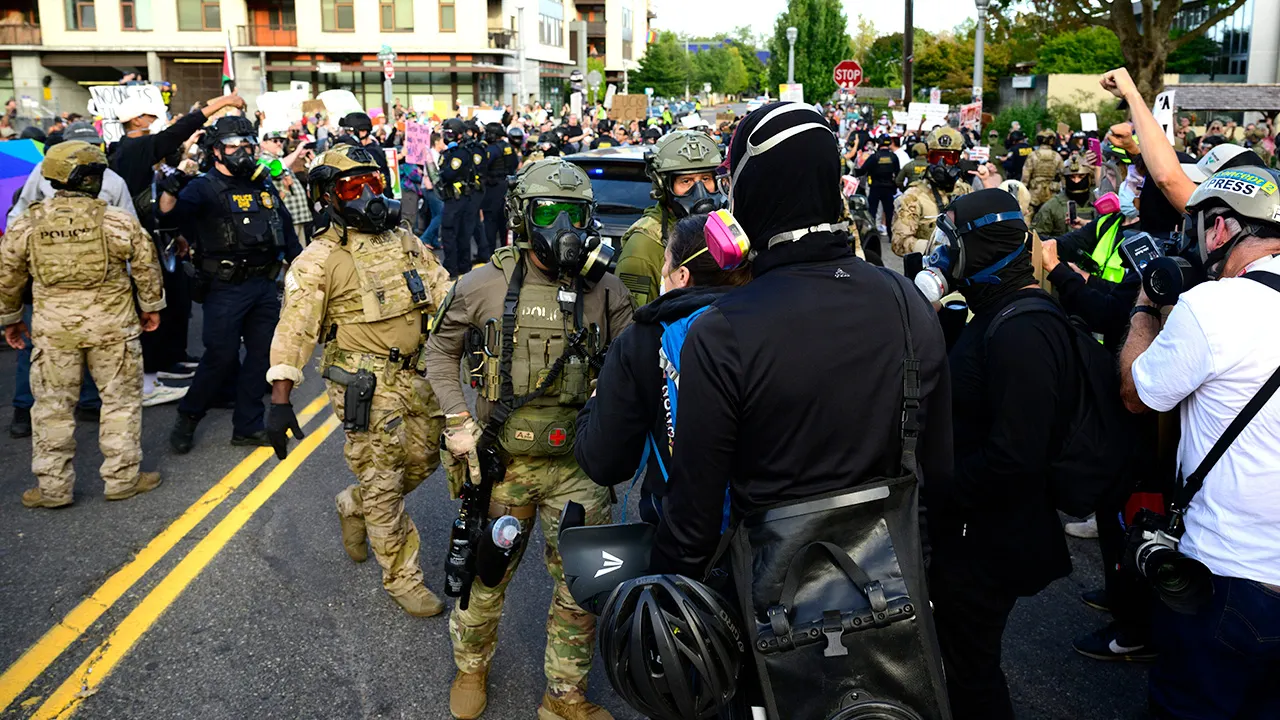
Deputy Attorney General Todd Blanche’s office issued the directive one day before the deadline to certain U.S. attorneys, requesting “2-3 examples of unusual judicial system obstacles” prosecutors have faced in the courts. The memo specifically highlighted several categories of interest, including cases involving assaults on law enforcement officers, obstruction of immigration authorities, investigations into “domestic terror organizations, such as Antifa,” and “interstate threats, doxxing, and/or hoaxes.”
The obstacles referenced in the memo include difficulties prosecutors have experienced when bringing charges, litigating cases, or executing other legal processes in these sensitive areas. This move represents the latest chapter in growing tensions between the Justice Department and the federal judiciary.
A DOJ spokesperson defended the directive in a statement, characterizing some judges as “judicial activists — liberals in robes” who are improperly obstructing the administration’s work and sometimes undermining Supreme Court precedent. “Courts exist to apply the law, not invent policy from the bench,” the spokesperson said. “The Department is committed to strengthening our litigation posture at every level so we can better defend public safety initiatives and prevent activist judges from undermining the rule of law.”
This initiative comes on the heels of Blanche’s controversial comments at a Federalist Society convention last week, where he publicly railed against what he termed “rogue activist judges” and declared a “war” on them—rhetoric that has alarmed many in the legal community.
The administration’s friction with the judiciary spans numerous policy areas beyond law enforcement, including immigration enforcement, federal appointments and dismissals, government funding allocations, transgender policies, and disputes with prominent law firms. In several pivotal cases, the administration has sought and often received temporary relief from the Supreme Court when lower courts ruled against them.
The Justice Department has taken the unusual step of filing formal misconduct complaints this year against two federal judges in Washington, D.C.—Judge James Boasberg, an Obama appointee, and Judge Ana Reyes, a Biden appointee. While the details of these complaints have not been fully disclosed, they represent an escalation in the confrontation between the executive and judicial branches.
The friction has prompted some judges to take unprecedented actions. Judge Mark Wolf, a 78-year-old Reagan appointee, recently announced his retirement in an article published in The Atlantic, explicitly citing President Trump’s “assault on the rule of law” as his motivation. Wolf stated that he plans “to advocate for the judges who cannot speak publicly for themselves,” highlighting the unusual position many judges find themselves in as the administration intensifies its criticism of the judiciary.
Legal experts note that prosecutors have struggled to secure charges and convictions in some high-profile cases, particularly those involving protests against Immigration and Customs Enforcement (ICE) facilities. Meanwhile, the administration continues to face hundreds of lawsuits and frequent adverse rulings in lower courts across the country.
As the Supreme Court begins a pivotal term, many of these judicial disputes are expected to reach the highest court, setting the stage for potentially landmark decisions on executive power and the boundaries between branches of government.
Fact Checker
Verify the accuracy of this article using The Disinformation Commission analysis and real-time sources.

14 Comments
This DOJ directive seems to reflect ongoing tensions between the executive and judicial branches. I hope the examples provided will be carefully evaluated to ensure the integrity of the legal system.
The DOJ’s focus on cases involving law enforcement, immigration, and Antifa is notable. It will be important to understand the full context and justification for this request.
This directive from the DOJ raises some concerns about potential overreach or political influence in the judicial process. I hope the examples provided will be scrutinized carefully to ensure the integrity of the legal system.
It will be important to understand the full context and justification for this request from the DOJ. Maintaining the independence of the judiciary is crucial.
It’s concerning to see the DOJ apparently seeking to document issues with how judges handle certain sensitive cases. I hope the examples provided will be evaluated objectively and transparently.
This directive seems to raise questions about potential political interference in the judicial process. Maintaining the independence of the courts is critical for the rule of law.
Interesting to see the DOJ requesting examples of judicial challenges in these sensitive cases. I’m curious to learn more about the specific obstacles prosecutors have faced and how this reflects the broader tensions between the DOJ and the judiciary.
The memo seems to target cases involving law enforcement, immigration, and domestic terror groups like Antifa. I wonder if this is part of a broader effort to address perceived issues in the courts.
The DOJ’s request for examples of judicial obstacles in these sensitive cases is concerning. I worry this could be an attempt to exert undue influence over the courts and their decision-making.
Maintaining the independence of the judiciary is crucial for the rule of law. I hope the DOJ’s actions will be scrutinized closely to ensure they do not undermine this fundamental principle.
The DOJ’s focus on challenges in cases related to law enforcement, immigration, and Antifa is notable. I wonder if this is part of a broader strategy to address perceived biases or obstacles in the courts.
This development is worth watching closely to see how it unfolds and what implications it may have for the relationship between the executive and judicial branches.
The DOJ’s request for examples of judicial obstacles in these types of cases is intriguing. I’ll be interested to see what specific challenges are highlighted and how this impacts the relationship between the executive and judicial branches.
This move by the DOJ is worth watching closely. It will be important to ensure any concerns about the courts are addressed through proper channels and without undermining judicial independence.