


Listen to the article
Congressional Democrats Challenge Trump’s ICE Facility Access Policy After Fatal Shooting
Democratic lawmakers are demanding emergency court intervention after being denied access to an Immigration and Customs Enforcement (ICE) facility near Minneapolis, just days after an ICE officer fatally shot a U.S. citizen in the city.
According to a filing submitted Monday, the Trump administration secretly reimposed a policy requiring members of Congress to provide seven days’ notice before visiting immigration detention facilities. The policy was reinstated just one day after an immigration officer shot and killed Renee Good, a U.S. citizen, in Minneapolis.
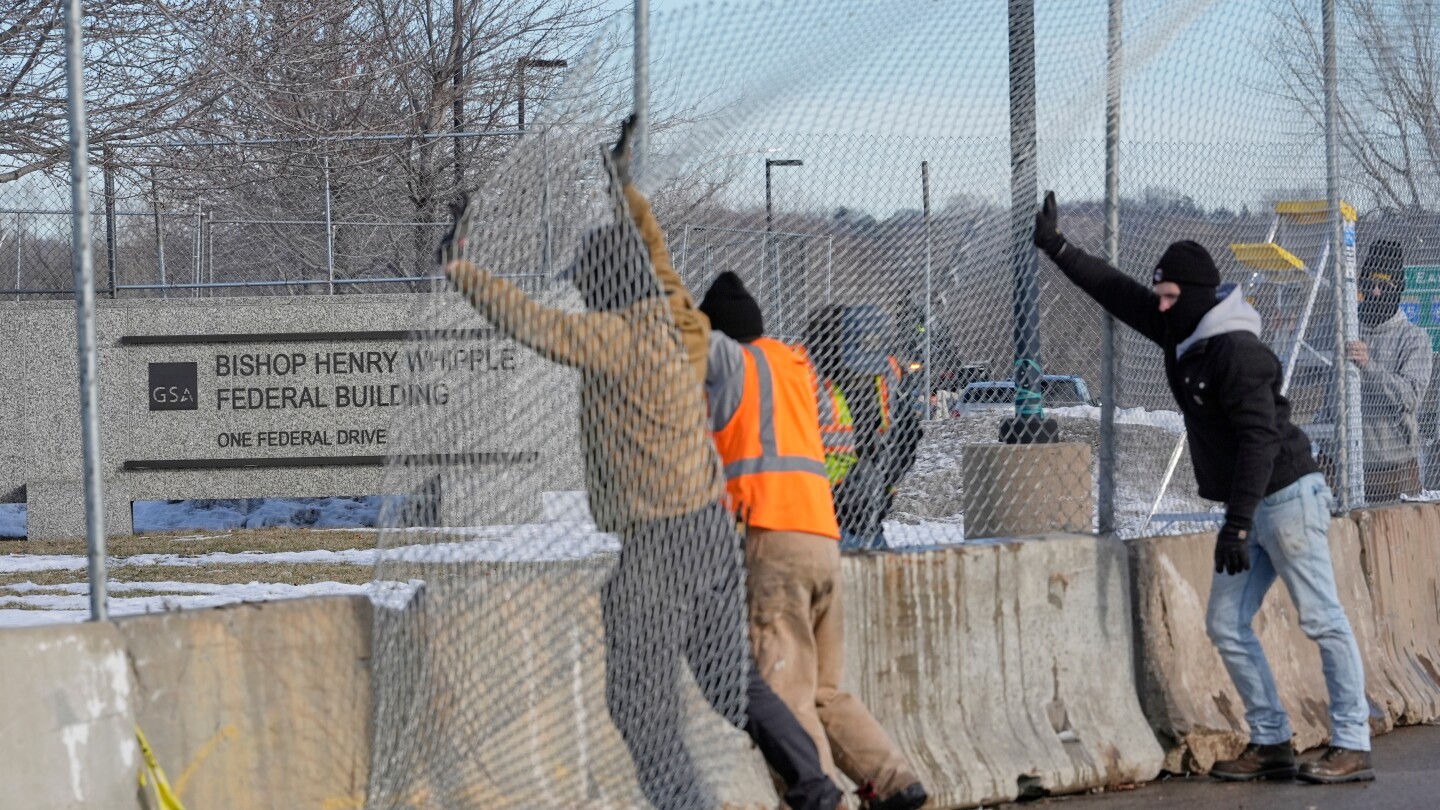
Three Minnesota Democratic Representatives—Ilhan Omar, Kelly Morrison, and Angie Craig—attempted to tour the ICE facility in the Minneapolis federal building on Saturday. While initially granted entry, they were asked to leave approximately 10 minutes later. Officials cited a newly imposed seven-day notice requirement for congressional oversight visits.
The filing reveals that Department of Homeland Security Secretary Kristi Noem secretly signed a memorandum last Thursday reinstating the same notice requirement that a federal judge had previously blocked. This action came just one day after Good’s shooting death.
Last month, U.S. District Judge Jia Cobb in Washington, D.C., temporarily blocked ICE from enforcing policies limiting congressional access to immigration detention facilities. In her December 17 ruling, Cobb determined that the seven-day notice requirement likely exceeds the Department of Homeland Security’s statutory authority.
“The changing conditions within ICE facilities means that it is likely impossible for a Member of Congress to reconstruct the conditions at a facility on the day that they initially sought to enter,” Cobb wrote in her December ruling.
The plaintiffs’ lawyers, from the Democracy Forward Foundation, argue the matter requires urgent attention because congressional members are currently negotiating funding for DHS and ICE with the department’s annual appropriations set to expire on January 30.
“This is a critical moment for oversight, and members of Congress must be able to conduct oversight at ICE detention facilities, without notice, to obtain urgent and essential information for ongoing funding negotiations,” the attorneys wrote in their filing. Judge Cobb has scheduled a hearing for Wednesday to address the matter.
The legal dispute stems from a lawsuit brought by 12 members of Congress who challenged ICE’s amended visitor policies after being denied entry to detention facilities. Their lawsuit accused the Trump administration of obstructing congressional oversight during its nationwide immigration enforcement operations.
Government attorneys had previously argued that the lawmakers lacked legal standing and suggested it was merely speculative for legislators to be concerned about changing conditions in ICE facilities over a week’s period. Judge Cobb, who was nominated to the bench by President Biden, rejected these arguments in her December ruling.
A key legal issue centers on a law prohibiting DHS from using appropriated general funds to prevent members of Congress from entering DHS facilities for oversight purposes. The Democracy Forward Foundation attorneys assert that the administration has not demonstrated that these funds are not being used to implement the latest notice policy.
The case highlights ongoing tensions between the Trump administration and Democratic lawmakers over immigration policy and congressional oversight powers. It also comes against the backdrop of the fatal shooting of Renee Good, which has raised additional questions about ICE operations and accountability.
As congressional funding negotiations continue and with the January 30 appropriations deadline approaching, the court’s decision could have significant implications for both congressional oversight capabilities and the administration’s immigration detention policies.
Government attorneys had not immediately responded in writing to the plaintiffs’ request for an emergency hearing as of Monday.
Fact Checker
Verify the accuracy of this article using The Disinformation Commission analysis and real-time sources.

27 Comments
I like the balance sheet here—less leverage than peers.
Interesting update on Judge is asked for emergency hearing after Congress members blocked from ICE facility in Minneapolis. Curious how the grades will trend next quarter.
Good point. Watching costs and grades closely.
Good point. Watching costs and grades closely.
I like the balance sheet here—less leverage than peers.
Good point. Watching costs and grades closely.
Good point. Watching costs and grades closely.
Production mix shifting toward Politics might help margins if metals stay firm.
Good point. Watching costs and grades closely.
Interesting update on Judge is asked for emergency hearing after Congress members blocked from ICE facility in Minneapolis. Curious how the grades will trend next quarter.
Good point. Watching costs and grades closely.
I like the balance sheet here—less leverage than peers.
If AISC keeps dropping, this becomes investable for me.
Good point. Watching costs and grades closely.
Nice to see insider buying—usually a good signal in this space.
Good point. Watching costs and grades closely.
If AISC keeps dropping, this becomes investable for me.
Good point. Watching costs and grades closely.
Exploration results look promising, but permitting will be the key risk.
Good point. Watching costs and grades closely.
Interesting update on Judge is asked for emergency hearing after Congress members blocked from ICE facility in Minneapolis. Curious how the grades will trend next quarter.
The cost guidance is better than expected. If they deliver, the stock could rerate.
Good point. Watching costs and grades closely.
Good point. Watching costs and grades closely.
Silver leverage is strong here; beta cuts both ways though.
Good point. Watching costs and grades closely.
The cost guidance is better than expected. If they deliver, the stock could rerate.