


Listen to the article
Federal Judge Blocks Trump’s Election Order in Washington and Oregon
A federal judge in Seattle has blocked most of former President Donald Trump’s executive order on elections from being enforced in Washington and Oregon, dealing another significant setback to Trump’s attempts to reshape voting requirements nationwide.
U.S. District Judge John H. Chun ruled Friday that key provisions of the March executive order exceeded presidential authority, specifically those requiring documentary proof of citizenship for voter registration and mandating that all ballots be received by Election Day. The ruling follows similar decisions in cases brought by 19 states in Massachusetts and by Democratic and civil rights groups in Washington, D.C.
“Today’s ruling is a huge victory for voters in Washington and Oregon, and for the rule of law,” Washington Attorney General Nick Brown said in a statement. “The court enforced the long-standing constitutional rule that only States and Congress can regulate elections, not the Election Denier-in-Chief.”
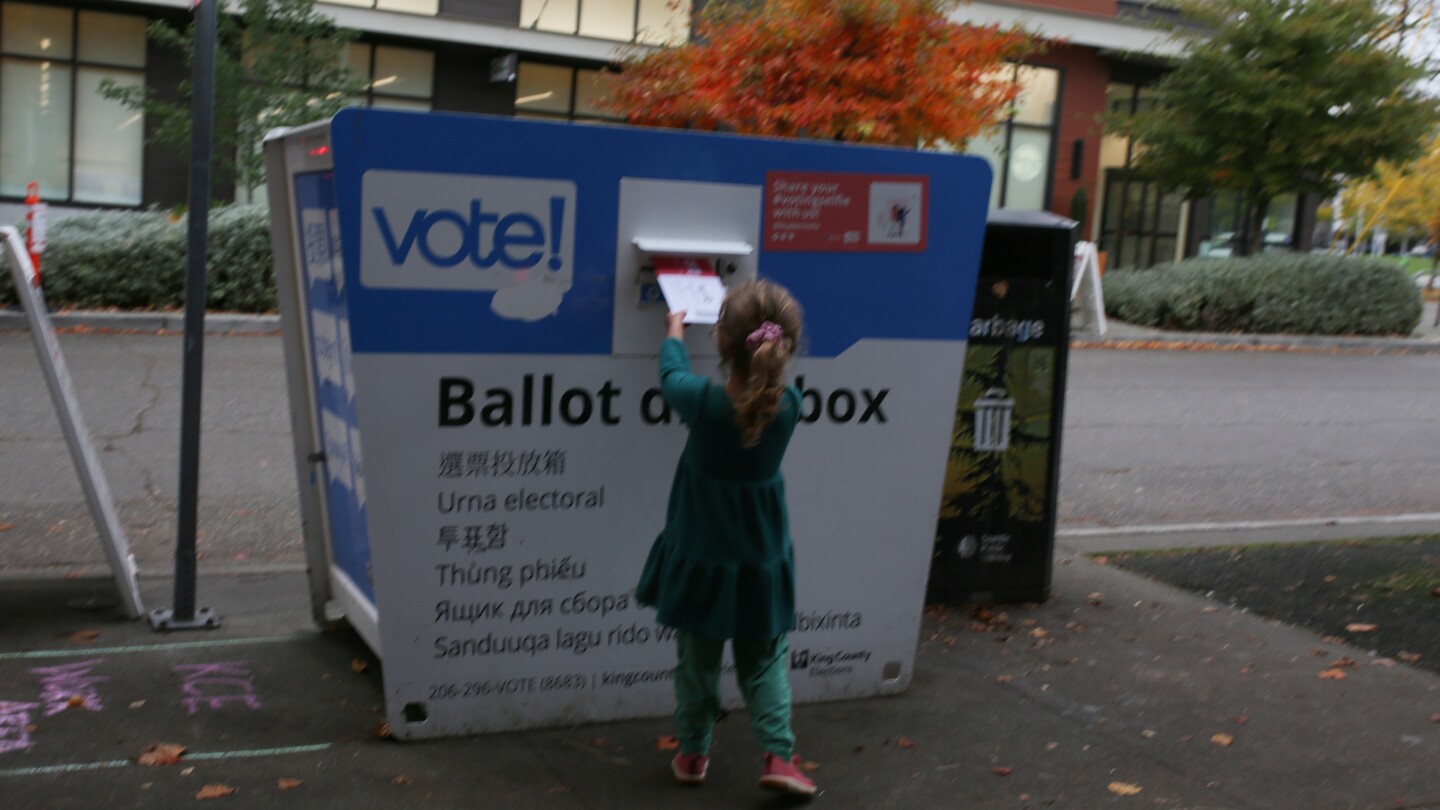
Washington and Oregon, both exclusively vote-by-mail states, had argued they would face particular challenges under Trump’s executive order. The states allow ballots to be counted as long as they are postmarked by Election Day, regardless of when they arrive at election offices. Officials presented data showing that during the 2024 general election, Washington counted nearly 120,000 ballots received after Election Day but postmarked on time, while Oregon processed nearly 14,000 such ballots.
Judge Chun’s ruling emphasized that Trump’s order violated the constitutional separation of powers, noting that the Constitution explicitly grants election regulation authority to Congress and the states, not the executive branch.
The executive order, issued in March, had attempted to implement sweeping changes to election administration nationwide. Beyond the proof of citizenship and ballot receipt deadlines, it also threatened states’ federal funding if election officials failed to comply with the new directives.
Election law experts have pointed out that the order appeared to target Democratic-leaning states with more expansive voting access policies. Washington and Oregon, which have conducted all elections by mail for years, have some of the highest voter participation rates in the country.
Trump and his Republican allies have repeatedly claimed that non-citizens are voting in significant numbers, using this assertion to justify stricter voting requirements. However, multiple studies and investigations have found that voting by non-citizens is extremely rare. When such cases are identified, individuals can face felony charges and, for immigrants, possible deportation.
The legal challenges to Trump’s executive order reflect broader tensions between federal and state authority over election administration. While states have traditionally maintained primary control over how elections are conducted, the federal government has occasionally intervened through legislation like the Voting Rights Act of 1965 or the Help America Vote Act of 2002.
Washington Secretary of State Steve Hobbs praised the ruling, saying it “preserves the integrity of our voting system and protects the rights of eligible voters to have their ballots counted.” He added that Washington’s mail voting system has proven secure and accessible through multiple election cycles.
The ruling doesn’t entirely invalidate Trump’s executive order but prevents its enforcement against Washington and Oregon specifically. Other legal challenges to the order continue to make their way through federal courts across the country.
Voting rights advocates have welcomed the decision as a protection for mail voting, which has expanded significantly since the COVID-19 pandemic. Critics of the executive order argued it would have disproportionately affected military personnel, rural voters, and others who rely on mail ballots arriving after Election Day.
The Justice Department declined to comment on whether it would appeal the ruling.
Fact Checker
Verify the accuracy of this article using The Disinformation Commission analysis and real-time sources.

8 Comments
This ruling reaffirms that our democratic institutions still function, even in the face of blatant attempts to subvert them. Kudos to the judge for upholding the Constitution.
While I’m not a fan of vote-by-mail, I respect the court’s decision to let states set their own policies. Hopefully both parties can work together to improve election security and accessibility.
I appreciate your measured perspective. Reasonable people can disagree on the merits of different voting methods, but the core principle of state authority should be upheld.
It’s concerning to see continued efforts to erode voting rights and access, even after Trump left office. Glad the courts are upholding democratic principles here.
Agreed. Protecting the integrity of elections should be a bipartisan issue, not a partisan one. Kudos to the states for standing up for their citizens’ voting rights.
This is a good decision by the judge to block the Trump administration’s overreach on election rules. States should have the authority to set their own voting procedures, not the federal government.
Absolutely. The Constitution is clear that states have primacy in running elections. Trying to undermine that through executive order is an abuse of power.
This is an important win for voting rights and the rule of law. The executive branch shouldn’t be able to unilaterally change election rules without legislative approval.