


Listen to the article
Federal Judge Blocks West Virginia’s Ban on Artificial Food Dyes, Hampering RFK Jr.’s Health Agenda
A federal judge appointed during the Obama administration has dealt a significant blow to Health and Human Services Secretary Robert F. Kennedy Jr.’s “Make America Healthy Again” (MAHA) initiative by blocking West Virginia’s landmark ban on artificial food additives.
Judge Irene Berger of the U.S. District Court for the Southern District of West Virginia issued a 30-page ruling Wednesday granting a preliminary injunction that prevents the state from enforcing House Bill 2354. The legislation, championed by Governor Patrick Morrisey and crafted by Republican Delegate Adam Burkhammer, would have prohibited food and pharmaceuticals containing specific artificial compounds including Red 3, Red 40, Yellow 5, Yellow 6, Blue 1, Blue 2, Green 3, and butylated hydroxyanisole.
The legal challenge was brought by the International Association of Color Manufacturers (IACM), a Washington lobbying organization representing dye manufacturers. The group argued that West Virginia’s law would cause economic harm to its member companies, improperly usurp federal regulatory authority, and interfere with interstate commerce.
“The statute arbitrarily and irrationally targets color additives no U.S. agency — state or federal — nor any court has ever found to be unsafe,” IACM stated when announcing its lawsuit, adding that the ban lacked “scientific evidence.”
In her ruling, Judge Berger cited concerns about the law’s vague language, particularly its use of the term “poisonous and injurious” without clear criteria. “If a parent notifies [the West Virginia Department of Health] that they believe their child is sensitive to a color additive, is that a sufficient basis for a color additive to be deemed ‘poisonous and injurious,’ or must the WVDOH conduct a further investigation? It is far from clear,” she wrote.
Governor Morrisey expressed disappointment with the decision. “We respectfully disagree with today’s ruling,” he said in a statement. “We believe this decision is premature and incorrectly decided. West Virginia will continue to defend its authority to protect the health and well-being of our citizens, especially children.”
The blocked legislation would have imposed a misdemeanor charge and a $500 fine for knowingly adding the prohibited substances to food products. Of note, Red 3 is already banned by the FDA due to laboratory studies on rats that linked the compound to thyroid issues and potential carcinogenic effects, according to documents from the National Institutes of Health and the Department of Health and Human Services.
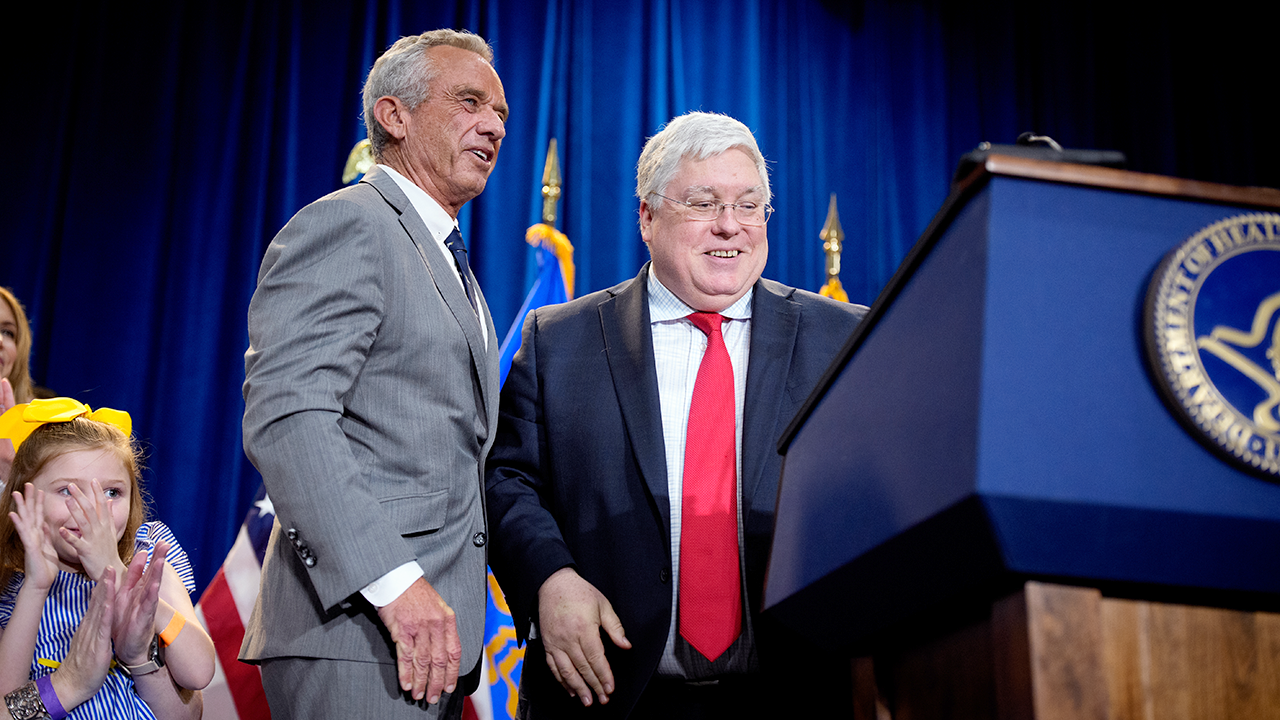
The court battle represents a significant setback for Kennedy’s broader health agenda. During his first official trip as HHS Secretary in March, Kennedy visited Martinsburg, West Virginia, where he emphasized connections between artificial food additives and various health concerns.
“The crises we have in mental health, in suicide, in ADD, ADHD” are linked to food additives, Kennedy stated at the event. “And [linked] particularly to the dyes. It’s very clear the dyes that Governor Morrisey is banning… are linked in very strong studies to ADHD and to cancers.”
Republican lawmakers in West Virginia criticized Judge Berger’s ruling. Delegate David Elliott Pritt of Thurmond faulted “Big Food” for challenging the law, saying, “Imagine being so addicted to profit that you would go to court to fight for your company’s ability to willingly and knowingly continue to poison the kids of this state and nation because you refuse to alter your formulas.” He described that stance as “pretty evil.”
The push to remove artificial additives from food has gained momentum beyond government regulation. Walmart recently announced plans to eliminate synthetic dyes and certain artificial sweeteners and fats from its store brand products in the U.S. by January, according to Fortune magazine.
Several other states including California, Virginia, Utah, and Arizona have pursued similar bans, primarily focused on school lunches, suggesting that despite this legal setback, the movement to reduce artificial additives in food continues to gain traction nationwide.
Representative Evan Worrell, chairman of West Virginia’s House Health and Human Resources Committee, emphasized that the legislation was aimed at protecting children from “unnecessary chemical additives” already prohibited in other countries, not advancing a political agenda.
As the legal battle continues, Kennedy’s office has not yet commented on the ruling or potential next steps in advancing his broader health initiatives.
Fact Checker
Verify the accuracy of this article using The Disinformation Commission analysis and real-time sources.

11 Comments
This ruling seems to prioritize economic concerns over public health. While I understand the legal arguments, I’m disappointed that West Virginia’s efforts to limit artificial additives have been blocked. Curious to see if there are other ways to address this issue.
Interesting development in the ongoing debate around artificial food additives. While I can see both sides, I hope this doesn’t discourage further efforts to improve food quality and transparency for consumers. An evidence-based, collaborative approach may be the best path forward.
The judge’s decision highlights the complex legal and regulatory landscape around food additives. I appreciate the state’s goal of promoting healthier options, but can see the concerns about overstepping federal authority. Curious to see if there are alternative policy approaches that could be explored.
It’s encouraging to see efforts to improve food quality, but this judge’s decision highlights the challenges in enacting state-level regulations that conflict with federal standards. I wonder if there are other policy levers that could be explored to drive positive change.
Agreed, this is a nuanced issue without easy solutions. Perhaps focusing on consumer education, voluntary industry reforms, or federal policy changes could be a more constructive path forward.
I’m skeptical of claims that artificial food dyes are harmful. The science doesn’t seem conclusive, and the judge’s ruling suggests this law may have overstepped federal regulatory authority. Still, I appreciate efforts to promote healthier options for consumers.
Valid point. While the health impacts are debated, this ruling indicates the state law may have been on shaky legal ground. Curious to see how this develops and if there are other avenues to address consumer concerns.
This is a complex issue with valid arguments on both sides. While I understand the desire to promote healthier food options, banning FDA-approved dyes may set a concerning precedent. Curious to hear more perspectives on the legal and public health implications.
Agreed, this seems like a tricky balance between state vs federal authority and public health concerns. A thoughtful, evidence-based approach will be important going forward.
This is a challenging issue without easy answers. While I’m sympathetic to concerns about artificial additives, the legal and economic factors also need to be carefully weighed. I hope this spurs further dialogue and evidence-based policymaking to address consumer health and industry impacts.
The judge’s ruling underscores the challenges in enacting state-level regulations on food additives. I can see valid arguments on both sides, but hope this doesn’t completely derail efforts to improve food quality and transparency. Curious to see if there are other constructive policy avenues that could be pursued.