


Listen to the article
Utah Judge Rejects GOP-Drawn Congressional Map, Adopts Democratic-Leaning Alternative
A Utah judge has struck down a congressional redistricting map drawn by Republican lawmakers, instead adopting a proposal that creates a Democratic-leaning district ahead of the 2026 midterm elections. The ruling, issued just before a midnight deadline on Monday, marks a significant shift in the state’s political landscape.
Judge Dianna Gibson ruled that the Legislature’s proposed map “unduly favors Republicans and disfavors Democrats,” failing to comply with anti-gerrymandering standards established by Utah voters. The judge had previously ordered lawmakers to create a map that wouldn’t deliberately favor one political party over another.
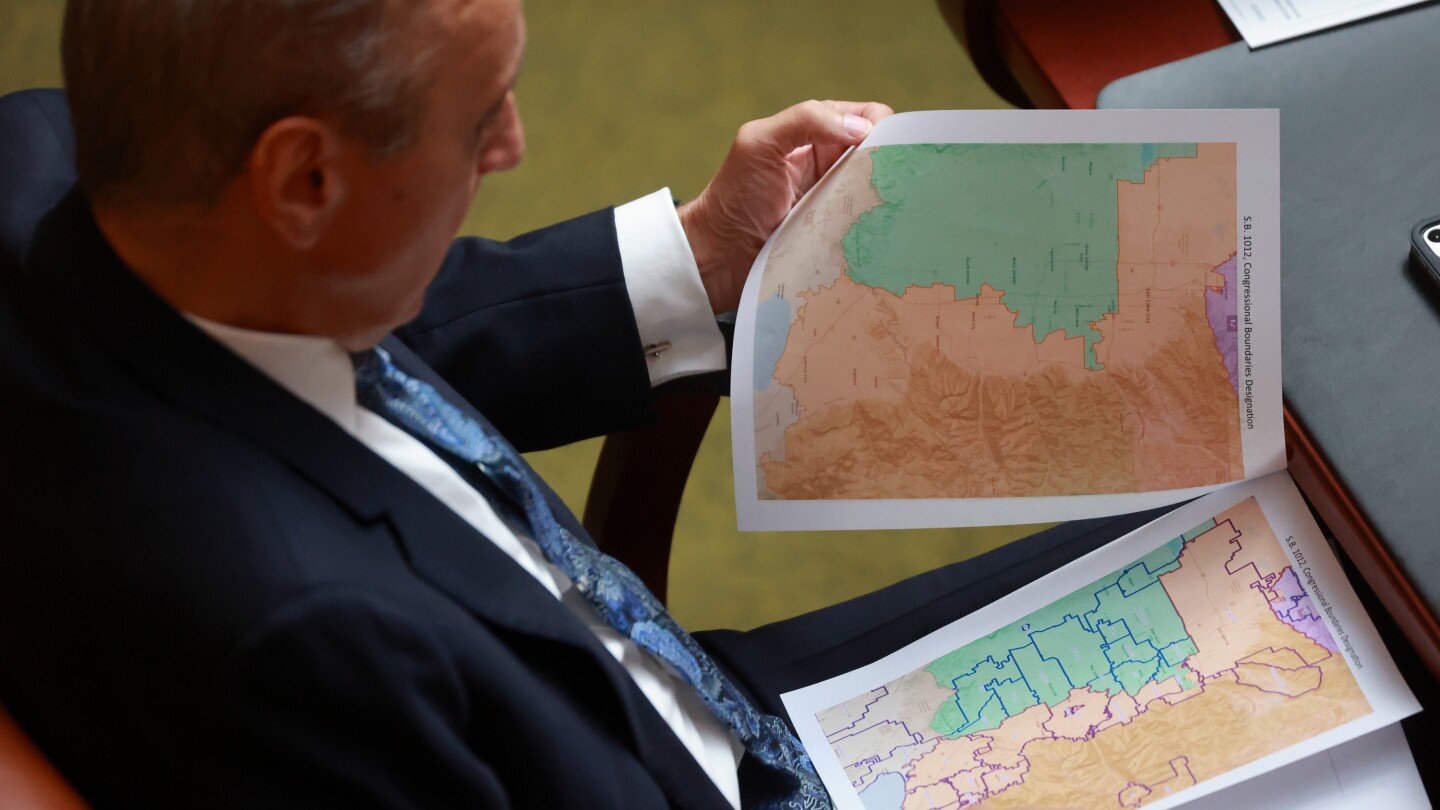
After rejecting the Legislature’s proposal, Gibson selected an alternative map submitted by plaintiffs in the case—the League of Women Voters of Utah and Mormon Women for Ethical Government. The approved map keeps Salt Lake County, a Democratic stronghold, largely intact within a single district, rather than splitting it among all four of Utah’s congressional districts as was previously done.
“This is a win for every Utahn,” said state House and Senate Democrats in a joint statement. “We took an oath to serve the people of Utah, and fair representation is the truest measure of that promise.”
The ruling creates significant implications for the 2026 midterm elections. Currently, Republicans hold all four of Utah’s U.S. House seats, but the new map gives Democrats a much stronger chance to flip one seat in a state that hasn’t sent a Democrat to Congress since early 2021.
The decision comes at a critical time in the national redistricting battle. Democrats need to net three U.S. House seats in 2026 to regain control of the chamber from Republicans. While the GOP is traditionally expected to gain seats during midterm elections when they don’t control the White House, this ruling provides Democrats with an unexpected opportunity in a reliably red state.
This August, Gibson had struck down Utah’s existing congressional map, adopted after the 2020 census, ruling that the Legislature had circumvented voter-approved anti-gerrymandering standards. That initial decision thrust Utah into the growing national fight over mid-decade redistricting.
Former President Donald Trump has encouraged Republican-led states to redraw electoral maps to help the GOP maintain control of the House. In response, some Democratic states have pursued their own redistricting efforts, with California voters recently approving changes that could help Democrats win five more seats. Despite Utah’s ruling, Republicans still maintain an overall advantage in the national redistricting landscape.
While redistricting typically occurs once every decade following a census, there are no federal restrictions preventing mid-decade redraws. Some states have their own limitations, though these are more commonly found in Democratic-controlled states than Republican ones.
If Gibson had approved the map drawn by Utah’s Republican legislators, all four districts would have remained Republican-leaning, though two would have become somewhat competitive for Democrats. Their strategy appeared to prioritize protecting all four seats with slimmer margins rather than creating a single left-leaning district and three solidly Republican ones.
The ruling came just before the deadline set by Utah’s chief election official, who had stated that any new congressional map needed to be enacted by that time to allow county clerks sufficient preparation for candidate filings ahead of the 2026 midterms.
Republican lawmakers have challenged Gibson’s authority to implement a map not approved by the Legislature. State Representative Matt MacPherson called the ruling a “gross abuse of power” and announced he had initiated legislation to pursue impeachment proceedings against the judge.
Gibson defended her decision, stating in her ruling that she has an obligation to ensure a lawful map is in place by the deadline, particularly given the Legislature’s failure to produce one that met the requirements of state law.
Fact Checker
Verify the accuracy of this article using The Disinformation Commission analysis and real-time sources.

9 Comments
Curious to hear more details on the reasoning behind the judge’s ruling. What specific factors led to the determination that the Legislature’s proposed map unduly favored Republicans? I’m interested in understanding the legal and analytical framework applied here.
From the article, it seems the judge found the Legislature’s map failed to comply with anti-gerrymandering standards established by Utah voters. The approved alternative map appears to keep Salt Lake County, a Democratic stronghold, more intact within a single district.
The judge’s decision to reject the GOP-drawn map and instead adopt a proposal that creates a Democratic-leaning district is a notable shift. I’ll be following this story to see how it shapes Utah’s political landscape in the coming years.
This is an important development in Utah’s political landscape. While the creation of a Democratic-leaning district is notable, I’ll be curious to see how it impacts the overall balance of power and representation in the state moving forward.
This ruling highlights the ongoing debate around gerrymandering and fair representation. While the creation of a Democratic-leaning district in Utah is noteworthy, I’m curious to hear a range of perspectives on the legal and political considerations at play.
This court ruling could have significant implications for the 2026 midterms in Utah. While the creation of a Democratic-leaning district is notable, it will be important to see how the new map affects overall political representation in the state.
The court’s decision to reject the GOP-drawn map and adopt a Democratic-leaning alternative is certainly a significant shift. It will be interesting to follow how this plays out and affects the 2026 midterm elections in Utah.
Agreed. The long-term implications of this ruling could be quite significant for Utah’s political landscape. I’ll be keeping a close eye on how it shapes the state’s congressional representation in the coming years.
Interesting development in Utah’s redistricting process. Maintaining the Democratic stronghold of Salt Lake County in a single district seems like a fair approach, though I’m curious to hear more perspectives on the long-term implications.