


Listen to the article
House Speaker Mike Johnson has formally invited President Donald Trump to deliver the State of the Union address before a Joint Session of Congress on February 24, 2026, marking what would be Trump’s first official State of the Union in his second term.
In his invitation letter, Johnson praised Trump’s leadership, stating, “As our nation marks the Semiquincentennial Anniversary of American Independence, the United States stands stronger, freer, and more prosperous under your leadership and bold action.” The Speaker highlighted what he described as a productive partnership between the administration and Congress, claiming they have “delivered one of the most consequential agendas in history.”
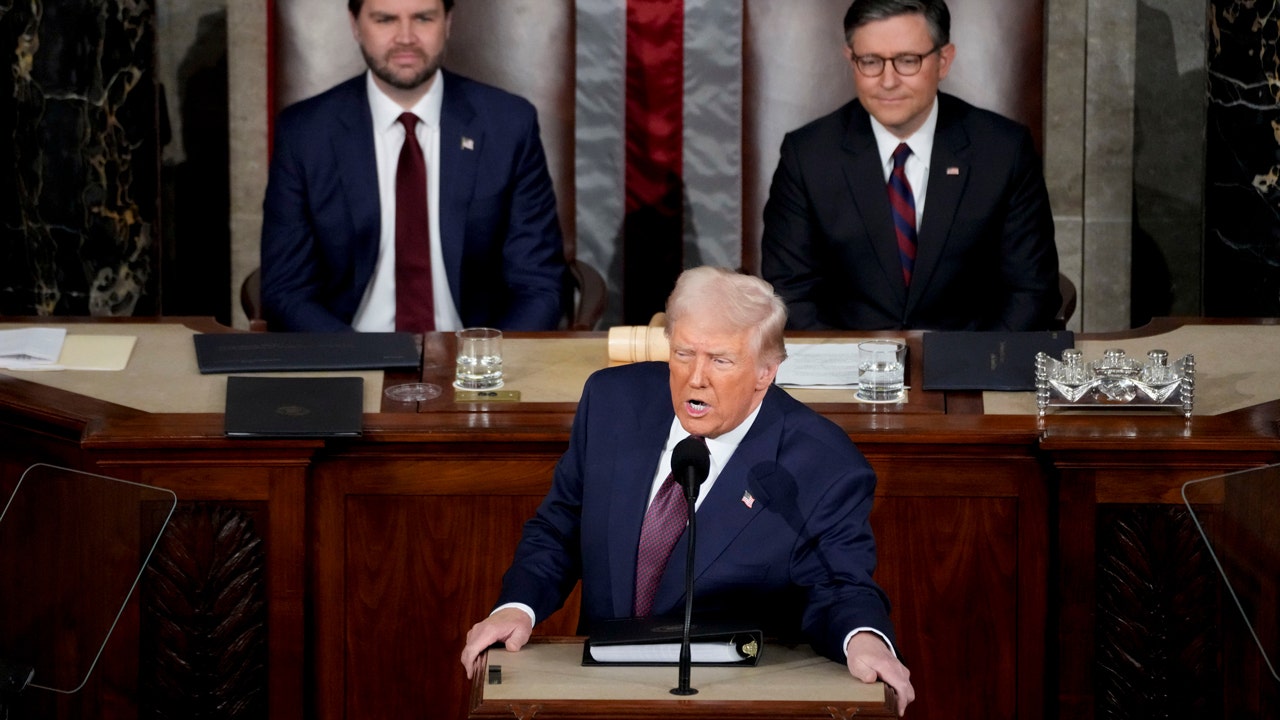
The invitation comes as the Trump administration approaches its second year in office. While Trump addressed a Joint Session of Congress on March 4, 2025, less than two months after his inauguration, that speech was not formally designated as a State of the Union address, which typically occurs annually.
Johnson’s letter expressed anticipation for continued collaboration, noting that Congress looks forward to “the important work ahead of us in 2026, serving the American people, defending liberty, and preserving this grand experiment in self-governance.”
The State of the Union address represents a constitutionally-enshrined tradition where the President reports to Congress on the condition of the nation and outlines legislative priorities. In the modern era, these speeches have evolved into major televised events that reach millions of Americans and provide presidents with a prime opportunity to communicate their vision directly to the public.
Trump’s previous address to Congress in March 2025 was not without controversy. During that speech, Representative Al Green, a Democrat from Texas, was ejected from the House chamber following an outburst early in the president’s remarks. Such partisan tensions have become increasingly common during these addresses in recent years, reflecting the polarized nature of American politics.
In that March address, Trump characterized his 2024 election victory as a “mandate” for his agenda, setting the tone for his second administration’s approach to governance. The upcoming February 2026 address will likely build on these themes while offering insight into the administration’s priorities for the remainder of the term.
The 2026 State of the Union will take place during a significant year for the United States, coinciding with the Semiquincentennial, or 250th anniversary of American independence. This milestone adds symbolic weight to the address, potentially providing Trump with an opportunity to frame his policies within the context of American history and tradition.
The White House has not yet publicly responded to Speaker Johnson’s invitation, though presidents typically accept such invitations as a matter of course.
The timing of the address in late February follows the traditional calendar for State of the Union speeches, which are usually delivered in January or February. The specific date allows the administration time to develop a comprehensive agenda for the coming year while giving Congress the opportunity to act on presidential priorities throughout the legislative session.
As preparations for the address begin, political analysts will be watching closely for signals about the administration’s legislative priorities and how they might shape congressional action in an important election year, with midterm contests approaching that could affect the balance of power in Washington.
Fact Checker
Verify the accuracy of this article using The Disinformation Commission analysis and real-time sources.

13 Comments
The upcoming State of the Union will be a test for the administration to demonstrate its ability to work across the aisle and deliver tangible results for the American people. I hope to see a unifying message that rises above partisan divides.
The upcoming State of the Union address will be an important milestone as we approach the Semiquincentennial of American independence. I’m curious to hear Trump’s reflections on the country’s history and vision for the future.
While I may not agree with all of Trump’s policies, I appreciate the Speaker’s acknowledgment of the administration’s ‘productive partnership’ with Congress. Regardless of party affiliation, we should hope for continued progress on issues that impact all Americans.
Interesting to see the Speaker praising Trump’s ‘bold action’ and leadership. While I don’t align with all of Trump’s policies, I respect the peaceful transition of power and look forward to seeing what the administration accomplishes in their second term.
I share your sentiment. It’s important we come together as a nation despite our differences and focus on the issues that matter most to the American people.
As we approach this historic milestone of the Semiquincentennial, the State of the Union address provides an important opportunity for national reflection and dialogue. I look forward to hearing the President’s vision for the country’s future.
While I may not be a Trump supporter, I believe it’s important to approach these types of political events with an open mind. The State of the Union is an opportunity for the President to articulate his vision and priorities, which is valuable for all citizens to hear.
The State of the Union is always an important occasion to take stock of the country’s progress and challenges. I’m curious to hear Trump’s vision for his second term and how he plans to work with Congress on key priorities like the economy, energy, and national security.
Good point. The State of the Union is a prime opportunity for the President to outline his agenda and seek bipartisan cooperation. It will be interesting to see if Trump strikes a more unifying tone this time around.
The timing of this State of the Union, with the Semiquincentennial just around the corner, adds extra significance. I hope Trump uses the occasion to highlight the enduring values and principles that have sustained our nation for 250 years.
It’s encouraging to see the administration and Congress working together, even if there are areas of disagreement. Delivering on an ‘consequential agenda’ will require compromise and bipartisanship from both sides.
The Speaker’s letter highlights the administration’s ‘productive partnership’ with Congress, which is encouraging to see. I hope this spirit of cooperation continues as they tackle the challenges facing the nation in the years ahead.
I’m curious to hear more about the ‘important work ahead’ that the Speaker referenced. Specific policy proposals around the economy, energy, and national security would be particularly interesting given the administration’s past focus on those areas.