


Listen to the article
Satellite Images Reveal Extensive Damage from U.S.-Israeli Strikes on Iran and Tehran’s Retaliatory Attacks
New satellite images have revealed the widespread devastation inside Iran following coordinated U.S.-Israeli military strikes, while also documenting damage from Iran’s retaliatory attacks across the Middle East region.
According to U.S. Central Command, which oversees American military operations in the Middle East, U.S. forces struck more than 1,250 targets during the first two days of the campaign known as Operation Epic Fury. The scope of these strikes demonstrates the comprehensive nature of the military response.
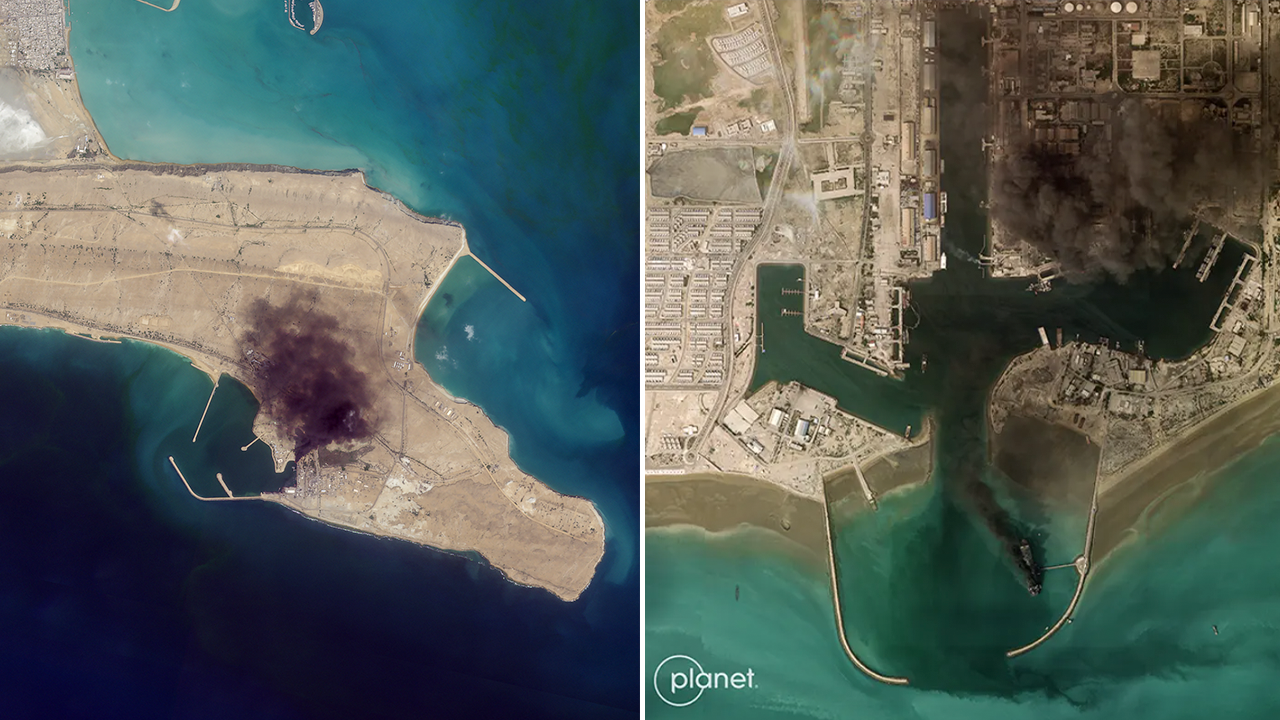
Satellite imagery from Planet Labs shows significant damage at multiple Iranian naval facilities. At the Konarak base in southern Iran, several vessels appear to be burning, while Iran’s naval headquarters in Bandar Abbas on the Persian Gulf exhibits extensive structural damage. The precision strikes appear to have specifically targeted key military infrastructure rather than civilian areas.
Additional satellite data from Vantor reveals destruction at the Choqa Balk drone facility in western Iran. This installation, believed to be crucial to Iran’s unmanned aerial vehicle program, shows multiple impact points consistent with precision-guided munitions. The strikes also damaged radar systems at the Zahedan air base in eastern Iran, near the country’s borders with Pakistan and Afghanistan.
Military analysts note the strategic significance of targeting facilities approximately 800 to 900 miles apart, demonstrating the operational reach of U.S. and Israeli forces across Iranian territory. The geographic spread of the strikes suggests a deliberate attempt to degrade Iran’s military capabilities across multiple fronts simultaneously.
Perhaps most striking are the images showing thick plumes of smoke rising above Tehran, confirming that strikes reached the Iranian capital itself. These images underscore how the conflict has progressed beyond isolated military installations to reach sites closer to Iran’s political and administrative center.
In response to these attacks, Iran launched its own missile and drone strikes against multiple targets across the Middle East, expanding the conflict beyond a bilateral confrontation. Satellite imagery reveals notable damage in the United Arab Emirates, particularly in the port city of Sharjah, the UAE’s third most populous urban center after Dubai and Abu Dhabi.
The Jebel Ali Port, recognized as the region’s largest maritime hub and a critical node in global shipping networks, was also targeted. This expansion of targets to include civilian infrastructure and commercial facilities marks a significant escalation, potentially threatening regional economic stability and international shipping routes.
The Pentagon has maintained that U.S. forces in the region remain on high alert, with officials publicly warning that any further attacks targeting American citizens would trigger additional military responses. This posture suggests the U.S. is prepared for a prolonged engagement if necessary.
Regional security experts express concern that the visible damage spanning from western Iran to the Persian Gulf represents a dangerous new phase in Middle Eastern tensions. The widespread destruction documented by these satellite images has raised questions about whether the situation will stabilize in coming days or potentially escalate into a broader regional conflict.
The strikes occur against a backdrop of years of simmering tensions between Iran and both the United States and Israel. The current exchange represents one of the most direct military confrontations between these powers in recent history, with potential implications for global energy markets, shipping routes through the Strait of Hormuz, and regional security arrangements.
As both sides appear prepared for additional rounds of strikes, diplomatic channels remain crucial but seemingly underutilized. The coming days may prove decisive in determining whether this confrontation stabilizes through deterrence or spirals into a wider regional war with global implications.
Fact Checker
Verify the accuracy of this article using The Disinformation Commission analysis and real-time sources.

10 Comments
Interesting development in the ongoing tensions between Israel, the US, and Iran. The satellite imagery provides some insight into the scope of these strikes and the damage inflicted on Iranian naval and drone facilities. It will be important to monitor the fallout and potential retaliation from Iran.
As a student of geopolitics, I’m fascinated by the strategic calculations and decision-making processes that likely led to these strikes. The balance between deterrence, escalation, and diplomacy is a delicate one in these volatile regional conflicts.
As an investor, I’m curious to see how this development might impact commodity and energy markets, particularly given Iran’s role as a major producer of oil and natural gas. The potential for supply disruptions or geopolitical risks could have significant economic implications.
The precision of these strikes suggests a coordinated effort to target key military infrastructure rather than civilians. However, the potential for further escalation remains a concern. Objective analysis of the strategic implications will be crucial going forward.
The satellite imagery provides a valuable window into the aftermath of these attacks. The extent of the damage to Iranian naval and drone facilities is quite substantial. Moving forward, it will be interesting to see how Iran responds and if this leads to further tensions or potential diplomatic engagement.
This incident underscores the importance of maintaining open lines of communication and diplomatic engagement, even in the face of heightened tensions. Avoiding further escalation and finding a pathway to de-escalation should be a priority for all parties involved.
The satellite imagery provides a clear visual representation of the scale and impact of these attacks. It will be crucial for policymakers and analysts to carefully assess the strategic implications and potential ripple effects, both regionally and globally.
This is a complex and rapidly evolving situation. While the strikes appear to have been targeted and precise, the potential for unintended consequences or further escalation remains a concern. Careful analysis and balanced reporting will be essential in the days and weeks ahead.
The satellite imagery provides a sobering look at the aftermath of these attacks. While the stated goal may have been to target military infrastructure, the potential for civilian casualties or unintended damage is always a concern in such operations.
This incident highlights the complexity of geopolitics in the Middle East. While the strikes may have achieved their immediate objectives, the long-term consequences could be far-reaching. It will be important to consider the broader regional dynamics and implications for energy and commodity markets.