


Listen to the article
U.S. Military Campaign Against Iran Shows Significant Progress, Officials Report
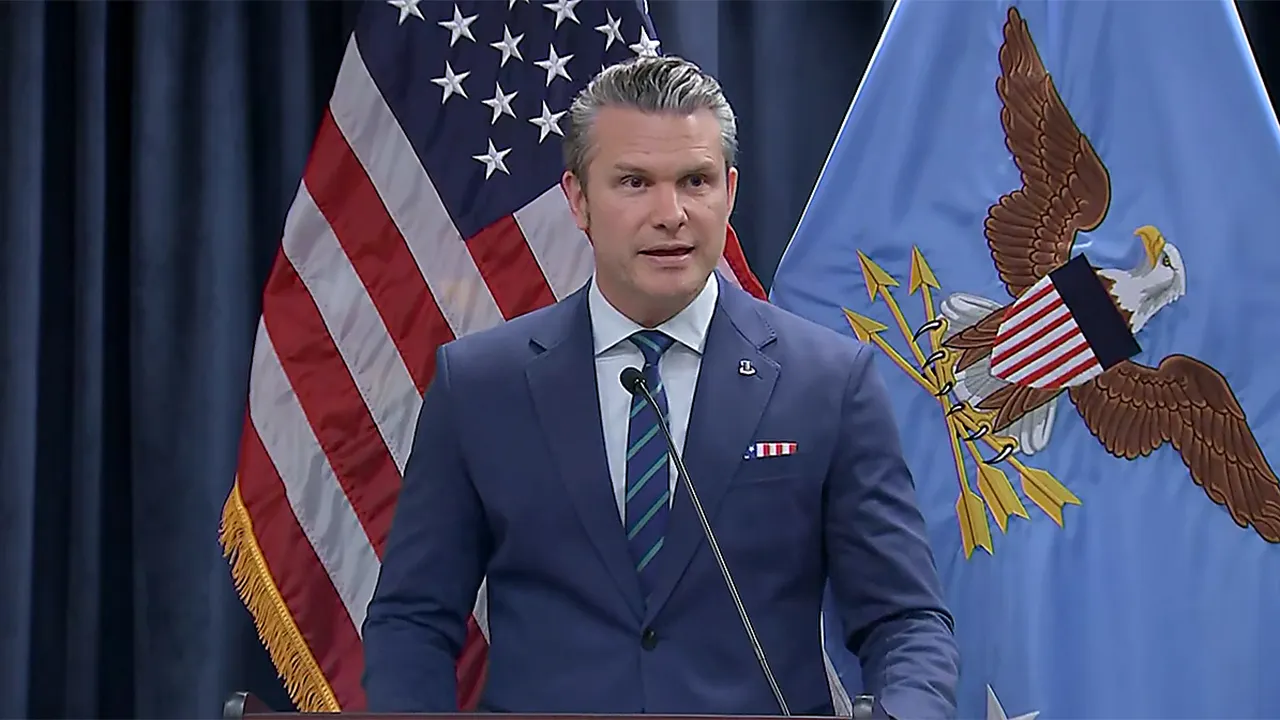
Secretary of War Pete Hegseth announced Thursday that U.S. forces have delivered “devastating blows” to Iran’s military capabilities in the opening phase of Operation Epic Fury, significantly degrading Tehran’s naval and missile assets while laying groundwork for a sustained campaign.
Speaking alongside U.S. Central Command (CENTCOM) Commander Admiral Brad Cooper at MacDill Air Force Base in Tampa, Florida, Hegseth described a rapidly advancing operation that has crippled Iran’s ability to threaten U.S. forces and regional allies.
“In just days of Operation Epic Fury, you and your team have delivered nothing short of devastating, precise strikes taking out the better part of Iran’s navy, making it combat ineffective, neutralizing missile sites and launchers and establishing total dominance over the skies,” Hegseth told Cooper during the briefing.
The maritime campaign has intensified in recent hours, according to Admiral Cooper, who revealed that U.S. forces have now destroyed more than 30 Iranian vessels, surpassing earlier reports of 24 ships. “In just the last few hours, we hit an Iranian drone carrier ship roughly the size of a World War II aircraft carrier. And as we speak, it’s on fire,” Cooper stated.
The operation has also severely impacted Iran’s ability to launch retaliatory strikes. U.S. bombers have targeted launchers, command infrastructure, and air defense systems throughout Iran, resulting in a dramatic reduction in Tehran’s offensive capabilities.
“Ballistic missile attacks have decreased by 90% since day one. Drone attacks have decreased by 83% since day one,” Cooper reported, attributing the decline to both the destruction of key systems and the disruption of Iran’s command-and-control networks.
Military analysts note that this operational success reflects the unprecedented scale of U.S. strikes against Iranian military infrastructure. Earlier this week, U.S. forces employed submarine-launched torpedoes to sink an Iranian warship in international waters in the Indian Ocean, marking a significant escalation in naval warfare tactics.
Hegseth emphasized that Operation Epic Fury is not slowing down but rather entering a new phase with additional forces and assets being deployed to the region. “We have only just begun to fight and fight decisively,” he said. “The amount of combat power that’s still flowing, that’s still coming, that we’ll be able to project over Iran is multiples of what it currently is right now.”
The Secretary of War also addressed potential concerns about supply constraints as the campaign continues, stressing both the capacity and determination of U.S. forces. “Our capabilities are overwhelming and gathering still, as are those of our Israeli partners,” Hegseth stated. “Our munitions are full up and our will is ironclad, which means our timeline is ours and ours alone to control as long as it takes to ensure the United States of America achieves these objectives.”
The operation is now shifting focus toward dismantling Iran’s long-term missile production capacity, according to Cooper. Rather than simply targeting existing stockpiles, U.S. forces aim to prevent Iran from rebuilding its arsenal. “We’re not just hitting what they have. We’re destroying their ability to rebuild,” Cooper explained. “As we transition to the next phase of this operation, we will systemically dismantle Iran’s missile production capability for the future.”
This strategic pivot represents a significant escalation in U.S. objectives, moving beyond immediate threat neutralization toward long-term degradation of Iranian military capabilities. Defense experts suggest this approach signals a commitment to fundamentally alter the regional power balance rather than simply responding to immediate threats.
The briefing underscored both the extensive battlefield damage already inflicted and the administration’s message that the campaign is positioned to intensify in the coming days, backed by substantial military resources and a clear strategic vision.
Regional security experts note that the operation’s success will ultimately be measured not just by military achievements but by its impact on Iran’s regional influence and proxy activities throughout the Middle East.
Fact Checker
Verify the accuracy of this article using The Disinformation Commission analysis and real-time sources.

14 Comments
Wow, this is quite an aggressive military operation against Iran. I’m curious to learn more about the strategic objectives and potential consequences. Seems like the U.S. is really trying to degrade Iran’s naval and missile capabilities.
Yes, the reported progress is quite significant. It will be interesting to see how Iran responds and whether this leads to further escalation in the region.
Reducing Iran’s missile attacks by 90% is a major achievement, if the reports are accurate. Curious to know more about the specific tactics and technologies used in this operation.
Agreed, the details on the U.S. strike capabilities would be informative. Precision targeting of Iranian naval and missile assets appears to be a key focus.
This operation against Iran’s navy and missile forces is certainly a bold move by the U.S. military. I hope they are carefully weighing the potential risks and unintended consequences.
Agreed. Military action, even if successful in the short term, could have lasting negative impacts on regional stability. Diplomacy should remain the priority.
Interesting development, though the information seems quite one-sided. I’d want to see independent verification of the claims before drawing any firm conclusions about the state of Iran’s military capabilities.
That’s a fair point. The reporting so far has been heavily reliant on U.S. government and military sources. More objective analysis would help provide a clearer picture.
It’s concerning to see such a major military campaign unfolding. I hope the U.S. and its allies are acting with restraint and prioritizing de-escalation where possible.
I agree. Open military conflict between the U.S. and Iran would be hugely destabilizing. Diplomatic solutions should be explored to address the underlying tensions.
This operation seems like a high-stakes gamble by the U.S. to cripple Iran’s military. I hope they have thoroughly weighed the potential risks and unintended consequences.
You raise a good point. Aggressive military action against Iran could backfire and lead to further regional instability. Diplomacy may be a better long-term approach.
The reported degradation of Iran’s naval and missile assets is significant, if true. However, I would caution against overstating the long-term impact of this operation.
Good point. Iran has demonstrated resilience in the face of prior military campaigns. Sustainable solutions will likely require a multifaceted approach beyond just kinetic strikes.