


Listen to the article
Iran’s Ballistic Missile Capabilities Raise Concerns as Range Expands
President Donald Trump has issued a stark warning that Iran is working to develop missiles that could “soon reach the United States of America,” elevating concerns about Tehran’s weapons program that already places U.S. forces across the Middle East within strike range.
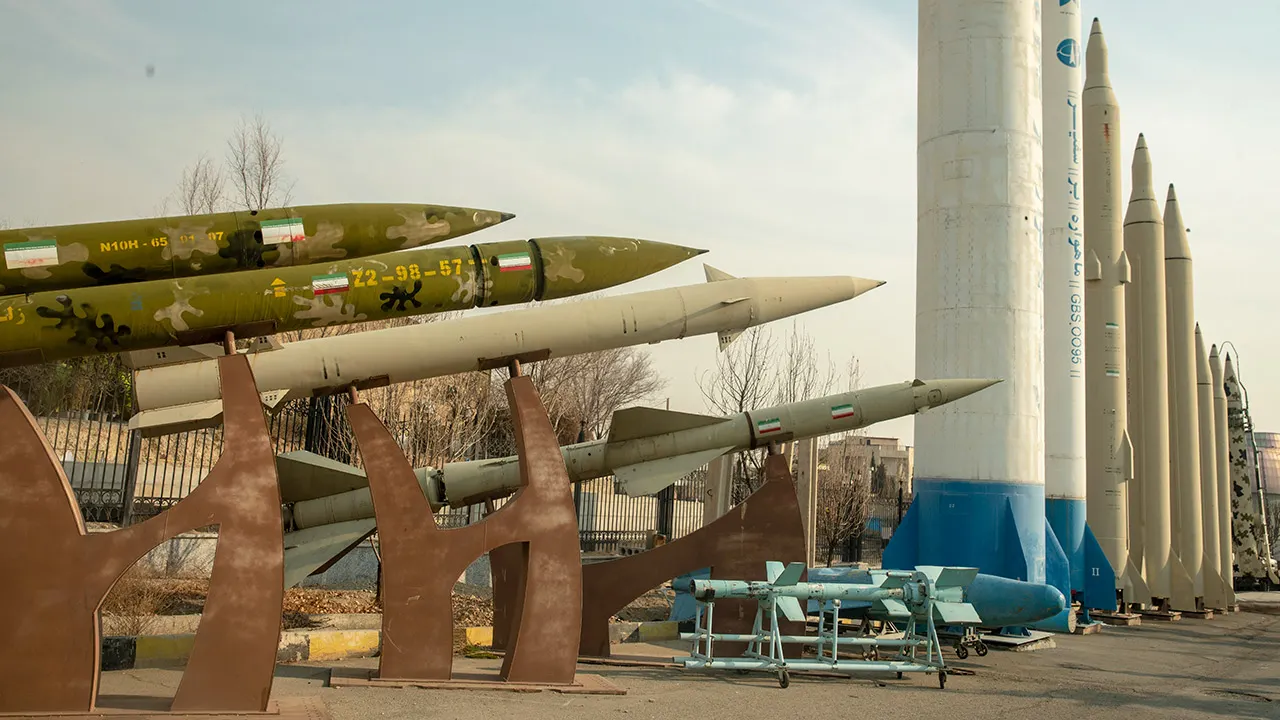
While Iran does not currently possess missiles capable of hitting the U.S. mainland, its extensive ballistic missile arsenal—the largest in the Middle East—has become a central point of contention in ongoing nuclear negotiations between the two nations.
Intelligence assessments indicate that Iran’s current missile capabilities extend approximately 2,000 kilometers (about 1,200 miles), placing numerous critical U.S. military installations throughout the Gulf region within range. These vulnerable bases include Al Udeid Air Base in Qatar, which serves as the forward headquarters for U.S. Central Command; Naval Support Activity Bahrain, home to the U.S. 5th Fleet; and several strategic air bases in Kuwait, Saudi Arabia, the United Arab Emirates, and Jordan.
Multiple U.S. officials have reported that staffing at the Navy’s 5th Fleet headquarters in Bahrain has been reduced to “mission critical” levels amid heightened tensions, though other officials dispute this characterization, stating no formal evacuation orders have been issued.
The U.S. has responded to the growing threat by significantly bolstering its military presence in the region. The USS Abraham Lincoln Carrier Strike Group is currently operating in the Arabian Sea alongside multiple destroyers, while additional naval assets are positioned throughout the eastern Mediterranean, Red Sea, and Persian Gulf. The USS Gerald R. Ford Carrier Strike Group is also en route to the region, supplementing an already robust Air Force presence that includes F-15s, F-16s, F-35s, and A-10s stationed across Jordan, Saudi Arabia, and Bahrain.
Iran has already demonstrated its willingness to use ballistic missiles against American targets. In January 2020, following the U.S. strike that killed Islamic Revolutionary Guard Corps General Qassem Soleimani, Iran launched more than a dozen ballistic missiles at U.S. positions in Iraq, resulting in traumatic brain injuries to dozens of American service members.
While Iran’s current missile capabilities fall short of reaching the continental United States, defense analysts warn that its space program could provide the technological foundation for future intercontinental ballistic missiles (ICBMs). The Defense Intelligence Agency has assessed that Iran “has space launch vehicles it could use to develop a militarily-viable ICBM by 2035 should Tehran decide to pursue the capability.”
Particular attention has been paid to Iran’s recent space launches, including rockets such as the Zuljanah, which utilize solid-fuel propulsion systems that can be stored and launched more quickly than liquid-fueled alternatives—a critical feature for military ballistic missiles. The technological overlap between space launch vehicles and long-range ballistic missiles suggests that advances in Iran’s civilian space program could accelerate the development of military capabilities if Tehran chose to adapt this technology.
The U.S. relies on layered missile defense systems to protect its forces and allies in the region, including Terminal High Altitude Area Defense (THAAD), Patriot batteries, and ship-based interceptors. While technically capable, these systems face significant challenges in a sustained conflict scenario. During a missile exchange between Iran and Israel in June 2025, U.S. forces reportedly fired more than 150 THAAD interceptors—approximately a quarter of the Pentagon’s total inventory.
The economics of this defensive posture highlight a concerning imbalance: Iranian short-range ballistic missiles are estimated to cost in the low hundreds of thousands of dollars each, while advanced U.S. interceptors such as THAAD cost approximately $12 million per missile. This cost disparity, combined with limited interceptor inventories that can take years to replenish, means a prolonged missile exchange could quickly strain U.S. defensive capabilities.
Secretary of State Marco Rubio has identified Iran’s refusal to negotiate limits on its ballistic missile program as “a big problem,” signaling that the administration views this arsenal as central to regional security concerns. While current diplomatic efforts focus primarily on Iran’s nuclear program and uranium enrichment activities, U.S. officials maintain that delivery systems—including ballistic missiles—cannot be separated from concerns about potential nuclear weapons development.
Iranian officials, however, insist their missile program serves purely defensive purposes and remains non-negotiable in nuclear-focused talks.
Fact Checker
Verify the accuracy of this article using The Disinformation Commission analysis and real-time sources.

12 Comments
As concerning as Iran’s missile capabilities are, I hope the US and its allies can find a way to address this issue through diplomacy rather than escalating regional tensions further. Constructive engagement will be key.
Well said. De-escalating tensions and finding a negotiated solution should be the top priority, even if it requires difficult compromises from all sides.
The proximity of Iran’s missile range to key US bases is very troubling. It’s clear that this issue needs to be a top priority in negotiations to prevent further escalation of tensions.
I agree, this is a complex challenge that will require careful diplomacy and concessions from both sides to find a sustainable solution.
This is a complex and high-stakes issue that will require careful navigation. I’m hopeful the ongoing negotiations can produce a diplomatic framework to effectively manage Iran’s missile program and regional security concerns.
Agreed. Balancing competing interests and finding mutually acceptable solutions will be critical to making meaningful progress on this issue.
This news highlights the delicate balance of power in the Middle East and the importance of robust regional security frameworks. I’m curious to see how the international community responds to these developments.
Absolutely, the geopolitical implications of Iran’s missile program extend well beyond just the US-Iran relationship. Coordinated multilateral efforts will be essential.
While I understand the US concerns about Iran’s missile capabilities, I hope the negotiations can find a way to address this issue without further militarizing the region. Diplomacy and de-escalation should be the top priorities.
That’s a fair perspective. Maintaining open channels of communication and pursuing diplomatic solutions will be crucial to managing this situation effectively.
This is certainly a concerning development, as Iran’s expanding missile capabilities pose a real threat to US interests and personnel in the region. I’m curious to see how the ongoing nuclear negotiations address this issue and what diplomatic solutions may be possible.
You raise a good point. Effectively managing Iran’s missile program will be critical to any lasting nuclear deal and regional stability.