


Listen to the article
Iran Foreign Minister Meets Putin as US-Iran Tensions Escalate in Critical Oil Shipping Lane
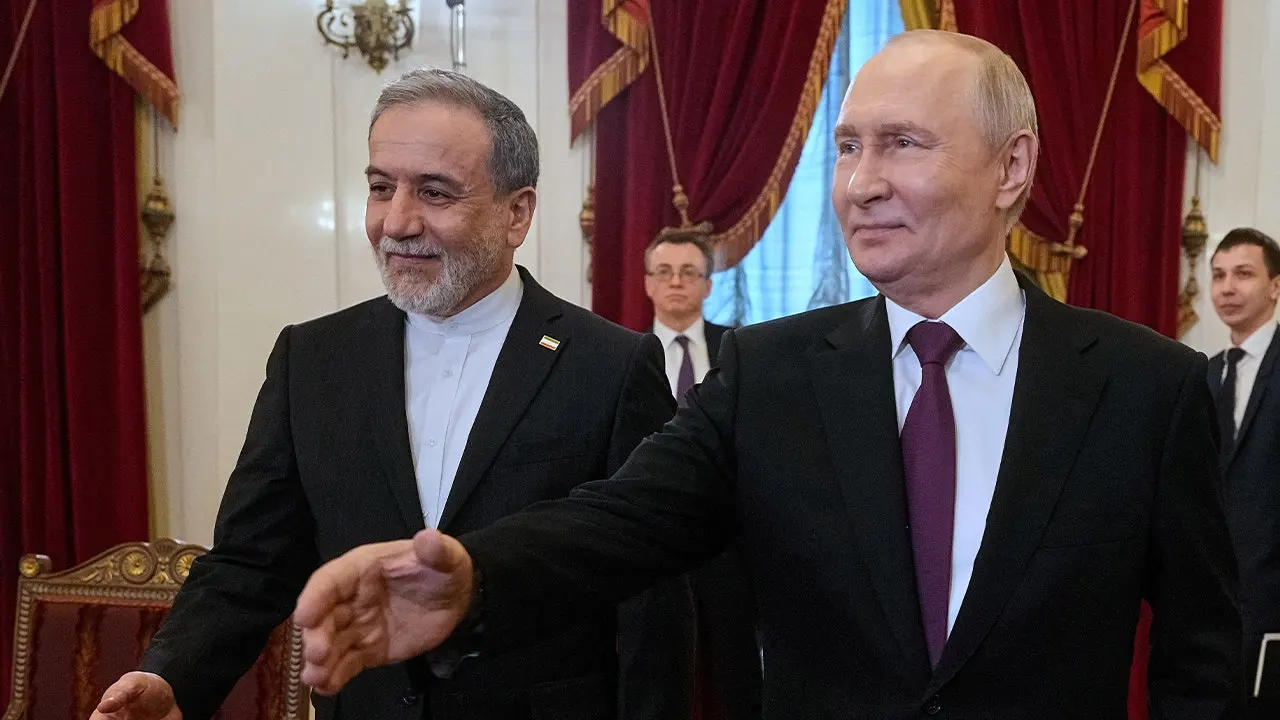
Iran’s foreign minister Abbas Araghchi met with Russian President Vladimir Putin in St. Petersburg on Monday as negotiations between Washington and Tehran appeared to collapse, heightening concerns over potential disruptions to global oil supplies through the Strait of Hormuz.
The high-stakes diplomatic meeting comes at a critical moment when tensions at sea have intensified following failed mediation attempts in Pakistan, where Araghchi had questioned whether the United States was “truly serious about diplomacy.”
“We see how courageously and heroically the people of Iran are fighting for their independence, for their sovereignty,” Putin told Araghchi during their meeting, according to Russian state news agencies. Kremlin spokesperson Dmitry Peskov emphasized the significance of the talks, stating: “The importance of this conversation is hard to overestimate in terms of how the situation around Iran and in the Middle East is developing.”
President Donald Trump has rejected Iran’s characterization of the diplomatic impasse, insisting that Washington holds the advantage in the standoff. “If they want to talk, all they have to do is call,” Trump said over the weekend, adding that the U.S. has “all the cards.” Trump also pointed to what he described as “tremendous infighting and confusion” within Iran’s leadership, suggesting Tehran is under significant internal pressure.
The meeting highlights Russia’s growing role in the conflict as Moscow positions itself as a potential mediator while simultaneously deepening ties with Tehran. U.S. officials have expressed concern over possible intelligence-sharing between Russia and Iran, with War Secretary Pete Hegseth warning in March that Russia “should not be involved” in the escalating conflict.
Araghchi has acknowledged that Russia is assisting Iran “in many different directions,” though he has not detailed the full scope of that cooperation. The relationship between Moscow and Tehran has strengthened considerably in recent years, with Iran finalizing a 20-year strategic partnership agreement with Russia in 2025. Russia is currently building two additional nuclear reactors at Iran’s Bushehr facility—the country’s only nuclear power plant.
The diplomatic breakdown has increasingly shifted the confrontation to maritime operations. The United States has enforced a naval blockade targeting Iranian shipping, while Iran has restricted and threatened traffic through the Strait of Hormuz, creating a high-stakes standoff over one of the world’s most vital energy corridors. Approximately one-fifth of global oil supply passes through this narrow waterway, making any disruption there a direct threat to global energy markets.
Oil prices have already risen as shipping traffic declines amid uncertainty over the strait’s stability. Iran has proposed reopening the strait if the U.S. lifts its blockade and agrees to defer nuclear negotiations—a framework the Trump administration has shown little interest in accepting.
Russia has offered to help restore calm following U.S. and Israeli strikes on Iran—actions Moscow has publicly condemned. The Kremlin has also proposed storing Iran’s enriched uranium as part of a potential effort to ease tensions, though Washington has not engaged with this offer.
The relationship between Moscow and Tehran extends beyond the current crisis. Iran has supported Russia’s war effort in Ukraine by supplying Shahed drones that Moscow has used in strikes against Ukrainian targets, further cementing their strategic alignment.
President Trump canceled a planned trip by special envoy Steve Witkoff and adviser Jared Kushner to Pakistan, where they had been expected to participate in mediated talks with Iranian officials. Trump justified the cancellation by arguing there was “no reason for U.S. officials to make an 18-hour flight when negotiations could take place remotely.”
Both sides have since traded blame for the breakdown in talks, with Iran accusing the U.S. of making “excessive demands,” while the Trump administration insists Iran must return to negotiations on American terms.
Analysts warn that without a diplomatic breakthrough, the standoff risks escalating into a broader confrontation with global economic consequences directly tied to the world’s most important oil transit route. The growing three-way dynamic between stalled diplomacy, rising military risks in the Strait of Hormuz, and Russia’s deepening alignment with Iran continues to shape this evolving crisis.
Fact Checker
Verify the accuracy of this article using The Disinformation Commission analysis and real-time sources.

5 Comments
This is a high-stakes situation that could have significant ramifications for global energy markets and the broader economy. I hope the US and Iran can find a way to de-escalate tensions through pragmatic diplomacy before the situation deteriorates further.
The growing Russia-Iran cooperation in response to failed US negotiations is a troubling sign. This could further destabilize the region and increase risks for global energy markets. It’s crucial that all parties exercise restraint and work toward a diplomatic resolution to this crisis.
This is a complex geopolitical situation with far-reaching implications for commodities and energy markets. I hope the US, Iran, and other key players can find a way to de-escalate tensions through measured diplomacy before the situation spirals further out of control.
This is a concerning development with major implications for global energy markets. Iran’s pivot to Russia suggests the US-Iran negotiations have reached an impasse, raising the risk of escalation in the Strait of Hormuz. Careful diplomacy will be critical to de-escalate tensions and maintain oil supply stability.
The US-Iran tensions in the Strait of Hormuz are highly worrying for the global economy, given the strategic importance of this oil chokepoint. I hope cooler heads prevail and a diplomatic solution can be found to ease the standoff before it disrupts energy supplies.