


Listen to the article
A federal judge was asked Wednesday to halt major renovations to The John F. Kennedy Center for the Performing Arts, as cultural and historic preservation groups seek to prevent President Donald Trump from moving forward with significant changes to the iconic venue.
The preservation groups have requested U.S. District Judge Christopher Cooper issue a preliminary injunction to block any construction before the planned July 6 project launch. They argue that the Trump administration and the center’s board of trustees may disregard historic preservation regulations designed to maintain the building’s integrity.
“The laws that govern the process go to the very fundamental question of: Do we slow down and take stock before we make changes to properties that define the American experience?” said attorney Greg Werkheiser following the hearing.
Justice Department attorneys, representing the president and board, countered that the planned renovations are limited in scope and fall well within the board’s authority, claiming additional approvals aren’t required. Attorney Yaakov Roth dismissed concerns about drastic changes to the structure, stating, “There’s no risk that there will be unilateral changes… that we’ll wake up and the building will be gone.”
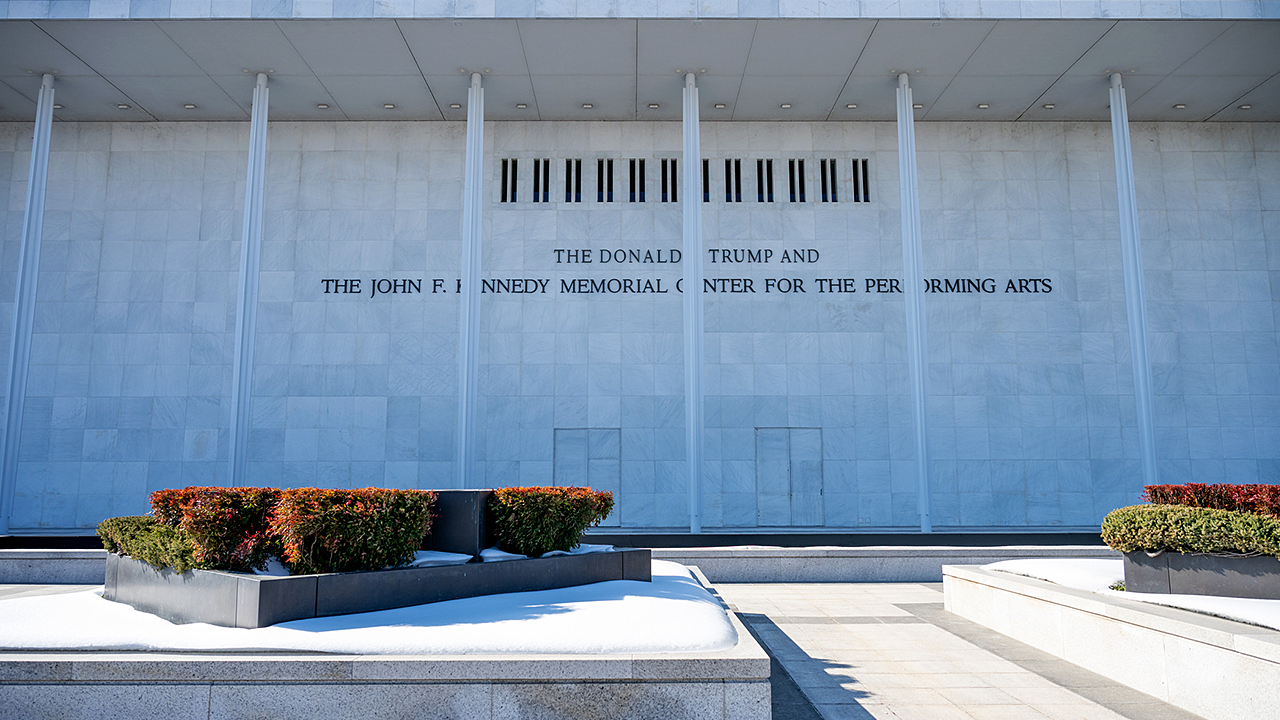
The Kennedy Center has already undergone significant changes since Trump returned to office. The president ousted previous leadership and installed a handpicked board of allies, naming himself chairman—a move that prompted backlash from numerous artists. In a controversial decision, Trump’s name was also added to the building’s facade, which now reads “The Donald J. Trump and The John F. Kennedy Memorial Center for the Performing Arts.”
Matt Floca, the center’s executive director and former facilities manager who was elevated to his position by the Trump-selected board, testified that the scheduled renovations are necessary to address decades of deterioration, including extensive water damage to a section of the building known informally as “the swamp.”
“The most efficient and effective way to complete the magnitude of projects we need to complete is to close the center,” Floca explained.
However, attorneys representing the preservation groups questioned the administration’s characterization of the renovations as limited, citing Trump’s own statements about plans to “fully expose” the building’s steel skeleton.
Wednesday’s hearing follows a separate proceeding the previous day regarding the center’s future. Rep. Joyce Beatty (D-Ohio) has also filed a lawsuit to block renovations in her capacity as an ex officio member of the board. Judge Cooper is overseeing both cases.
The legal battles over the Kennedy Center represent part of a broader confrontation between the Trump administration and historic preservationists concerning changes to national landmarks in Washington, D.C. Since returning to office, Trump has frustrated preservation advocates with several high-profile projects, including paving over the White House’s Rose Garden and demolishing the White House East Wing to make way for a proposed $400 million ballroom—though construction of the ballroom has been temporarily halted by court order.
The president has also announced plans to erect a 250-foot “triumphal arch” commemorating the nation’s 250th anniversary.
The Kennedy Center, which opened in 1971 as a living memorial to President John F. Kennedy, has long served as a premier performing arts venue and cultural landmark in the nation’s capital. The outcome of these legal challenges will likely determine not only the fate of the planned renovations but also set precedent for how historic federal properties can be modified by presidential administrations.
Judge Cooper has not yet ruled on the injunction request, but his decision will be closely watched by preservationists, arts advocates, and legal experts concerned with the protection of national cultural institutions.
Fact Checker
Verify the accuracy of this article using The Disinformation Commission analysis and real-time sources.

9 Comments
It’s good to see cultural groups advocating for the Kennedy Center’s historic integrity. Landmark buildings like this define a city’s character, so preserving them is important.
Preservation of historic buildings and landmarks is so important. I hope the cultural groups are able to ensure the Kennedy Center’s integrity is maintained through this process.
Interesting to see cultural groups fighting to preserve the Kennedy Center’s historic integrity. These types of renovations can be tricky balancing acts between modern needs and honoring the original design.
I’m curious to see how the court ruling plays out. Careful consideration of historic preservation regulations is important, but the renovations may also have valid practical goals.
The Kennedy Center is such an iconic venue – I can understand the desire to maintain its original character. At the same time, renovations may be needed to keep it functional and accessible for modern audiences.
It sounds like a complex issue with valid arguments on both sides. Hopefully the judge can find a balanced solution that respects the building’s history while also addressing current needs.
The Kennedy Center is such an important part of DC’s cultural landscape. I can see both sides of this debate – the need to respect the original design, but also keeping the venue modern and functional.
I’ll be interested to see how the judge rules on this. Hopefully they can find a way to balance historic preservation with practical renovations.
This is a tricky situation. On one hand, the Kennedy Center’s history and architectural significance should be protected. But on the other, reasonable updates may be necessary to keep it relevant and accessible. Careful consideration is key.