


Listen to the article
Trump-Musk Alliance Collapses in 2025 After Brief But Intense Partnership
Back on Inauguration Day, few in Washington would have believed that the highly publicized friendship between President Donald Trump and Elon Musk would implode before the year’s end.
No political partnership burned brighter or fizzled faster than Trump and Musk’s in 2025. What began as a joint crusade to cut federal spending through the newly minted Department of Government Efficiency quickly devolved into a public falling out that unfolded in a full-blown social media feud.
The relationship’s trajectory reflects the volatile nature of modern political alliances, especially those involving two of America’s most outspoken public figures.
Campaign Alliance Forms After Assassination Attempt
The foundation of their partnership was laid during the 2024 presidential campaign. After the first Trump assassination attempt at a rally in Butler, Pennsylvania, on July 13, 2024, Musk endorsed Trump in an X post. The tech billionaire went on to donate more than $200 million to Trump’s presidential campaign through his super PAC, America PAC.
While the two appeared together for a virtual town hall in August, their first significant public appearance came on October 5, as Trump returned to Butler three months after the shooting. Musk was visibly enthusiastic, jumping for joy as he joined Trump on stage.
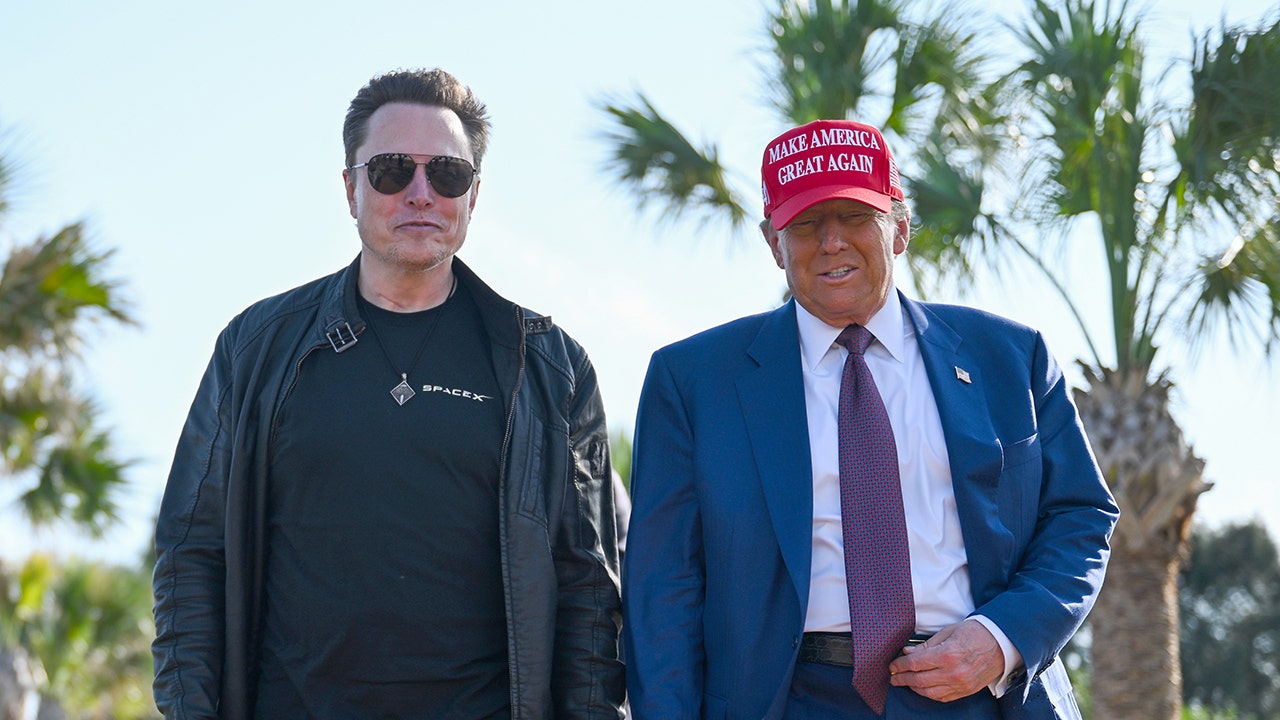
Following Trump’s election victory in November 2024, he appointed Musk to lead the Department of Government Efficiency (DOGE). At his Mar-a-Lago victory speech, Trump proclaimed of Musk, “A star is born!” Two weeks later, Trump and his family attended a SpaceX “Starship” launch with Musk, further cementing their alliance.
DOGE Takes Shape
Trump formalized DOGE on Inauguration Day by signing an executive order aimed at cutting waste, fraud and abuse in federal government. The department’s mandate included modernizing “Federal technology and software to maximize governmental efficiency and productivity.”
As the Trump administration settled in, DOGE began pursuing Musk’s ambitious goal of cutting up to $2 trillion from the federal budget. According to the DOGE website, by October 2025, the agency had saved approximately $214 billion through asset sales, contract cancellations, fraud elimination, grant cancellations, programmatic changes, and workforce reductions.
These cost-cutting measures, however, came with significant political consequences. When tens of thousands of federal workers were laid off, protests erupted across the United States, targeting both Musk’s leadership and Trump’s second-term agenda.
Support Amid Backlash
The political fallout extended to Musk’s business interests. Tesla stocks began dropping earlier in the year as Musk’s political involvement prompted backlash from protesters. Tesla vehicles, charging stations, and dealerships were targeted in a string of vandalism attacks.
In a show of support for his embattled ally, Trump transformed the White House South Lawn into a Tesla showroom and purchased a red Tesla Model S. “He’s built this great company, and he shouldn’t be penalized, because he’s a patriot,” Trump stated at the time.
The Beginning of the End
By May, cracks in the relationship became apparent as Musk began reducing his hours at DOGE. According to the Office of Government Ethics, “special government employees” like Musk can work for the federal government no more than 130 days a year, which in Musk’s case was until May 30. On his final day, Musk joined Trump in the Oval Office for a press conference celebrating his contributions.
The real rupture came in June, when Trump’s “One Big Beautiful Bill” (OBBB) was under congressional negotiation. Musk publicly denounced the legislation, writing on June 3: “I’m sorry, but I just can’t stand it anymore. This massive, outrageous, pork-filled Congressional spending bill is a disgusting abomination. Shame on those who voted for it: you know you did wrong. You know it.”
Fiscal conservatives, including Musk, argued that the bill—which included tax cuts, green energy spending cuts, and Medicaid reform—didn’t do enough to address the nation’s $38 trillion debt crisis.
Public Feud Erupts
Trump told reporters he was “very disappointed” in Musk’s criticism of his signature legislation, saying: “Elon and I had a great relationship. I don’t know if we will anymore.”
Musk escalated the confrontation on X, claiming that “Without me, Trump would have lost the election, Dems would control the House and the Republicans would be 51-49 in the Senate.” He urged Trump to “keep the EV/solar incentives cuts in the bill.”
Trump retaliated on his Truth Social platform, writing that Musk was “wearing thin” and claiming he had asked Musk to leave the White House. “I took away his EV Mandate that forced everyone to buy Electric Cars that nobody else wanted (that he knew for months I was going to do!), and he just went CRAZY!” Trump wrote, threatening to “terminate Elon’s Government Subsidies and Contracts.”
The feud reached its nadir when Musk leveled a serious accusation, claiming Trump was “in the Epstein files.” White House Press Secretary Karoline Leavitt responded by characterizing the situation as “an unfortunate episode from Elon, who is unhappy with the One Big Beautiful Bill because it does not include the policies he wanted.”
Signs of Reconciliation
The public animosity continued through July, with Musk renewing his criticism of the reconciliation bill on social media and Trump threatening to use DOGE to investigate government subsidies for Musk’s companies.
A tentative thaw began in September, when Trump and Musk reunited at the memorial service for conservative activist Charlie Kirk, who was assassinated during a Turning Point USA event in Utah on September 10. The two were photographed shaking hands at State Farm Stadium in Arizona, with Musk later posting “For Charlie” in response to the image on X.
By late October, Trump appeared ready to move past the conflict. Aboard Air Force One, he told reporters: “During Charlie’s beautiful tribute, Elon came over. It’s good with Elon. I like Elon. I have always liked Elon. Elon’s good.” He added, “Look, he’s a nice guy, and he’s a very capable guy. I have always liked him. He had a bad spell. He had a bad period. He had a bad moment. Stupid moment in his life. Very stupid. I’m sure he’d tell you that, but I like Elon, and I suspect I will always like him.”
On November 18, Musk attended a White House dinner as Trump hosted Saudi Crown Prince Mohammed bin Salman, suggesting a further warming of relations.
As 2025 draws to a close, the dust appears to have settled on their “big, beautiful” breakup. When asked in early December whether Musk was back in his “circle of friends,” Trump responded: “Well, I really don’t know. I mean, I like Elon a lot.”
The Trump-Musk saga illustrates how quickly political alliances can form and dissolve in today’s high-stakes environment, particularly when strong personalities, business interests, and competing visions for government collide.
Fact Checker
Verify the accuracy of this article using The Disinformation Commission analysis and real-time sources.

9 Comments
This is a fascinating look at the inner workings of high-level political relationships. The Trump-Musk split seems to have been driven more by personal dynamics than policy differences, which is intriguing.
While the Trump-Musk alliance may have seemed unbreakable, this article demonstrates how quickly such partnerships can unravel. It will be interesting to see how this impacts the broader political and business landscape going forward.
Given their combined influence in areas like mining, energy, and technology, the Trump-Musk fallout likely had ripple effects across those industries. I wonder if it led to any major shifts in policy or investment.
The accelerated rise and fall of this alliance underscores how quickly political winds can shift. It will be important to analyze the long-term impacts on both Trump and Musk’s reputations and future prospects.
The collapse of the Trump-Musk partnership is a prime example of the volatile nature of modern politics. I wonder what lessons can be drawn from this episode about cultivating durable alliances between influential figures.
The article provides a cautionary tale about the fragility of powerful partnerships, even those forged during a crisis like the assassination attempt. This breakdown highlights the challenges of maintaining alignment between strong-willed individuals.
This article highlights the unpredictable nature of relationships between powerful public figures. The Trump-Musk split seems to have been fueled by personal dynamics rather than policy differences. Curious to learn more about the behind-the-scenes tensions.
Fascinating inside look at the rise and fall of the Trump-Musk alliance. I wonder what led to their public falling out and whether this impacted their policy goals around government efficiency.
The collapse of such a high-profile political partnership reflects the volatility of modern alliances. It will be interesting to see how this affects the broader political landscape and their respective legacies.