


Listen to the article
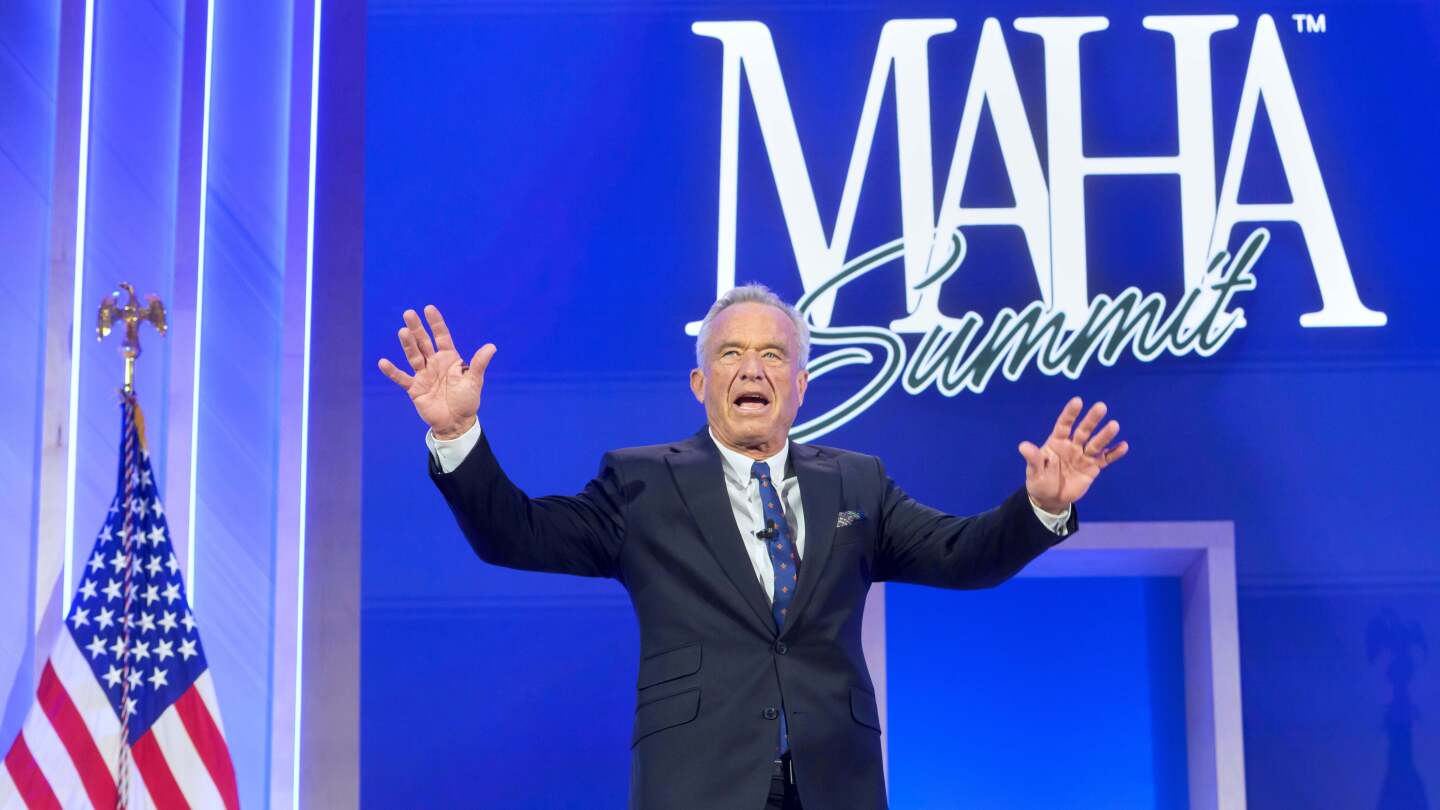
In the first year of President Donald Trump’s second term, the Department of Health and Human Services has undergone dramatic transformation under the leadership of Secretary Robert F. Kennedy Jr., who has rapidly implemented policies aligned with his “Make America Healthy Again” (MAHA) movement.
Since taking office in February, Kennedy has orchestrated a significant restructuring of HHS, eliminating thousands of positions and redirecting billions in research funding. His approach has centered on challenging conventional medical practices while promoting alternative health perspectives on issues ranging from nutrition to vaccines.
The changes have earned praise from MAHA supporters who have long viewed the department with skepticism. Both Republicans and Democrats have expressed support for certain initiatives, particularly those focused on promoting healthy eating habits and securing lower prescription drug prices.
However, medical professionals and public health experts have raised serious concerns about the long-term implications of Kennedy’s policies. Lawrence Gostin, a Georgetown University public health law professor who was removed from a National Institutes of Health advisory board earlier this year, warned that “the United States is going to be hobbled and hollowed out in its scientific leadership.”
HHS spokesperson Andrew Nixon defended the department’s direction, stating, “In 2025, the Department confronted long-standing public health challenges with transparency, courage, and gold-standard science.”
The overhaul comes at a challenging time for America’s healthcare system, with Medicaid cuts approved by Congress and expiring Affordable Care Act subsidies threatening insurance coverage for millions of Americans.
Kennedy’s approach to vaccines has proven particularly controversial. Despite reassurances during his confirmation process, he has taken several actions that alarm public health experts. In May, the CDC announced it would no longer recommend COVID-19 vaccines for healthy children and pregnant women, a decision that experts questioned given the lack of new data supporting such a change.
In June, Kennedy dismissed all 17 members of a CDC vaccine advisory committee, later replacing them with several individuals known for vaccine skepticism. The reconstituted committee has made several decisions that have shocked medical professionals, including declining to recommend COVID-19 vaccines for anyone and reversing longstanding recommendations for hepatitis B vaccination at birth.
Perhaps most controversially, Kennedy directed the CDC in November to abandon its position that vaccines do not cause autism, though he kept the original language on the agency’s website due to a promise made to Republican Senator Bill Cassidy. Kennedy added a disclaimer explaining this compromise while promising comprehensive research into potential environmental factors contributing to autism.
Public health researchers emphasize that decades of rigorous scientific investigation have consistently shown no link between vaccines and autism. During an Oval Office event with President Trump in September, Kennedy promoted unproven connections between Tylenol, vaccines, and autism.
The structural changes at HHS have been equally sweeping. Within two months of taking office, Kennedy announced a plan to eliminate entire agencies, consolidate others, and lay off approximately 10,000 employees—beyond the 10,000 who had already accepted buyouts. While legal challenges have slowed some aspects of this restructuring, thousands of layoffs have proceeded as planned.
Kennedy has also removed key leadership personnel throughout the department, including four NIH directors, the FDA’s former vaccine chief, and even a CDC director he had appointed less than a month earlier. Research funding has seen significant cuts, with billions eliminated from NIH projects and the termination of $500 million in contracts for mRNA vaccine development.
Despite these reductions, Kennedy has directed new funding toward research aligned with MAHA priorities, including studies on autism, Lyme disease, and food additives.
The MAHA initiative has expanded beyond HHS, with other cabinet departments adopting its branding and approach. Defense Secretary Pete Hegseth has joined Kennedy in promoting physical fitness, Transportation Secretary Sean Duffy announced $1 billion for family-friendly airport facilities, and EPA Administrator Lee Zeldin is developing health-related environmental goals.
While MAHA has gained popularity with many Americans, it hasn’t been without controversies. In May, HHS faced criticism after releasing a MAHA report containing citations to nonexistent studies. Critics maintain that when the initiative promotes scientifically unsupported positions—such as vaccine skepticism or raw milk consumption—it potentially endangers public health.
As Kennedy’s first year at HHS draws to a close, the fundamental tension remains between his supporters, who celebrate the disruption of established medical institutions, and healthcare professionals concerned about the undermining of scientific consensus and evidence-based public health policy.
Fact Checker
Verify the accuracy of this article using The Disinformation Commission analysis and real-time sources.

8 Comments
Restructuring HHS and redirecting funding is a bold move. While I appreciate the goal of making America healthier, I hope RFK Jr.’s policies are grounded in sound science and not ideological biases against mainstream medicine.
Well said. Healthy skepticism of the status quo can drive progress, but it’s crucial that changes are evidence-based and don’t undermine core public health functions.
Lowering drug prices and promoting healthy eating are commendable objectives, but I worry that RFK Jr.’s broader agenda could jeopardize important medical advances and protections. Balancing innovation and public health will be a major challenge.
Interesting developments in US health policy under RFK Jr. Curious to see how his focus on alternative medicine and challenging conventional practices plays out. Will be important to balance innovation with public health safeguards.
I agree, navigating this balance will be critical. Promoting healthy habits is positive, but changes to medical research and practices raise valid concerns that need to be carefully considered.
Dramatic restructuring of HHS under RFK Jr. is certainly shaking things up. While some of his initiatives may have merit, I share concerns about the long-term implications for public health. Careful oversight and a commitment to scientific integrity will be essential.
I’m cautiously optimistic about RFK Jr.’s focus on nutrition and preventative care, but removing seasoned experts from advisory roles raises red flags. Hope there’s a transparent process to ensure policies are evidence-based, not ideologically driven.
Well put. Maintaining public trust in health institutions will be crucial, so the decision-making process should be open and inclusive of diverse medical/scientific perspectives.