


Listen to the article
A bipartisan rift has erupted as Democratic governors across the country rally in solidarity after two of their colleagues were excluded from a traditionally bipartisan White House dinner during the National Governors Association’s annual winter gathering.
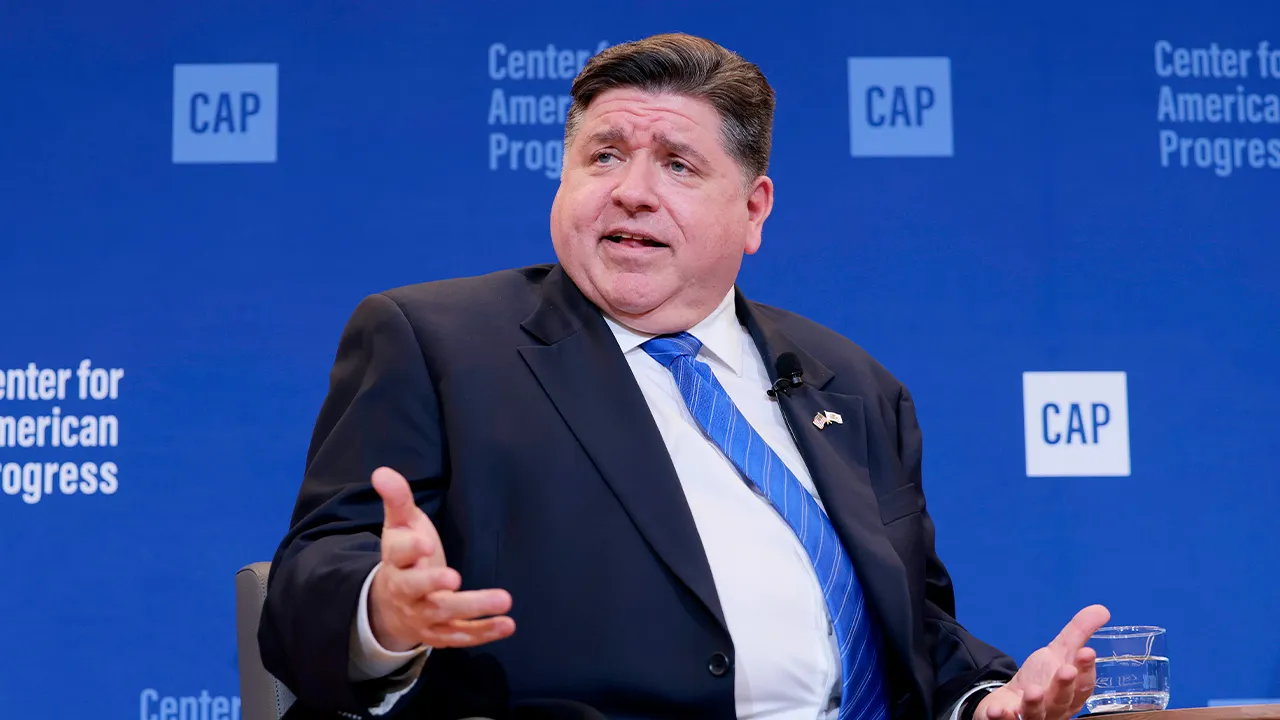
Illinois Governor J.B. Pritzker announced Tuesday he would boycott the White House events scheduled for February 19-21, declaring, “No way will I attend the White House dinner with this President. I’m standing with Gov. Wes Moore and Gov. Jared Polis — and standing against Trump’s corruption and hatred.”
The boycott gained momentum under the leadership of Kentucky Governor Andy Beshear, chair of the Democratic Governors Association, and Michigan Governor Gretchen Whitmer, the association’s vice chair. Other prominent Democrats joining the boycott include California’s Gavin Newsom, Pennsylvania’s Josh Shapiro, and Minnesota’s Tim Walz. Together, 18 governors signed a statement condemning President Trump for creating “chaos and division” by selectively excluding certain state leaders.
The White House has departed from the longstanding tradition of inviting governors from both parties to the annual gathering. A White House official reportedly told Politico that “many Democrats were invited to dinner at the White House” while others were not, suggesting a deliberate selection process rather than a complete partisan exclusion.
This controversy follows a public confrontation between President Trump and Maine’s Democratic Governor Janet Mills during last year’s “Governors Working Session.” Their televised dispute over transgender sports participation sparked weeks of back-and-forth criticism, highlighting tensions between the administration and Democratic state leaders over federal policies.
When asked about the controversy, White House press secretary Karoline Leavitt defended the president’s decision. “It is a dinner at the White House. It’s the people’s house. It’s also the president’s home, and so he can invite whomever he wants to dinners and events here at the White House,” Leavitt stated Tuesday from the briefing room.
Leavitt also noted that Governor Moore had been invited the previous year but did not attend. “Nobody reported on it,” she said, adding that “the president has the discretion to invite whomever he wants to the White House, and he welcomes all those who received an invitation to come and if they don’t want to that’s their loss.”
The exclusion appears particularly significant for Maryland Governor Wes Moore, who suggested racial motivations during an appearance on CNN’s “State of the Union.” Moore, the only Black governor in the country, said it was “not lost” on him that he was being denied attendance at an organization’s event that his fellow Democratic governors have expressed interest in seeing him lead. He also highlighted that he had recently led a delegation of governors to the White House just weeks ago.
The National Governors Association, traditionally a bipartisan forum, has found itself caught in the crossfire. Brandon Tatum, CEO of the association, expressed disappointment with the administration’s decision, while Oklahoma Governor Kevin Stitt, the Republican NGA chairman, informed fellow governors Monday that the association was “no longer serving as the facilitator” for the upcoming event.
In his letter, Stitt emphasized the NGA’s mission to represent all governors—those from the 50 states as well as American Samoa, Guam, the Northern Mariana Islands, Puerto Rico, and the Virgin Islands.
The dispute highlights growing partisan tensions in what has historically been a more collegial gathering of state executives. As the boycott gains traction, it underscores the increasingly polarized political landscape even in forums previously seen as opportunities for cross-party collaboration and policy discussion. The fracture comes at a time when cooperation between federal and state governments is particularly crucial for addressing national challenges.
Fact Checker
Verify the accuracy of this article using The Disinformation Commission analysis and real-time sources.

7 Comments
It’s concerning to see the breakdown of bipartisan cooperation at the highest levels of government. The exclusion of certain governors from the White House dinner is a worrying sign of the growing divide between the parties. I hope that the parties can find a way to set aside their differences and work together for the good of the country.
Boycotting the White House dinner is a bold move by these Democratic governors. It seems they are willing to forgo the traditional bipartisan gathering to take a stand against what they see as unfair and divisive behavior by the President. This reflects the increasingly partisan nature of politics, even at the state level.
The decision by these Democratic governors to boycott the White House dinner is a strong statement of their principles and values. They seem to be willing to sacrifice the opportunity for face-to-face interaction with the President in order to take a stand against what they see as unfair and undemocratic behavior. This highlights the deep ideological divides that exist in American politics today.
This is an interesting development in the tensions between Democratic and Republican state leaders. It seems the White House has broken with tradition by excluding certain governors from the annual dinner. I’m curious to learn more about the reasons behind this decision and how it might impact bipartisan cooperation on key issues.
This is a complex and nuanced situation, with valid arguments on both sides. On the one hand, the White House’s decision to exclude certain governors seems to be a violation of longstanding bipartisan traditions. On the other hand, the governors’ decision to boycott the event is a dramatic and potentially divisive move. I hope that both sides can find a way to move forward in a spirit of cooperation and compromise.
The decision by these Democratic governors to boycott the White House dinner is a bold and principled stance. They are clearly willing to forgo the potential benefits of attending the event in order to make a strong statement against what they see as unfair and undemocratic behavior. It will be interesting to see how this situation unfolds and what impact it has on the broader political landscape.
The decision by these Democratic governors to boycott the White House dinner is a strong statement of solidarity. It reflects the deep divisions and mistrust that have emerged between the parties at the state level. I wonder if this will lead to further escalation or if there are opportunities for compromise and de-escalation.