


Listen to the article
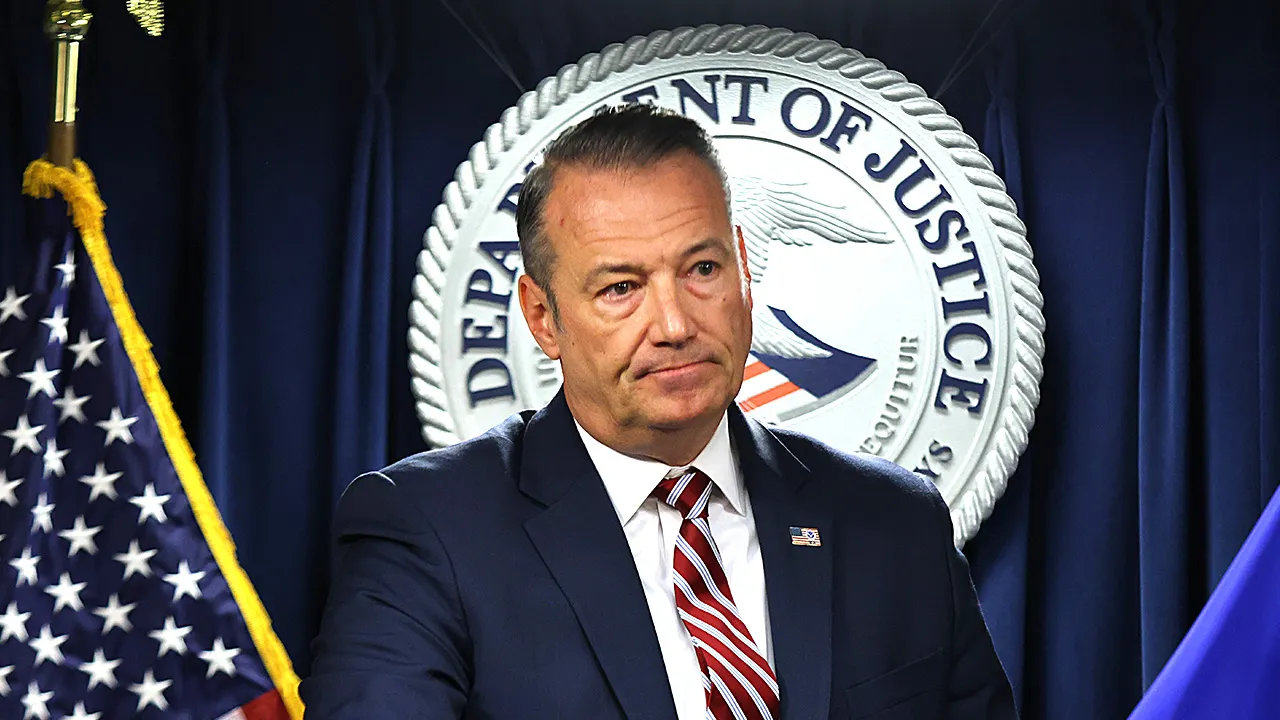
Immigration and Customs Enforcement (ICE) Acting Director Todd Lyons revealed during Senate testimony that approximately 1.6 million illegal immigrants with final deportation orders currently reside in the United States, with half of those individuals having criminal convictions.
Lyons made this disclosure while testifying before the Senate Homeland Security and Governmental Affairs Committee on Thursday, emphasizing that these deportation orders were not issued by ICE or the Department of Homeland Security but rather “through an immigration judge with the Department of Justice separate from Immigration Customs Enforcement.”
During questioning from Senator James Lankford (R-Okla.), Lyons also noted that Minnesota alone has 16,840 individuals with final deportation orders who remain at large in the state. This statistic comes at a time when immigration enforcement operations in Minnesota have faced particular scrutiny.
The revelation provides a concrete measure of the scale of immigration enforcement challenges facing federal authorities. With 800,000 individuals who have both criminal convictions and final deportation orders remaining in the country, the data highlights significant gaps in the enforcement system’s ability to execute deportation decisions.
Senator Lankford used the hearing to express support for immigration enforcement officers, noting that “two years ago, we had 10,000 people a day illegally crossing into the country… not vetted, had no idea who they were.” He added that the Biden administration had estimated that 70,000 “special interest aliens” with connections to terrorism would enter the country in 2024.
“But we had no idea who they were. They were allowed to be able to come into the country two years ago,” Lankford said, contrasting past border policies with current enforcement efforts. “The work that the men and women that work around you have done have stopped that chaos.”
The testimony comes amid intense political debate over immigration enforcement tactics. ICE has faced significant criticism from Democratic lawmakers, particularly following incidents in Minnesota where two activists, Renee Good and Alex Pretti, were killed in altercations with federal officers. These incidents have prompted some Democrats to threaten funding cuts to the Department of Homeland Security unless enforcement approaches change.
Immigration enforcement has become increasingly contentious, with Lankford describing a situation where agents face resistance from protesters “running into churches and disturbing church services” while claiming First Amendment rights. He characterized some protesters as “saying they’re a peaceful protester while they throw rocks at agents.”
The tensions surrounding immigration enforcement reflect broader national divisions on immigration policy. Critics of stricter enforcement argue that aggressive tactics disrupt communities and separate families, while supporters contend that executing deportation orders, particularly for those with criminal records, is essential for public safety.
ICE’s operational challenges are compounded by competing political pressures – balancing humanitarian concerns with enforcement mandates while operating in communities where local governments may be uncooperative with federal immigration authorities.
These revelations come as both major political parties have positioned immigration as a central issue ahead of upcoming elections, with Republicans generally advocating for stricter enforcement and Democrats often calling for more measured approaches that prioritize only those who pose genuine public safety risks.
The presence of 1.6 million individuals with final deportation orders represents one of the most tangible metrics in the ongoing debate about immigration enforcement priorities, resource allocation, and the practical challenges of executing deportation orders in a complex legal and political landscape.
Fact Checker
Verify the accuracy of this article using The Disinformation Commission analysis and real-time sources.

16 Comments
The high number of deportation orders not being enforced is certainly concerning. However, it’s important to understand the full context and complexities before jumping to conclusions. A balanced, evidence-based approach focused on constructive solutions is needed to address this issue effectively.
Well said. Objective analysis and bipartisan collaboration will be crucial to developing sustainable immigration policies that uphold the rule of law while also reflecting American values of fairness and compassion.
The high number of people with deportation orders remaining in the US raises serious concerns. However, the details around their specific situations and the challenges faced by enforcement agencies are crucial to understanding this issue more fully.
Absolutely. Simplistic rhetoric or knee-jerk reactions won’t help here. A thoughtful, bipartisan dialogue focused on practical solutions is needed to address this complex problem.
The scale of the deportation order backlog is concerning, but the details behind these numbers are critical. I hope policymakers and enforcement agencies can work together to address this issue in a constructive, nuanced way that uphold’s America’s values.
Well said. Striking the right balance between effective enforcement and compassionate, pragmatic policies is no easy task. An open, evidence-based process is needed to find workable solutions that reflect the complexity of this challenge.
These statistics highlight the significant challenges facing immigration authorities. While the numbers are stark, I would caution against knee-jerk reactions. Careful analysis of the specific factors involved and a measured, bipartisan approach will be essential to developing effective policies.
Agreed. Simplistic partisan narratives won’t solve this complex issue. Policymakers need to engage in thoughtful, data-driven discussions to find practical, humane solutions that address the root causes and nuances of this challenge.
While the statistics are sobering, I’d caution against drawing broad conclusions. Immigration enforcement is a nuanced issue with many factors at play. Constructive policymaking requires careful analysis and an openness to diverse perspectives.
Well said. Objective, data-driven discussions are crucial when it comes to complex social and political issues like this. Avoiding partisan grandstanding and focusing on practical solutions should be the priority.
Interesting data point on the scale of immigration enforcement challenges. It’s concerning to hear that so many with deportation orders remain in the country, including those with criminal convictions. Curious to learn more about the factors behind this situation and potential solutions.
Agreed, this highlights the need for a more effective and efficient immigration system. Curious to hear policymakers’ perspectives on addressing this complex issue.
This is a complex and sensitive topic. While the numbers are striking, I’d caution against drawing overly simplistic conclusions. There are likely nuanced factors at play that merit careful consideration by immigration experts and policymakers.
Fair point. Immigration policy is inherently challenging, with many competing priorities and perspectives to balance. An objective, evidence-based approach is needed to find constructive solutions.
These numbers certainly highlight the significant challenges facing immigration authorities. However, it’s important to consider the context and complexities involved before rushing to judgment. A balanced, evidence-based approach is needed to address this issue effectively.
Agreed. Sensationalizing the problem or proposing simplistic fixes won’t help. Policymakers should engage in thoughtful, bipartisan dialogue to develop sustainable, humane solutions grounded in data and expertise.