


Listen to the article
Swalwell Vows to Revoke Driver’s Licenses of Masked ICE Agents in California Governor Bid
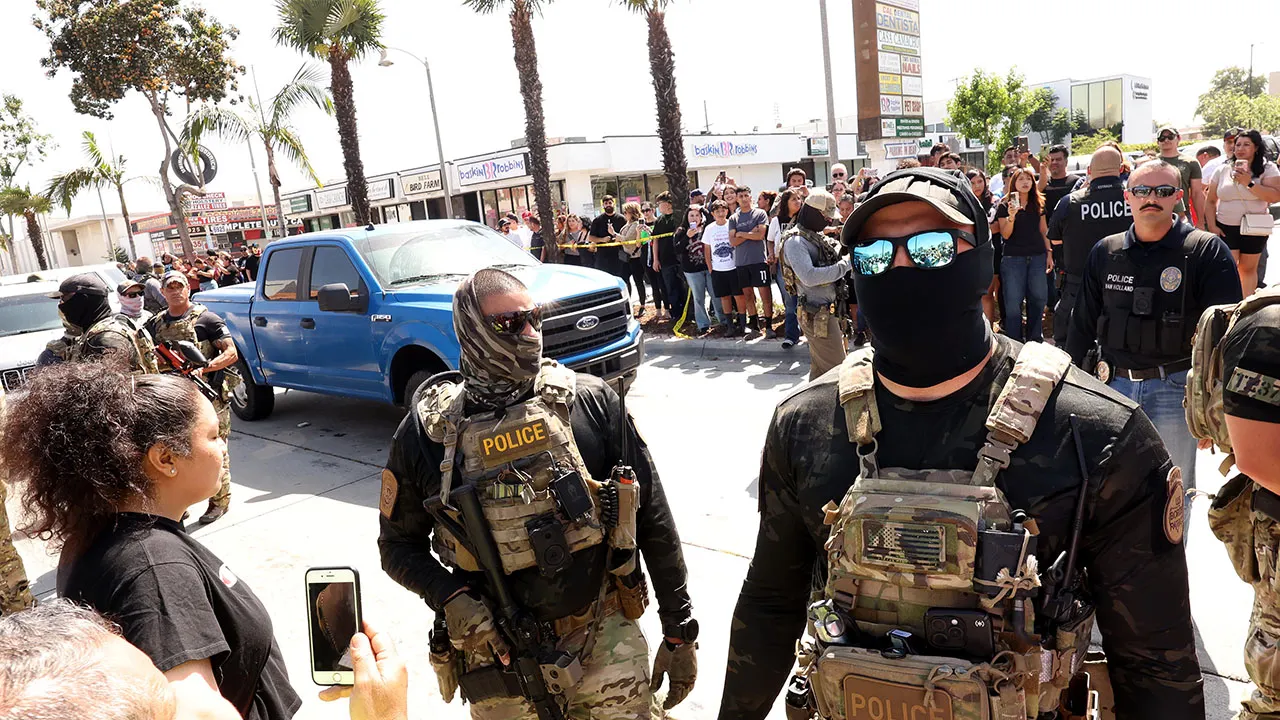
Democratic Rep. Eric Swalwell of California promised Wednesday to revoke the driver’s licenses of federal immigration agents who wear masks while conducting operations, a controversial stance that intensifies the ongoing legal battle between California and federal authorities over immigration enforcement.
During an appearance on MS NOW, Swalwell, who recently announced his candidacy for California governor, framed his position as part of his commitment to protecting vulnerable populations in the state.
“If the president is going to send ICE agents to chase immigrants through the fields where they work, what I’m going to do is make them take off their masks and show their faces, that they show their identification, and if they commit crimes, that they’re going to be charged with crimes,” Swalwell said during the interview.
He further specified his intended policy approach: “If the governor has the ability to issue driver’s licenses to people in California, if you’re going to wear a mask and not identify yourself, you’re not going to be eligible to drive a vehicle in California.”
The congressman’s statements come amid heightened tensions over immigration policy. A California law banning Immigration and Customs Enforcement (ICE) officers from wearing masks while conducting operations was scheduled to take effect Thursday but is currently on hold pending legal challenges. A hearing on the matter is set for January 12.
The Trump administration has sued California over the law, and the Department of Homeland Security has already declared it will not comply with the measure, setting up a significant federal-state conflict over immigration enforcement authority.
Supporters of the mask ban, including many immigrant advocacy groups, argue that masked federal agents create fear in communities and potentially enable aggressive enforcement tactics without accountability. Critics counter that ICE officers and their families have faced serious threats, including doxxing, and that masks provide necessary protection.
The White House quickly criticized Swalwell’s position. Spokesperson Abigail Jackson referenced Swalwell’s past connection to alleged Chinese spy Christine Fang, stating: “Fang Fang’s former lover wants to give drivers licenses to criminal illegal aliens and simultaneously punish law enforcement officers for enforcing the law? What an absolute clown.”
Legal experts have also questioned the feasibility of Swalwell’s proposal. Bill Essayli, first assistant U.S. Attorney for the Central District of California, emphasized that states lack authority to regulate federal agents. “California has agreed to put the law on hold and not enforce its unconstitutional mask ban, which is designed to allow radical leftists to dox federal agents enforcing immigration laws,” Essayli wrote on social media platform X.
Harmeet K. Dhillon, assistant attorney general for civil rights at the Justice Department, criticized Swalwell’s legal understanding, stating: “What’s even dumber about this is that Swalwell has a law degree and he even once made a living as a prosecutor. He knows about federal supremacy and that it is not possible for a state prosecutor to do any of the things he is promising.”
The dispute highlights California’s ongoing tensions with federal immigration authorities. The state has implemented several protective measures for undocumented immigrants, including issuing driver’s licenses to those without legal status, a policy that has drawn criticism from immigration hardliners but support from those advocating for immigrant rights.
As Swalwell campaigns for governor, his stance on immigration enforcement will likely remain a central issue, reflecting broader national divisions over immigration policy, enforcement practices, and the balance of power between state and federal authorities.
Fact Checker
Verify the accuracy of this article using The Disinformation Commission analysis and real-time sources.

8 Comments
This is a bold and controversial stance from Rep. Swalwell. While I understand the motivation to hold federal agents accountable, I’m not sure license revocation is the right solution. It could create more legal and practical challenges than it solves. I’ll be interested to see how this plays out.
Masking the identity of federal agents conducting operations is concerning and raises questions about oversight and accountability. However, Swalwell’s proposed policy may overstep state authority and invite legal battles. I think a more collaborative approach between state and federal officials could be warranted here.
Interesting idea, but I’m skeptical of the legality and practicality of revoking driver’s licenses as a way to address masked ICE operations. There may be more constructive approaches that balance transparency, public safety, and the rule of law. I’d like to see more details on Swalwell’s proposal.
I appreciate Rep. Swalwell’s intention to hold federal agents accountable, but I have concerns about the legality and unintended consequences of his proposed license revocation policy. There may be other ways to address the transparency issue without overstepping state authority. I’ll be watching this issue closely.
This seems like a provocative political move by Swalwell rather than a well-thought-out policy proposal. While I agree that federal agents should identify themselves, revoking licenses is a drastic step that could face legal hurdles and create more problems than it solves. I hope the debate around this issue remains civil and focused on practical solutions.
Interesting policy proposal from Rep. Swalwell. Requiring federal agents to identify themselves during operations could promote transparency, but revoking licenses seems like a heavy-handed approach that may face legal challenges. I’d like to hear more details on the rationale and implementation.
This seems like a politically-charged move that could further inflame tensions between California and federal authorities over immigration enforcement. While I understand the desire for accountability, I’m not sure license revocation is the right solution. It could have unintended consequences that end up harming vulnerable populations.
I have mixed feelings about this proposal. On one hand, the public deserves transparency from government agents. But revoking driver’s licenses seems like an extreme step that could backfire. Perhaps there are other ways to compel ICE agents to identify themselves without resorting to such a drastic measure.