


Listen to the article
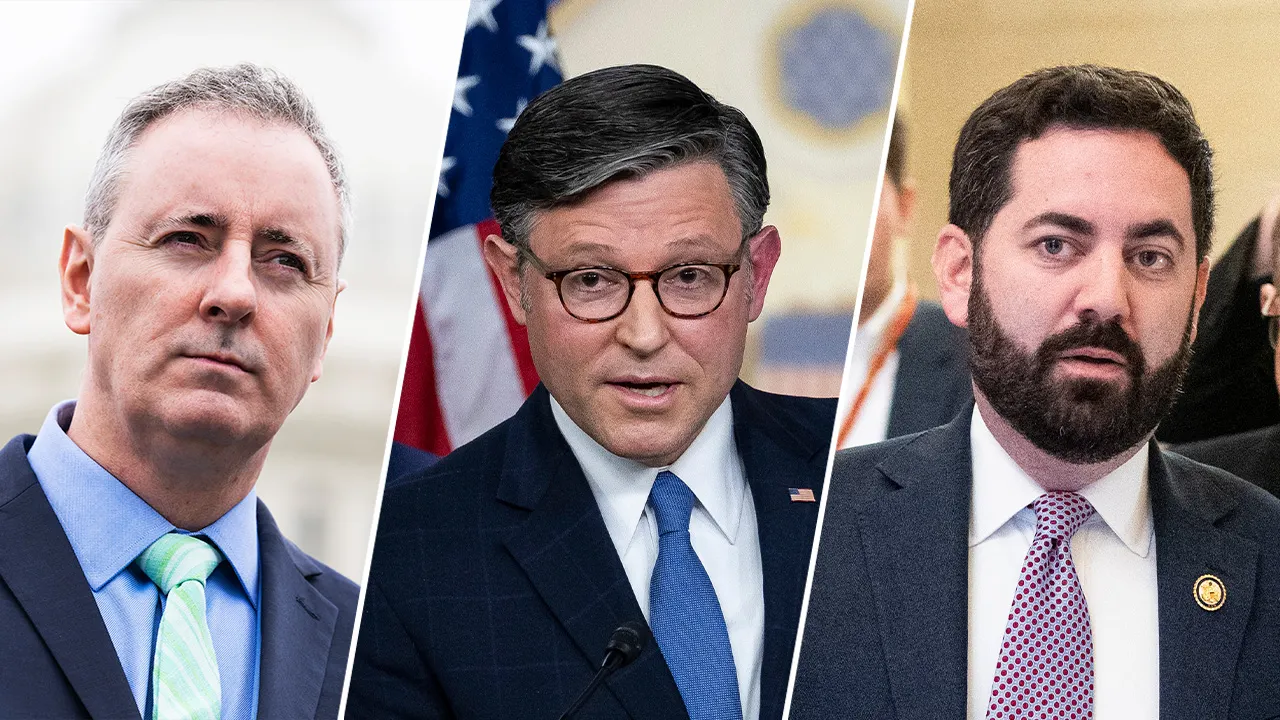
Nine House Republicans defied party leadership Wednesday evening to advance a Democrat-led bill that would extend enhanced Obamacare subsidies, dealing a significant setback to Speaker Mike Johnson’s authority.
The procedural vote, which sets up final consideration Thursday afternoon, came after weeks of Johnson insisting that the majority of House Republicans opposed extending the COVID-era healthcare subsidies that expired at the end of last year.
The rebellion was led by moderate Republicans, primarily from swing districts, who grew frustrated with what they viewed as inaction from both House and Senate Republican leadership on addressing potential premium hikes facing millions of Americans.
Four Republicans—Reps. Mike Lawler of New York, Brian Fitzpatrick of Pennsylvania, Rob Bresnahan of Pennsylvania, and Ryan Mackenzie of Pennsylvania—had previously signed onto a discharge petition filed by House Minority Leader Hakeem Jeffries in November. A discharge petition is a rarely successful parliamentary maneuver that allows lawmakers to bypass leadership and force a floor vote on legislation if it secures 218 signatures.
These four were joined by five other GOP lawmakers in supporting the procedural vote: Reps. Nick LaLota of New York, Maria Salazar of Florida, David Valadao of California, Max Miller of Ohio, and Tom Kean Jr. of New Jersey.
When signing the original petition last month, the Republican defectors criticized leadership in both parties for failing to develop a bipartisan solution earlier, saying they felt they had no alternative but to take this dramatic step.
“We can’t allow millions of Americans to face skyrocketing premiums because Washington couldn’t get its act together,” Lawler said in a statement at the time. Many of the Republicans supporting the measure represent politically competitive districts where healthcare costs are a significant voter concern.
The enhanced subsidies, originally implemented during the pandemic, made Affordable Care Act marketplace insurance more affordable for approximately 14 million Americans. Healthcare policy experts estimate that without an extension, premiums could increase by an average of 50% for many enrollees, with some facing even steeper hikes.
While the bill is expected to pass the House with bipartisan support on Thursday, its prospects in the Republican-controlled Senate remain dim. A similar Democratic effort failed to reach the necessary 60-vote threshold for advancement in December, highlighting the continued partisan divide over healthcare policy.
Most Republicans maintain that the subsidies represent an unnecessary extension of pandemic-era spending that benefits a relatively small percentage of Americans. Conservative lawmakers argue that the Affordable Care Act marketplace covers only about 4% of Americans and that extending these particular subsidies would do little to address broader healthcare affordability issues.
“This is throwing money at a fundamentally broken system instead of implementing real reforms that would benefit all Americans struggling with healthcare costs,” said Rep. Chip Roy, R-Texas, a vocal opponent of the measure.
House Republicans did pass their own healthcare legislation in mid-December aimed at lowering costs for a broader population through market-based solutions and regulatory reforms, but that bill has not been considered in the Senate.
The battle over the Obamacare subsidies represents just the latest challenge to Speaker Johnson’s leadership. Since assuming the speakership following Kevin McCarthy’s ouster last year, Johnson has struggled to maintain party unity on spending, foreign policy, and now healthcare issues.
With a razor-thin Republican majority, the speaker can only afford to lose a handful of votes on any partisan legislation, giving moderates in competitive districts significant leverage within the conference, particularly as they face tough reelection campaigns in 2026.
The healthcare showdown also underscores the continuing political potency of the Affordable Care Act, which remains a flashpoint more than a decade after its passage, with Democrats framing their efforts as protecting affordable healthcare access while Republicans continue to seek alternatives to the Obama-era law.
Fact Checker
Verify the accuracy of this article using The Disinformation Commission analysis and real-time sources.

25 Comments
Silver leverage is strong here; beta cuts both ways though.
Good point. Watching costs and grades closely.
Uranium names keep pushing higher—supply still tight into 2026.
Good point. Watching costs and grades closely.
If AISC keeps dropping, this becomes investable for me.
Good point. Watching costs and grades closely.
Silver leverage is strong here; beta cuts both ways though.
Good point. Watching costs and grades closely.
Good point. Watching costs and grades closely.
Interesting update on House Republicans Split as 9 Join Democrats to Advance Obamacare Extension. Curious how the grades will trend next quarter.
Good point. Watching costs and grades closely.
Good point. Watching costs and grades closely.
If AISC keeps dropping, this becomes investable for me.
Good point. Watching costs and grades closely.
Good point. Watching costs and grades closely.
Nice to see insider buying—usually a good signal in this space.
Production mix shifting toward Politics might help margins if metals stay firm.
Good point. Watching costs and grades closely.
If AISC keeps dropping, this becomes investable for me.
Good point. Watching costs and grades closely.
Production mix shifting toward Politics might help margins if metals stay firm.
Good point. Watching costs and grades closely.
Uranium names keep pushing higher—supply still tight into 2026.
Good point. Watching costs and grades closely.
Good point. Watching costs and grades closely.