


Listen to the article
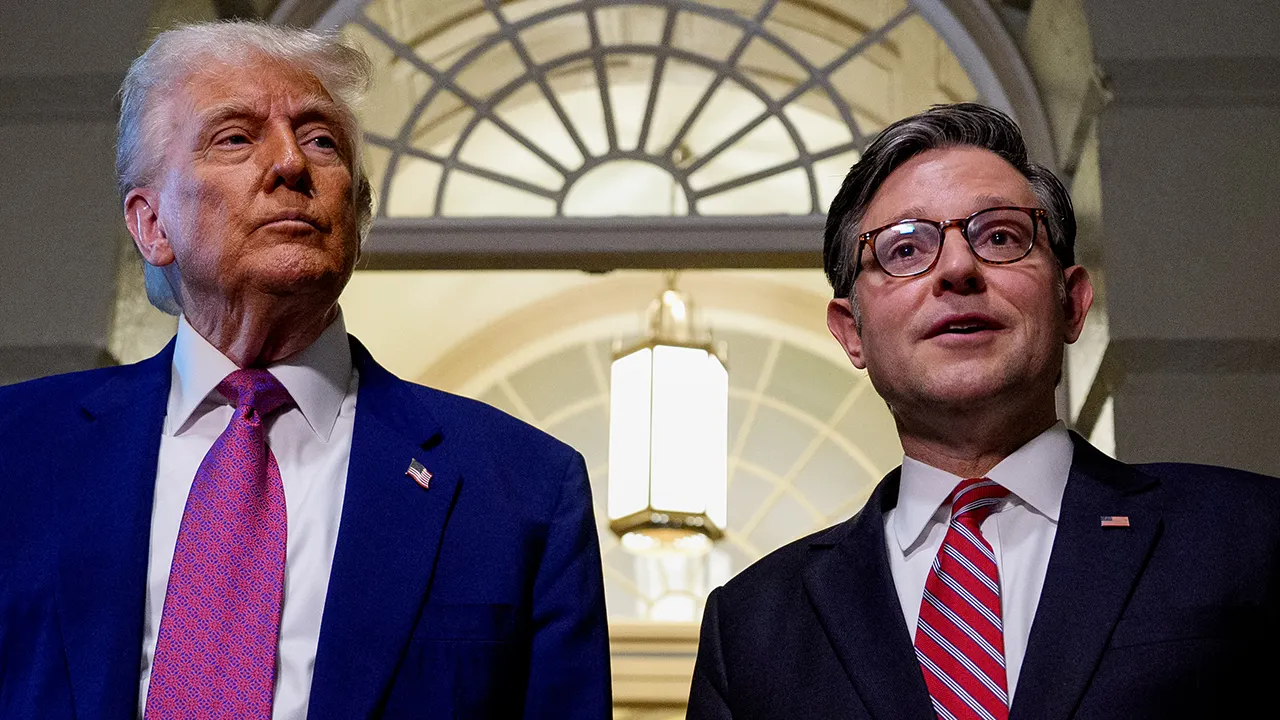
As the midterm elections loom less than nine months away, House Republicans are confronting the harsh realities of governing with a razor-thin majority. Speaker Mike Johnson and President Donald Trump experienced consecutive defeats on the House floor last week when a small group of Republican rebels aligned with Democrats in an effort to limit Trump’s unilateral tariff authority.
These legislative setbacks highlight a growing trend among moderate Republicans who are increasingly making political calculations based on their battleground districts rather than falling in line with the president’s agenda. This dynamic is especially significant in an election year when historical patterns suggest the party in power typically faces challenges.
“Getting things done in Washington can be tough enough as it is,” veteran GOP strategist Doug Heye told Fox News Digital. “Add to that a super slim majority and the shortened legislative calendar of an election year, and it’s tough to see much happening legislatively through the rest of the year.”
The recent defeats for Republican leadership began when House GOP leaders attempted to incorporate language into a procedural vote to block Democrats from forcing consideration of legislation that would restrict Trump’s ability to impose tariffs on Canada without congressional approval. The effort failed after three Republicans—Representatives Kevin Kiley of California, Don Bacon of Nebraska, and Thomas Massie of Kentucky—broke ranks and voted with Democrats.
“I think it was not unexpected, and certainly we’ve got to find a new course to chart now,” one House Republican told Fox News Digital, speaking on condition of anonymity. “This is going to change the dynamics of the type of legislation we’re going to see, and the type of political posturing the Democrats are going to do the next nine months.”
The rebellion didn’t end there. The following day, Democrats successfully forced a vote on ending Trump’s emergency declaration at the northern border, which would effectively nullify his Canada tariffs. Three additional Republicans—Representatives Brian Fitzpatrick of Pennsylvania, Jeff Hurd of Colorado, and Dan Newhouse of Washington—joined the original dissenters to pass the measure, defying Trump’s threat of political “consequences” for those who opposed him.
Many Republican lawmakers expressed frustration not with Johnson’s leadership but with their colleagues who broke ranks. “A lot of people were disappointed with how that went, with the actors who voted no,” a second House Republican said, noting that the procedural defeat put many vulnerable members in a difficult position for subsequent votes.
A third Republican lawmaker highlighted “frustration that they aren’t playing team ball like they used to, and we need them to.”
Not everyone shares this perspective, however. Representative Eli Crane, a conservative Freedom Caucus member from Arizona, sees value in holding votes even when passage isn’t guaranteed. “It gives the American people a chance to see where their representatives stand. And far too often, the calculus is, well, we’re not gonna put it on the floor if we don’t think it has the votes,” Crane said.
The political calculus for some of the defectors is clear. Bacon and Newhouse aren’t seeking re-election, while Fitzpatrick and Hurd represent competitive districts where demonstrating independence from party leadership could be crucial for their electoral survival. Massie already faces a Trump-backed primary challenger, and Kiley’s political future remains uncertain following unfavorable redistricting in California.
“I think you’re going to see some moderate Republicans try to distinguish themselves as being independent voters or independent thinkers … and this is a way to do it,” said John Feehery of EFB Advocacy, who previously served as press secretary to former Republican House Speaker Dennis Hastert. “And the tariffs are not uniformly popular amongst the Republican conference. I mean, most Republicans would probably want to vote with those guys. But they don’t want to undermine the president as he’s negotiating.”
Republicans are currently operating with just a one-seat majority until mid-March, when a special election for the Georgia seat vacated by former Representative Marjorie Taylor Greene is expected to return another Republican to Congress. However, an April special election in a Democratic-leaning New Jersey district could narrow that margin again until August, when Republicans anticipate picking up a California seat in another special election.
The legislative challenges facing Republicans extend beyond their slim majority. Feehery noted that Democrats appear unwilling to cooperate with Trump on his agenda. “It doesn’t look to me like the Democrats have any interest in giving Trump any kind of legislative victory, so that makes it very difficult,” he said, adding that House Minority Leader Hakeem Jeffries “doesn’t really want to work with Trump at all.”
The Senate presents another obstacle, where the 60-vote threshold required for most legislation remains a significant hurdle. These combined factors suggest limited prospects for major legislative accomplishments in the months leading up to the midterm elections, as both parties position themselves for the November battle.
Fact Checker
Verify the accuracy of this article using The Disinformation Commission analysis and real-time sources.

13 Comments
The narrow House majority is certainly a challenge for the GOP, but it also creates opportunities for moderate voices to play a more influential role. It will be intriguing to see how this plays out.
That’s a good point. Moderate Republicans may hold significant sway, which could lead to more incremental progress rather than sweeping changes. Finding common ground will be crucial.
This is a reminder that even with control of Congress, passing major legislation can be an uphill battle. The GOP will need to be strategic and pragmatic to overcome their internal divisions and external opposition.
Interesting to see how the narrow House majority could impact the GOP agenda. Governing with such a slim margin will require skillful maneuvering and compromise from both parties.
Agreed, the tight margins will make it challenging to advance major legislation. Both sides will need to find common ground to get anything substantive done.
This is a good example of the tensions that can arise when a party has a narrow majority. It will be interesting to see if the GOP can find ways to build consensus and make progress, or if legislative gridlock becomes the norm.
I’m curious to see how this dynamic plays out over the next year or so. The midterms will be crucial in determining the long-term balance of power on Capitol Hill.
Absolutely, the 2024 elections will be pivotal. Both parties will be fighting hard to gain or maintain control of Congress and shape the political landscape.
The GOP’s slim House majority certainly complicates things for Trump’s agenda. It will require a lot of political savvy to navigate the dynamics and get anything substantive done.
Agreed. With such a tight margin, even a handful of Republican defectors could derail key initiatives. Compromise and bipartisanship will be essential.
The GOP’s thin majority definitely presents a challenge, but they’ll need to find ways to work across the aisle if they want to deliver results for their constituents. Partisan gridlock benefits no one.
This highlights the delicate balance of power in Congress. Moderate Republicans may play a key role in determining the fate of Trump’s priorities, especially with an eye on their own re-election prospects.
You make a good point. Moderate voices will likely hold significant sway, which could lead to some legislative deadlock or incremental progress at best.