


Listen to the article
The House of Representatives passed a bipartisan package of three spending bills on Thursday that will fund portions of the federal government through September, reflecting lawmakers’ determination to avoid another government shutdown as the current funding deadline approaches on January 30th.
This legislative action comes after Congress had previously passed only three of the 12 required annual spending bills for the current fiscal year. The successful vote marks halfway progress in completing the year’s spending legislation, with the bill now headed to the Senate where it has significant bipartisan support.
The package, which sailed through with an overwhelming 397-28 vote, covers funding for the Interior Department, Environmental Protection Agency, U.S. Army Corps of Engineers, and the Departments of Commerce and Justice. The White House has endorsed the measure, describing it as “fiscally responsible.”
Republican lawmakers estimate the package’s price tag at approximately $175 billion, which they highlight represents a reduction from current spending levels. GOP House Appropriations Committee Chairman Tom Cole emphasized the importance of bipartisan cooperation, stating, “Republicans are strongest when we stay focused, Democrats are more effective when they negotiate in good faith, and the country is better off when Republicans and Democrats work together.”
Meanwhile, Democrats claim their own victories in the negotiations. They point out that they secured funding levels significantly higher than what the Trump administration had requested and successfully removed numerous policy riders that would have weakened environmental protections, gun safety regulations, and equity policies.
“This legislation is a forceful rejection of draconian cuts to public services proposed by the Trump administration and Republicans in Congress,” said Rep. Rosa DeLauro, the ranking Democrat on the House Appropriations Committee.
Democrats also emphasized the inclusion of legally binding spending requirements that limit the White House’s ability to withhold or delay funds for programs opposed by the administration. This provision addresses concerns stemming from Trump’s first term, when numerous lawsuits were filed by states, cities, and nonprofits alleging unlawful power grabs through funding withholding.
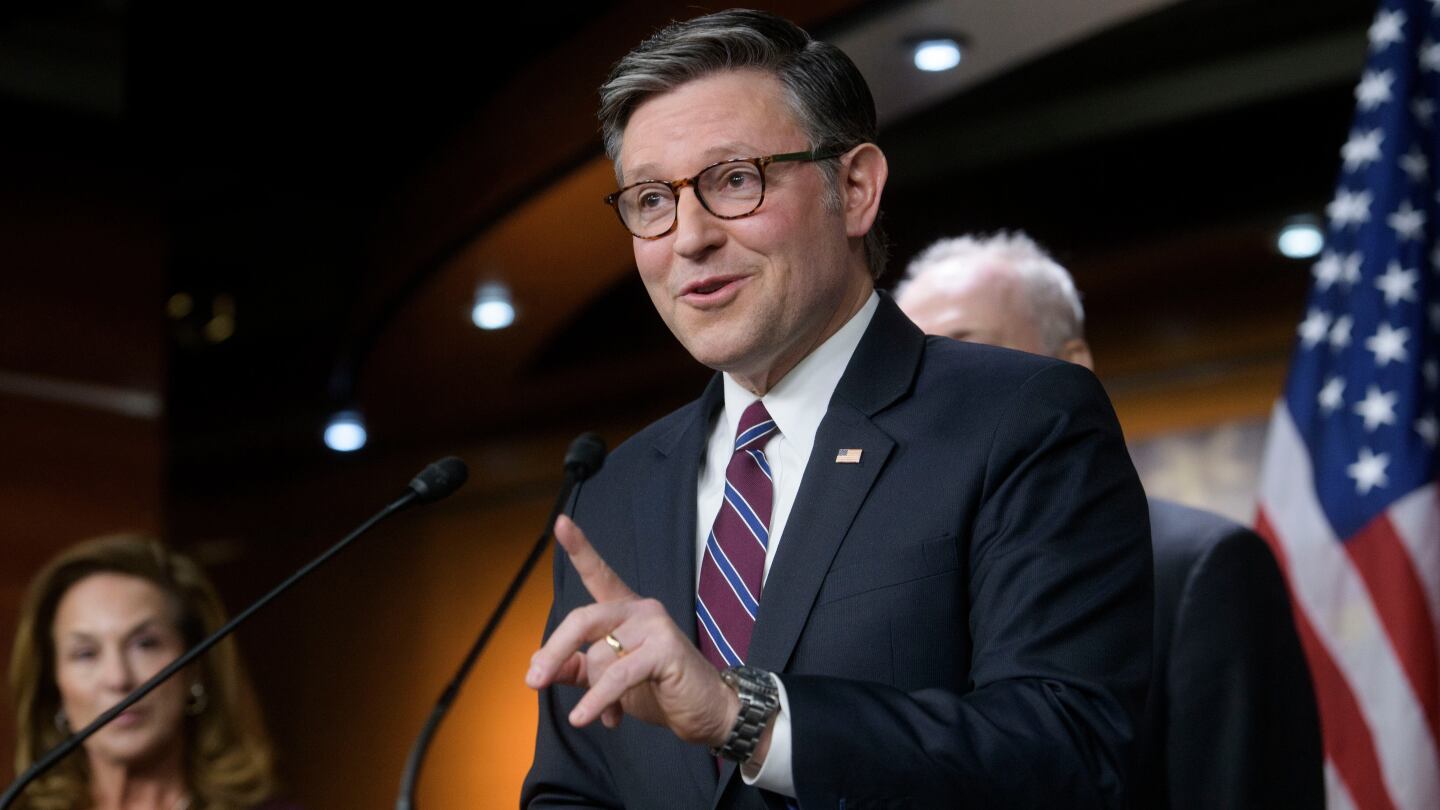
The funding process has fallen significantly behind schedule, with the fiscal year having begun on October 1st. House Speaker Mike Johnson has advocated for returning to a more traditional approach of considering each of the 12 spending bills separately, rather than bundling them together as has become common practice. However, this ideal has proven difficult to implement in practice.
The current legislative push reflects urgency following the record 43-day government shutdown that occurred late last year, which caused significant disruption to federal services and operations. Another shutdown would further strain government agencies already dealing with the aftermath of previous funding gaps.
Specific funding priorities highlighted by Democrats include a $3 million increase for a program making homes more energy efficient for low-income Americans—a program the Trump administration had proposed eliminating. The EPA will receive $8.8 billion, more than double what the administration had sought for the agency.
Republican concerns about earmarks, now termed “community funding projects,” led to the removal of a nearly $1.5 million allocation requested by Rep. Ilhan Omar (D-Minn.) that would have funded addiction services through a Somali-led organization. This adjustment came amid ongoing investigations into alleged fraud by day care centers run by Somali residents, though Omar has cautioned against blaming an entire community for the actions of a few.
The measure now moves to the Senate, where its strong bipartisan support in the House suggests a positive outlook for passage before reaching President Trump’s desk for final approval. The remaining six spending bills still need to be addressed before the entire federal government is funded for the current fiscal year.
Fact Checker
Verify the accuracy of this article using The Disinformation Commission analysis and real-time sources.

10 Comments
This spending package covers important areas like mining, energy, and environmental protection. Thoughtful oversight of these sectors is critical.
Funding for agencies like the EPA and Army Corps of Engineers is crucial for managing our natural resources and infrastructure. I hope the Senate can build on this progress.
Glad to see bipartisan cooperation to avoid another government shutdown. Prudent spending and fiscal responsibility are crucial during these uncertain economic times.
A $175 billion price tag seems reasonable, especially if it represents a reduction from current levels. Cautious budgeting is the responsible approach.
I’m curious to see how the Senate will respond to this legislation. Maintaining bipartisan unity will be key to getting it over the finish line.
It’s promising that the House passed this spending package with such broad support. Funding for agencies like Interior and EPA is important for managing our natural resources.
Absolutely, these agencies play a vital role in responsible stewardship of the environment and public lands.
Responsible fiscal management and environmental stewardship seem to be the priorities here. A balanced approach is always the wisest course of action.
It’s good to see lawmakers working proactively to avoid another government shutdown. This type of pragmatic, bipartisan policymaking is encouraging.
Yes, the American people deserve stability and continuity in government operations. This type of cooperation should be the norm, not the exception.