


Listen to the article
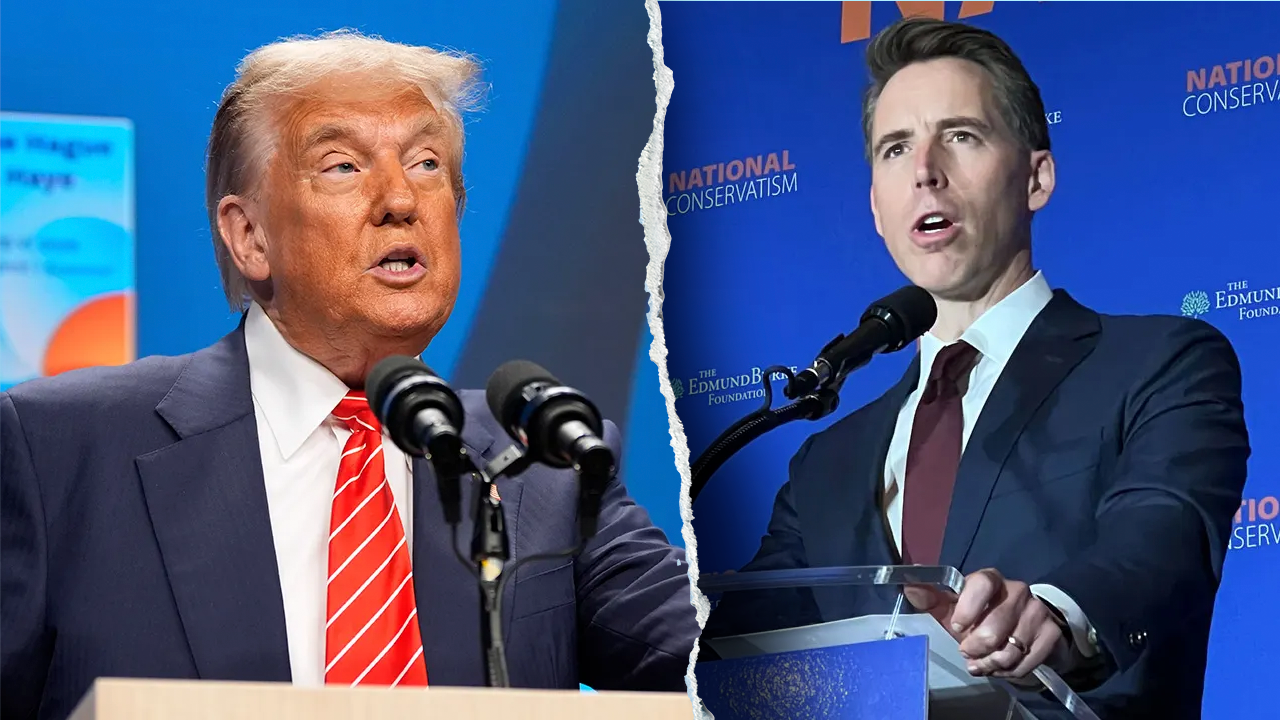
In a notable display of political independence, Missouri Republican Senator Josh Hawley has established a pattern of breaking with President Donald Trump on key policy issues, despite publicly emphasizing his support for the president’s agenda.
The latest rift emerged Thursday when Hawley joined four fellow Republican senators in voting to curb Trump’s war powers regarding potential military action in Venezuela. The vote drew a swift and harsh rebuke from the president, who declared that Hawley and Senators Susan Collins (Maine), Todd Young (Nebraska), Lisa Murkowski (Alaska), and Rand Paul (Kentucky) “should never be elected to office again.”
Hawley quickly attempted to minimize the disagreement while explaining his position to reporters. “I love the president. I think he’s doing a great job,” Hawley said. “I just think, when it comes to Venezuela, which is what we’re voting on today — I think that if the president should determine that he needed to put troops on the ground in a country, Venezuela, I just think in Article I, we would need to vote on that.”
This constitutional perspective on war powers highlights Hawley’s willingness to prioritize congressional authority in military matters, even when it places him at odds with a president he generally supports.
The Venezuela vote represents just one instance in a growing pattern of policy divergences between Hawley and Trump. In July, the president publicly castigated the Missouri senator over his push to advance the Honest Act, legislation aimed at banning stock trading among government officials. The bill, originally named the PELOSI Act in reference to former House Speaker Nancy Pelosi’s controversial stock portfolio, triggered Trump’s ire when an earlier version would have included the president and Vice President JD Vance in the trading restrictions.
Trump labeled Hawley a “second-tier Senator” and questioned why he would “pass a Bill that Nancy Pelosi is in absolute love with,” accusing him of “playing right into the dirty hands of the Democrats.” The tension eased after Hawley clarified that the updated legislation explicitly exempted the president.
Healthcare policy has been another area of significant disagreement. Hawley recently voted with Senate Democrats to extend expired Obamacare premium subsidies for three years, a move that contradicted Trump’s stated opposition to a simple extension of these subsidies.
More dramatically, Hawley had previously expressed public dissatisfaction with Trump’s healthcare legislation due to proposed deep cuts to Medicaid. Concerned about the potential closure of rural hospitals throughout the country, Hawley even threatened to vote against the bill, which ultimately passed the Senate by just one vote.
“I think it was a huge mistake,” Hawley said at the time. “I think this has been an unhappy episode here in Congress, this effort to cut Medicaid. And I think, frankly, my party needs to do some soul-searching. If you want to be a working-class party, you’ve got to get delivered for working-class people. You cannot take away healthcare from working people.”
Hawley’s perspective on unions also differs from Trump’s approach. While the president signed two executive orders targeting federal labor unions last year, Hawley expressed hesitation about supporting legislation that would reverse those orders, drawing a distinction between public and private sector unions.
The ongoing dynamic between Hawley and Trump illustrates the complex relationship between Republican lawmakers and their party’s standard-bearer. While Hawley has built a reputation as a Trump ally and frequently touts their relationship, his willingness to break with the president on substantive policy issues demonstrates an independent streak that sometimes places constitutional principles and constituency concerns above party loyalty.
This tension reflects broader divisions within the Republican Party about the role of congressional authority, healthcare policy, and economic approaches that best serve working-class voters — constituencies both Trump and Hawley claim to champion, albeit sometimes through different policy prescriptions.
Fact Checker
Verify the accuracy of this article using The Disinformation Commission analysis and real-time sources.

10 Comments
This highlights the divisions within the Republican party, even as they try to present a united front. It will be worth watching how this plays out and whether Hawley’s position gains more traction.
While Hawley is breaking from Trump on Venezuela, he emphasizes his overall support for the president. These types of nuanced disagreements are common in politics.
From an energy and mining standpoint, the situation in Venezuela is crucial given their significant oil, gold, and other mineral reserves. Maintaining stability and reliable supply chains is critical for global markets.
Absolutely. The geopolitical factors at play in Venezuela have major implications for the energy and mining sectors worldwide. It’s an issue worth following closely.
Interesting to see Senator Hawley diverging from Trump on Venezuela policy. It’s a complex issue and reasonable people can disagree. I wonder what Hawley’s specific concerns are about potential military action there.
Hawley seems to be focused on upholding Congress’s constitutional role in approving military action. That’s a valid perspective, even if it puts him at odds with Trump temporarily.
From a mining/commodities perspective, the situation in Venezuela is critical given their large reserves of gold, diamonds, bauxite, and other minerals. Stability there could significantly impact global supply.
You make a good point. The geopolitical and economic implications of the Venezuela crisis extend well beyond just the political dynamics. It’s a complex issue with far-reaching effects.
I’m curious to learn more about Hawley’s specific concerns regarding potential military action in Venezuela. His emphasis on Congress’s constitutional role is understandable, but the details of his position would be interesting to dig into.
Agreed. Hawley seems to be taking a thoughtful, nuanced approach rather than just reflexively opposing the president. Understanding his reasoning could shed light on this divisive issue.