


Listen to the article
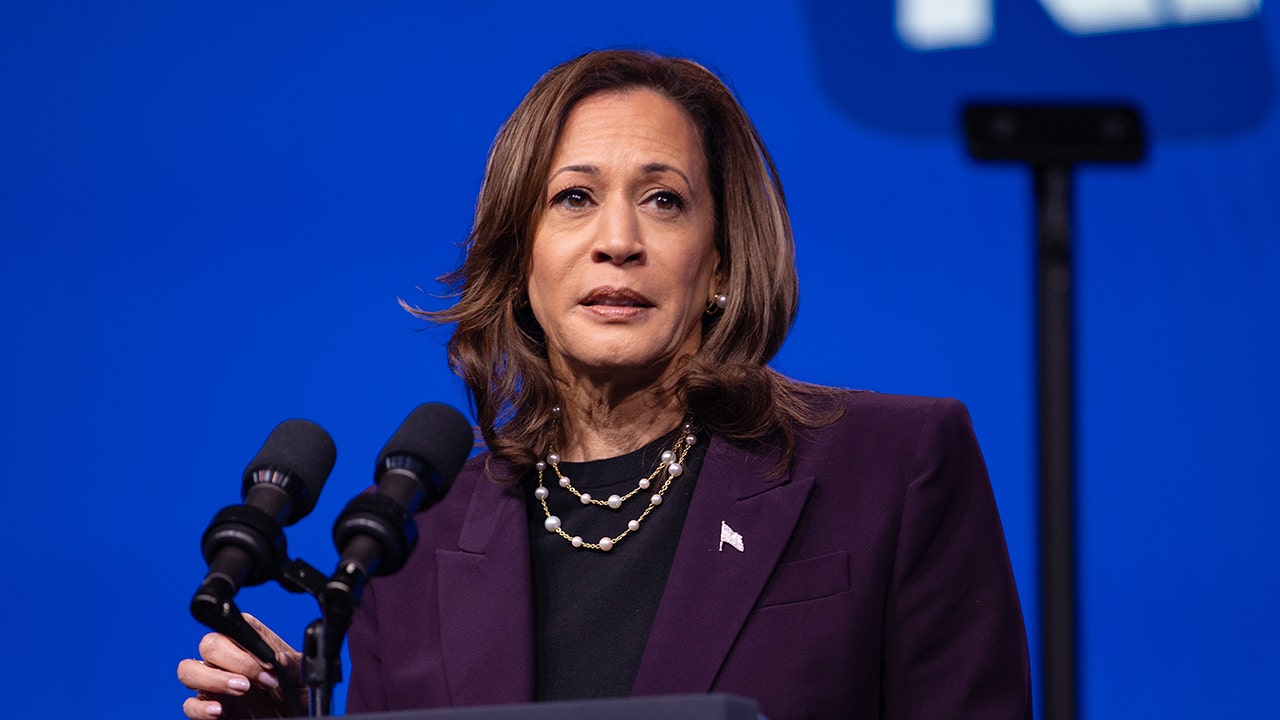
Former Vice President Kamala Harris launched a sharp critique of the Trump administration’s recent capture of Venezuelan dictator Nicolás Maduro, describing the operation as both “unlawful” and “unwise” despite acknowledging Maduro’s brutal regime.
In a detailed statement posted on social media platform X, Harris acknowledged Maduro as a “brutal” and “illegitimate” dictator but argued that President Donald Trump’s actions in Venezuela “do not make America safer, stronger, or more affordable.” She warned that this intervention follows a familiar and concerning pattern.
“We’ve seen this movie before,” Harris stated. “Wars for regime change or oil that are sold as strength but turn into chaos, and American families pay the price.”
The operation, code-named “Operation Absolute Resolve,” resulted in the capture of Maduro and his wife, who were transported out of Venezuela by U.S. forces. By late Saturday, the Venezuelan leader had arrived at the Metropolitan Detention Center in Brooklyn after being processed at the DEA facility in Manhattan.
Harris’s criticism comes amid significant geopolitical implications for the region and U.S. foreign policy. Venezuela, once among Latin America’s wealthiest nations, has experienced economic collapse under Maduro’s leadership, resulting in one of the world’s largest refugee crises with over 7 million Venezuelans fleeing the country since 2014.
The former vice president specifically questioned the administration’s motives, suggesting oil interests rather than humanitarian or security concerns drove the intervention. “The American people do not want this, and they are tired of being lied to,” Harris asserted. “This is not about drugs or democracy. It is about oil and Donald Trump’s desire to play the regional strongman.”
Venezuela possesses the world’s largest proven oil reserves, a fact that has kept the country at the center of international geopolitical interest despite its economic deterioration. U.S. policy toward Venezuela has fluctuated over various administrations, with sanctions being a primary tool to pressure Maduro’s government.
Harris, who analysts view as a potential Democratic presidential contender in 2028, further accused Trump of endangering American troops and destabilizing the region without proper legal authority or a clear exit strategy. “The President is putting troops at risk, spending billions, destabilizing a region, and offering no legal authority, no exit plan, and no benefit at home,” she said.
The capture has elicited varied reactions across the political spectrum and within Venezuelan exile communities worldwide, where many celebrated Maduro’s apprehension. Images shared by Trump showed the captured Venezuelan president aboard the USS Iwo Jima following the operation.
Trump stated earlier Saturday that the U.S. government would “run” Venezuela “until such time as we can do a safe, proper and judicious transition.” This announcement raises significant questions about sovereignty and the future governance of the South American nation.
The intervention represents a dramatic escalation in U.S. policy toward Venezuela, which has previously focused on diplomatic pressure and economic sanctions. International law experts are likely to scrutinize the legality of the operation in coming days, particularly regarding sovereignty principles.
Regional stability now faces new challenges as neighboring countries assess the implications of this direct U.S. military action and its potential to trigger broader instability or conflict in South America, a region with a complex history of U.S. interventions.
As developments continue to unfold, questions remain about the long-term strategy for Venezuela’s governance and the international community’s response to this unprecedented action by the Trump administration.
Fact Checker
Verify the accuracy of this article using The Disinformation Commission analysis and real-time sources.

31 Comments
Exploration results look promising, but permitting will be the key risk.
Good point. Watching costs and grades closely.
Good point. Watching costs and grades closely.
The cost guidance is better than expected. If they deliver, the stock could rerate.
Good point. Watching costs and grades closely.
Good point. Watching costs and grades closely.
The cost guidance is better than expected. If they deliver, the stock could rerate.
Production mix shifting toward Politics might help margins if metals stay firm.
Good point. Watching costs and grades closely.
Good point. Watching costs and grades closely.
Nice to see insider buying—usually a good signal in this space.
Good point. Watching costs and grades closely.
Good point. Watching costs and grades closely.
Interesting update on Harris Criticizes Trump Administration’s Maduro Capture as ‘Unlawful and Unwise’. Curious how the grades will trend next quarter.
Nice to see insider buying—usually a good signal in this space.
Good point. Watching costs and grades closely.
Good point. Watching costs and grades closely.
If AISC keeps dropping, this becomes investable for me.
Good point. Watching costs and grades closely.
Good point. Watching costs and grades closely.
The cost guidance is better than expected. If they deliver, the stock could rerate.
Good point. Watching costs and grades closely.
Good point. Watching costs and grades closely.
Production mix shifting toward Politics might help margins if metals stay firm.
Good point. Watching costs and grades closely.
Exploration results look promising, but permitting will be the key risk.
Good point. Watching costs and grades closely.
Good point. Watching costs and grades closely.
I like the balance sheet here—less leverage than peers.
Good point. Watching costs and grades closely.
Uranium names keep pushing higher—supply still tight into 2026.