


Listen to the article
House Democrats Avoid Committing to Harris for 2028 Presidential Run
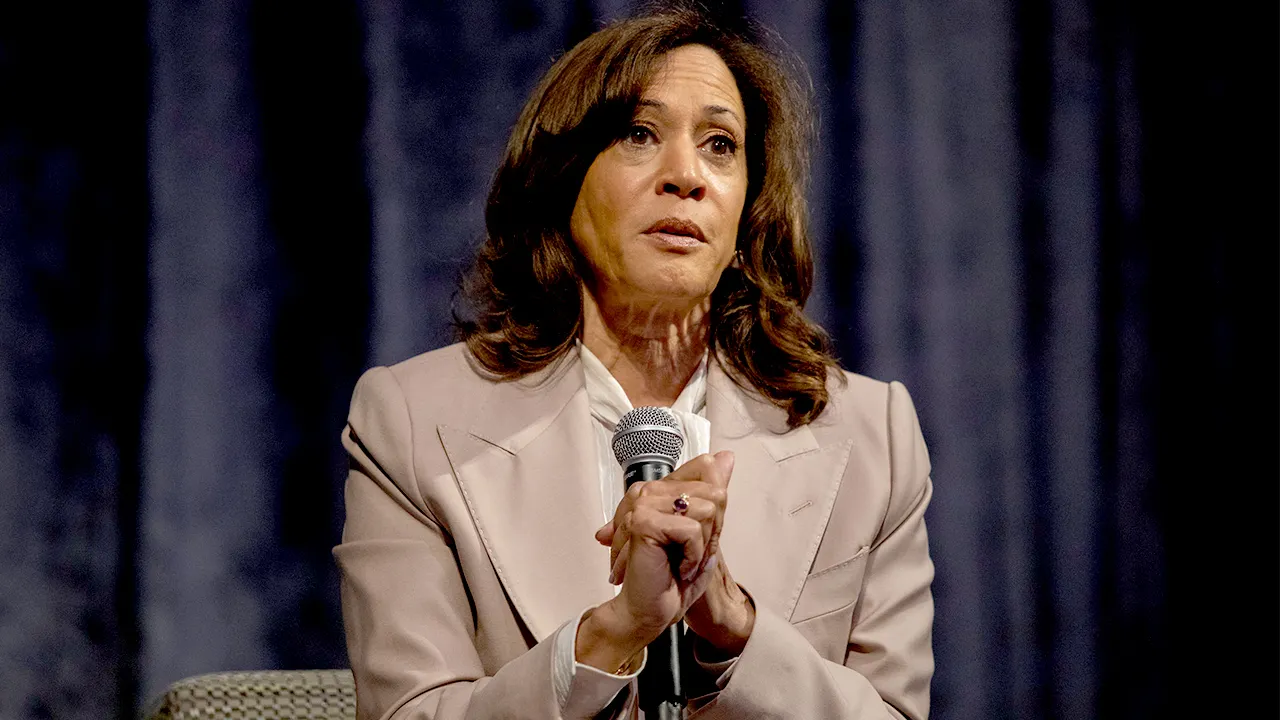
House Democrats are remaining noncommittal about whether former Vice President Kamala Harris should pursue another presidential bid in 2028, signaling uncertainty within the party about its future leadership.
When asked about Harris’s potential candidacy, Rep. Jim Clyburn of South Carolina, the former House majority whip, told Fox News Digital simply, “I have no idea.” Rep. Dan Goldman of New York deflected the question by saying, “I have no idea who’s running, and we’ll focus on 2028 after 2026,” referring to the upcoming midterm elections.
The reluctance to back Harris comes in the wake of Democrats’ crushing defeat in the 2024 election, where Republicans secured control of the White House, Senate, and House of Representatives. Harris failed to outperform former President Joe Biden’s 2020 numbers in any U.S. county, raising questions about her viability as the party’s standard-bearer.
Rep. Judy Chu of California similarly avoided endorsing a Harris run, stating, “I won’t comment until I know whether she really actually is or not.”
Harris has kept her political options open. Last July, she announced she would not run for governor of California, a decision some political observers interpreted as leaving the door open for another presidential campaign. “In recent months, I have given serious thought to asking the people of California for the privilege to serve as their Governor,” Harris said in a statement. “I love this state, its people and its promise. It is my home. However, after careful reflection, I’ve decided not to run for Governor in this election.”
The Democrats’ 2028 field is expected to be crowded with prominent figures. California Governor Gavin Newsom, Pennsylvania Governor Josh Shapiro, and Michigan Governor Gretchen Whitmer are frequently mentioned as potential candidates. All three have established national profiles, particularly through their opposition to President Donald Trump’s policies.
Rep. John Larson of Connecticut emphasized the importance of an open primary process. “I think that’s her decision,” Larson said of Harris running again. “But I believe there should be a wide-open Democratic primary, and I think there’ll be a lot of contenders; you know, governors, senators. But I also think people outside of government will be interested in running too.”
Larson added that a competitive primary would be “a healthy experience, and that anyone who’s interested ought to run,” though he declined to name specific candidates he might support.
The Democrats’ hesitation to rally behind Harris reflects broader questions about the party’s direction following its 2024 losses. Political analysts suggest the party may need to reassess its messaging and candidate selection process to reconnect with voters who drifted to Republicans.
Despite the overall reluctance to commit, Rep. Glenn Ivey of Maryland offered a more positive assessment of Harris’s prospects. “I think there’s definitely a lot of support still out there for her. And she seemed real sharp on the issues still. So, we’ll see how it goes. But there’s gonna be a lot of people jumping in that one,” Ivey said.
As Democrats look toward rebuilding their electoral coalition, the question of leadership remains open. The party faces the challenge of developing a message and selecting candidates who can effectively counter Republican momentum while addressing the concerns of an increasingly diverse electorate. Whether Harris will be at the forefront of that effort remains one of the central questions in Democratic politics.
Fact Checker
Verify the accuracy of this article using The Disinformation Commission analysis and real-time sources.

5 Comments
The reluctance to back Harris for 2028 is quite telling. Democrats will need to carefully evaluate their options and prioritize the interests of the party and the country. A thoughtful, inclusive approach to selecting their next presidential candidate will be crucial.
It’s interesting to see the uncertainty within the Democratic party about Kamala Harris’s potential 2028 run. Her failure to outperform Biden in 2024 is certainly a concern, and it will be important for the party to consider all viable options as they look to the future.
While it’s understandable that Democrats are hesitant to endorse Harris for 2028 this early on, I’m curious to see how her political prospects evolve in the coming years. Her performance and the party’s overall strategy will be key factors in determining their future direction.
Interesting to see the uncertainty within the Democratic party about Kamala Harris’s political future. It will be important for them to carefully consider their best path forward as they prepare for 2028. Thoughtful leadership choices are crucial for the party’s success.
The 2024 election results seem to have raised questions about Harris’s viability as a potential presidential candidate. It’s wise for Democrats to avoid premature commitments and instead focus on the upcoming 2026 midterms to get a better sense of the political landscape.