


Listen to the article
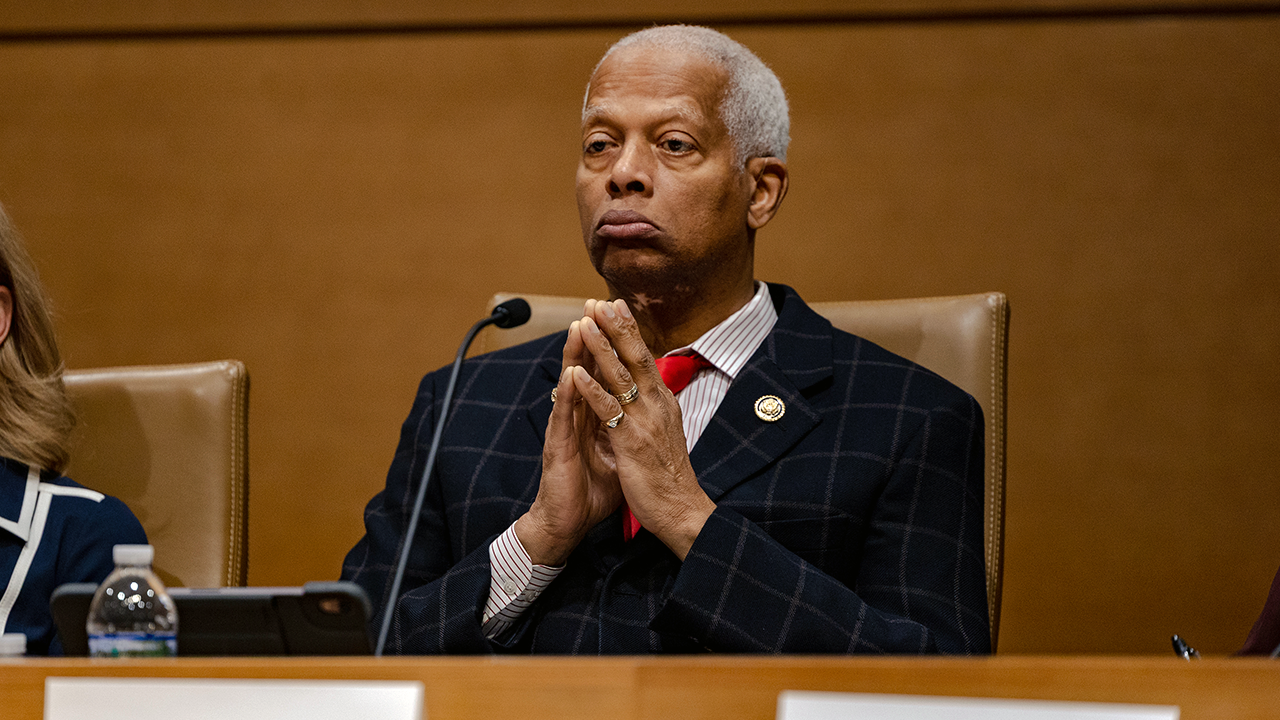
A heated exchange erupted at a congressional hearing Thursday when Democratic Rep. Hank Johnson of Georgia drew fierce criticism from grieving families and Republican colleagues after he appeared to downplay the tragedies of crime victims while redirecting the discussion to political attacks on “MAGA Republicans.”
The House Judiciary Committee hearing, titled “The Human Toll of Sanctuary Policies,” featured testimony from mothers whose children were killed or injured in incidents allegedly involving undocumented immigrants. The session quickly descended into partisan confrontation after Johnson’s remarks.
After offering brief condolences to the victims’ families, Johnson claimed their testimonies were a “Steve Miller-approved” political stunt designed to “stir up passion and prejudice against immigrants who are people of color.” He argued that the committee should instead focus on what he called the “human toll” of other issues, including “Trump MAGA tax cuts,” Trump’s Iran policy, or “the cover-up of the Epstein files.”
Johnson proceeded to list violent crimes committed by white men and referenced the death of Renee Good, who was killed during an immigration enforcement protest in January. “I’m not minimizing the tragedy that is before us today with you three women, but the other tragedies at the hands of non-immigrants are just as important,” Johnson said.
The congressman further accused Republicans of strategically placing a Democratic witness between family members of victims for “dramatic effect” during the hearing.
Rep. Brandon Gill, a Texas Republican, immediately fired back, calling Johnson’s comments “one of the most disgusting testimonies I have ever heard.” Gill blamed Democratic lawmakers for creating conditions that led to these tragedies, citing what he described as four years of “open borders” under the Biden administration.
The most emotional response came from Jen Heiling, whose 18-year-old son Brady was killed alongside his girlfriend Hallie Helgeson when an allegedly intoxicated undocumented immigrant from Honduras crashed into their car while driving the wrong way on Interstate 90 in 2025.
“You can put me in whatever order, in whatever seat. My tragedy is never going to be OK,” Heiling told Johnson directly. “Today’s our day. Hear us. Leave your butts in your seat. I don’t want to hear your butts.”
Heiling described how her 11-year-old and 16-year-old children still wait for their older brother to come home, and that her garage stall remains empty because her son’s car is being held as evidence. “We can’t pick a headstone, because that makes it too real. But you can sit here and tell us about what kind of hearing this should be,” she said.
She also rejected Johnson’s comparison to Renee Good, stating: “Renee Good is not the same as angel families. She made a choice… Brady and Hallie didn’t get a choice… They were living [by] American laws… and they were stolen by somebody who doesn’t care.”
Patricia Fox, mother of Carissa Aspnes, who was seriously injured in a hit-and-run allegedly caused by an undocumented immigrant, also challenged Johnson’s focus on race. “I don’t know if anybody has noticed, but I am not White. I wake up Brown every day,” Fox stated. “I’m not sure what race has to do with any of this.”
Fox admonished lawmakers for straying from the hearing’s focus: “Today, we’re talking about sanctuary policies and how they have wrecked our families. Y’all come and y’all feed Carissa. You get her up from her bed using a crane, and then you tell me and lecture me what this hearing should be about.”
The contentious exchange highlights the deeply divisive nature of immigration policy debates in Congress, particularly regarding sanctuary jurisdictions – areas where local authorities limit cooperation with federal immigration enforcement. These policies have become flashpoints in the broader national debate over immigration enforcement priorities, public safety concerns, and the treatment of undocumented immigrants in the United States.
As border security and immigration continue to rank among voters’ top concerns heading into the 2024 election, Thursday’s emotional hearing underscores how personal tragedies are increasingly becoming centerpieces in partisan battles over national immigration policy.
Fact Checker
Verify the accuracy of this article using The Disinformation Commission analysis and real-time sources.

9 Comments
This is a sensitive and complex issue. While I understand the grief of the victims’ families, diverting the discussion to political attacks is unlikely to lead to constructive solutions. Perhaps the committee could explore data-driven policies that balance public safety with compassion for all.
The tragic experiences of the victims’ families deserve to be heard and respected. However, turning the discussion into partisan attacks risks further polarizing the issue and obscuring opportunities for meaningful reform. An objective, data-driven approach may be more constructive.
This is a sensitive and emotionally charged topic. I appreciate the committee’s efforts to address the human toll of these tragic incidents. However, devolving into partisan bickering is unlikely to lead to constructive solutions. An impartial, evidence-based approach may be more effective.
This sounds like a highly charged and emotional situation. While I empathize with the victims’ families, steering the discussion toward political attacks is unlikely to yield productive solutions. Perhaps the committee could explore bipartisan approaches that balance public safety and compassion.
Well said. Finding common ground and a shared commitment to addressing the underlying issues, rather than scoring political points, seems crucial in this case.
I’m concerned to hear about the partisan confrontation during this hearing. While the experiences of the victims’ families deserve respect, shifting the focus to political attacks seems counterproductive. Perhaps the committee could find a way to address the underlying issues without further polarizing the discussion.
Focusing the discussion on political attacks rather than the core issues at hand is concerning. While the victims’ families deserve compassion, a more measured, fact-based dialogue could lead to meaningful reforms that protect public safety without further dividing the nation.
I agree. Constructive policymaking requires setting aside partisan agendas and focusing on objective data and diverse stakeholder perspectives.
It’s understandable that the victims’ families are seeking justice and accountability. However, resorting to partisan rhetoric may not be the most productive approach. An objective, fact-based examination of the issues could lead to more meaningful reforms.