


Listen to the article
In a dramatic shift of political power dynamics, House Democrats see new opportunities for leverage as the Republican majority teeters on the brink of shrinking even further, with rumors swirling about Rep. Neal Dunn (R-Fla.) potentially resigning his seat in the coming days.
If Dunn, who has previously dealt with health concerns, decides to step down, Republicans would be left with just a one-seat majority in the House, leaving them virtually no margin for error on key votes and potentially forcing them to seek Democratic support for legislation.
“Look, yeah, the less of a majority they have, the better it is for us to actually get real stuff done that benefits the country,” Rep. Pramila Jayapal (D-Wash.) said Wednesday evening, expressing optimism about Democrats’ strengthened negotiating position.
The timing of this potential power shift is particularly significant as Congress races against a Friday deadline to fund the Department of Homeland Security (DHS) and avoid a partial government shutdown. The funding impasse has been exacerbated by Democratic demands for substantial reforms to Immigration and Customs Enforcement (ICE).
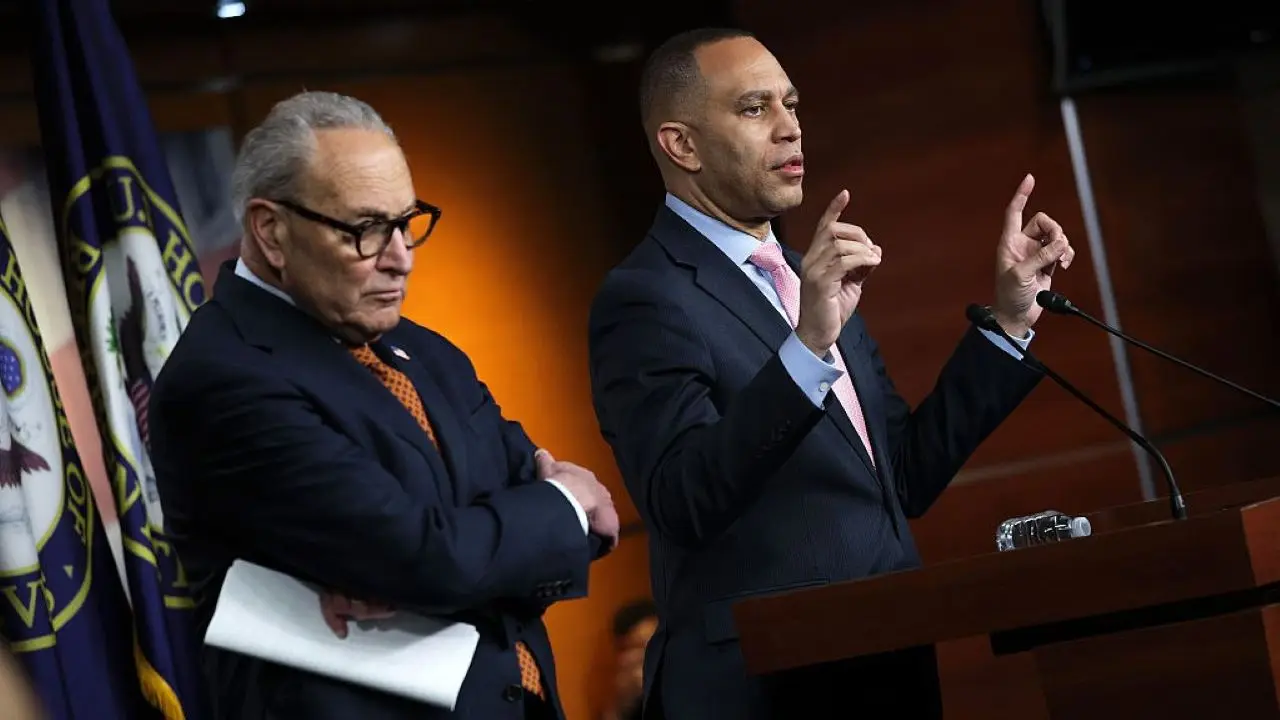
House Minority Leader Hakeem Jeffries (D-N.Y.) and Senate Minority Leader Chuck Schumer (D-N.Y.) have presented a list of ten demands for ICE reform that include prohibiting the use of masks during operations, ending racial profiling, implementing stricter warrant requirements, and halting paramilitary policing practices.
Rep. Rosa DeLauro (D-Conn.) emphasized how the numerical shift could change Republican calculations on DHS funding. “This place runs on numbers,” DeLauro noted. “I think what I’ll do is take the circumstance and, for me, we need to be bold, transformational but do what is attainable.”
Beyond the immediate funding crisis, Democrats see opportunity to influence the legislative process more broadly. Rep. Johnny Olszewski (D-Md.) suggested that with a razor-thin majority, Republicans might be forced to allow more Democratic amendments to legislation rather than maintaining the current practice of “closed” rules that limit amendment consideration.
“I have, in good faith, tried to offer amendments to make bills better and potentially able to support,” Olszewski said. “If we’re serious about coming together and finding solutions — especially on the cost of living crisis that’s crushing America — maybe we’ll see that.”
The potential for bipartisan cooperation through procedural mechanisms has already been demonstrated this Congress. Lawmakers have filed 16 discharge petitions, a legislative tool that allows members to force votes over leadership objections, with four successfully gathering the required 218 signatures to advance. One notable success was legislation that forced the release of files related to Jeffrey Epstein.
Despite the potential for a slimmer majority, Republicans can expect some relief on March 10 when Georgia holds its special election to replace former Rep. Marjorie Taylor Greene, who resigned in January. The district, which Greene previously won by a 28.8% margin, is expected to remain firmly in Republican hands.
Political analysts note that this precarious balance of power creates both challenges and opportunities. Republicans will need to maintain near-perfect unity among their ranks, including managing persistent independent voices like Rep. Thomas Massie (R-Ky.), who has frequently broken with party leadership on key votes.
For Democrats, the strategy appears focused on selectively engaging with Republicans on issues where GOP unity is fractured, potentially extracting concessions on Democratic priorities in exchange for providing necessary votes to pass legislation.
As Jayapal observed regarding the potential for bipartisan cooperation: “I mean, you’ve seen the success with discharge petitions,” suggesting Democrats may increasingly turn to procedural tactics to advance their agenda in a closely divided House.
With a potential partial government shutdown looming on Friday and no compromise in sight, the coming days will test whether this shifting balance of power translates into meaningful changes in congressional negotiations or merely deepens the partisan gridlock that has characterized much of this legislative session.
Fact Checker
Verify the accuracy of this article using The Disinformation Commission analysis and real-time sources.

18 Comments
This is a high-stakes situation with significant implications for both parties. The GOP’s precarious position means they’ll need to tread carefully and potentially make concessions to the Democrats to avoid a damaging shutdown.
Absolutely, the narrow GOP majority puts a lot of pressure on them to find common ground with the Democrats. Compromise and bipartisanship will be crucial in this process.
The timing of this potential power shift is certainly noteworthy as Congress races to fund DHS and address the ICE reform standoff. I’m curious to see how the negotiations unfold.
Given the GOP’s slim majority, the Democrats may have more room to maneuver and push for the changes they want. It will be an interesting process to follow.
The timing of this potential power shift is certainly significant as they race to fund DHS and avoid a shutdown. I wonder how much leverage the Democrats will be able to exert on ICE reforms.
With the narrow GOP majority, the Democrats may have more room to push for the changes they want on immigration and ICE. It’ll be an interesting negotiation to follow.
With the GOP’s narrow majority, the Democrats may have more leverage to push for the changes they want on immigration and ICE. This will be a crucial test of bipartisanship in Congress.
Absolutely, the stakes are high, and both parties will need to be willing to find common ground to avoid a damaging shutdown.
Interesting to see the dynamics shifting in Congress with the narrow GOP majority. It’ll be crucial to see how they navigate the funding debate and potential ICE reforms amidst the tight margins.
The GOP will certainly have their work cut out for them trying to pass legislation with such a slim majority. Bipartisanship may become even more crucial.
The potential resignation of Rep. Dunn would be a major blow to the GOP’s already thin majority. It’ll be fascinating to see how this plays out and whether the Democrats can capitalize on the situation.
Definitely a fluid and high-pressure situation. The GOP will need to work hard to maintain unity and find compromise solutions to keep the government running.
The potential power shift comes at a critical time with the DHS funding deadline looming. I wonder if the Democrats can leverage their strengthened position to drive reforms to ICE.
Given the GOP’s narrow majority, the Democrats may have more bargaining power than usual. It will be fascinating to see how the negotiations unfold.
This is a high-stakes situation with significant implications for both parties. The GOP’s slim grip on power puts them in a tough spot as they try to manage the funding debate and ICE reforms.
Agreed, the GOP’s precarious position means they’ll need to tread carefully and potentially make concessions to the Democrats to avoid a damaging shutdown.
Curious to see how this all plays out. The GOP’s razor-thin majority puts a lot of pressure on them to find common ground with Democrats on these high-stakes issues.
Agreed, the slim majority leaves little room for error. Compromise and bipartisanship will be key to avoiding a shutdown and advancing any legislation.