


Listen to the article
President Trump faces new economic challenges as the ongoing conflict with Iran drives fuel costs higher nationwide, threatening to undermine his campaign promises of affordability and putting Republicans under pressure ahead of the midterm elections.
Oil prices surged past $100 per barrel this week for the first time since 2022, as markets react to U.S.-Israeli strikes on Iran and growing concerns about potential supply disruptions in the volatile Middle East. The immediate impact is being felt by American consumers at gas pumps across the country.
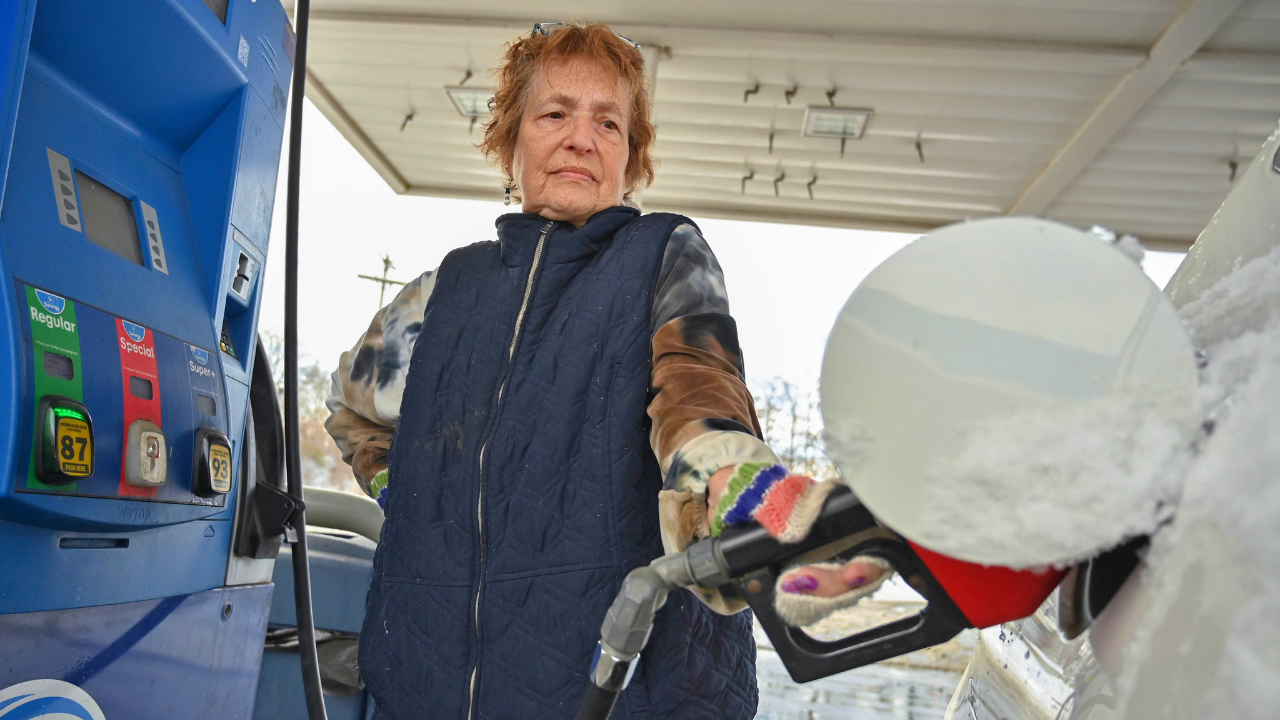
According to GasBuddy data, the national average gas price has climbed to $3.53 per gallon, a substantial increase of 59 cents over the past week. Diesel prices have seen an even steeper rise, jumping 97 cents to reach a national average of $4.72 per gallon.
The price increases are hitting battleground states particularly hard, creating a potential flashpoint in the upcoming congressional elections. Indiana saw the steepest weekly increase at 58 cents, followed closely by Florida (57 cents), Michigan (55 cents), Ohio (54 cents), and California (51 cents). These dramatic price jumps in politically contested regions could have significant electoral implications.
A stark regional divide is emerging in fuel costs across America. The lowest average prices remain in Kansas ($2.90), Oklahoma ($2.95), and Arkansas ($2.98), while drivers in California ($5.14), Washington ($4.58), and Hawaii ($4.33) face the highest costs at the pump. This geographic disparity may sharpen midterm campaign rhetoric around energy policy and inflation.
The timing couldn’t be worse for Republicans. Democrats have already demonstrated success with affordability-centered messaging in recent state and local elections across Virginia, New York, and New Jersey. In those contests, Democratic candidates effectively tied Trump’s economic policies, especially on trade, to voter concerns about the rising cost of living.
At the heart of the current oil price volatility is the Strait of Hormuz, a narrow maritime passage between Iran and Oman that serves as a critical artery for global energy supplies. Approximately 20 million barrels of oil transit through this chokepoint daily, representing about one-fifth of the world’s supply of liquefied natural gas. Even the mere threat of disruption to this single corridor can send global energy markets into turmoil.
The strategic importance of the strait has prompted a direct response from President Trump, who addressed the situation during a press conference in Florida this week. “I will not allow a terrorist regime to hold the world hostage and attempt to stop the globe’s oil supply,” Trump declared. “And if Iran does anything to do that, they’ll get hit at a much, much harder level.”
Trump further asserted that “in the long run, oil supplies will be dramatically more secure without the threat of Iranian ships, drones, missiles,” signaling a potentially more aggressive approach to securing energy transit routes in the region.
The White House is reportedly weighing various measures to protect shipping lanes in the Strait of Hormuz and prevent further price increases. Any disruption to this vital waterway could have cascading effects on global energy markets and exacerbate inflation pressures already squeezing American consumers.
For a president who campaigned heavily on economic relief and affordability, the current surge in energy prices presents both a policy challenge and a political vulnerability. With congressional control hanging in the balance this November, Republicans will need to navigate voter frustration over pocketbook issues while Democrats appear poised to capitalize on the economic anxiety.
As geopolitical tensions continue to influence domestic fuel prices, both parties are likely to intensify their messaging on energy security and economic relief measures in the coming weeks, making the Iran conflict’s economic fallout a central issue in the midterm campaign narrative.
Fact Checker
Verify the accuracy of this article using The Disinformation Commission analysis and real-time sources.

8 Comments
The impact on battleground states is particularly concerning. Voters will likely be feeling the pain at the pump when they head to the polls.
Agreed. This could be a major issue that sways undecided voters in those key swing states.
These price hikes are really squeezing American consumers. I wonder how the GOP will respond to this new political challenge ahead of the midterms.
With oil prices surging past $100/barrel, it’s clear that the conflict with Iran is having real economic consequences for ordinary Americans. I hope politicians on both sides can work to find solutions.
A nearly 60 cent jump in the national average gas price in just one week is staggering. This is going to put a serious strain on household budgets across the country.
Absolutely. The steep rise in diesel prices is especially worrying for businesses and the broader economy.
It will be interesting to see how the Biden administration and congressional leaders respond to this emerging political and economic challenge. Tough choices likely lie ahead.
This situation really highlights the volatility and geopolitical risks inherent in global energy markets. Diversifying our energy sources should be a top priority.