


Listen to the article
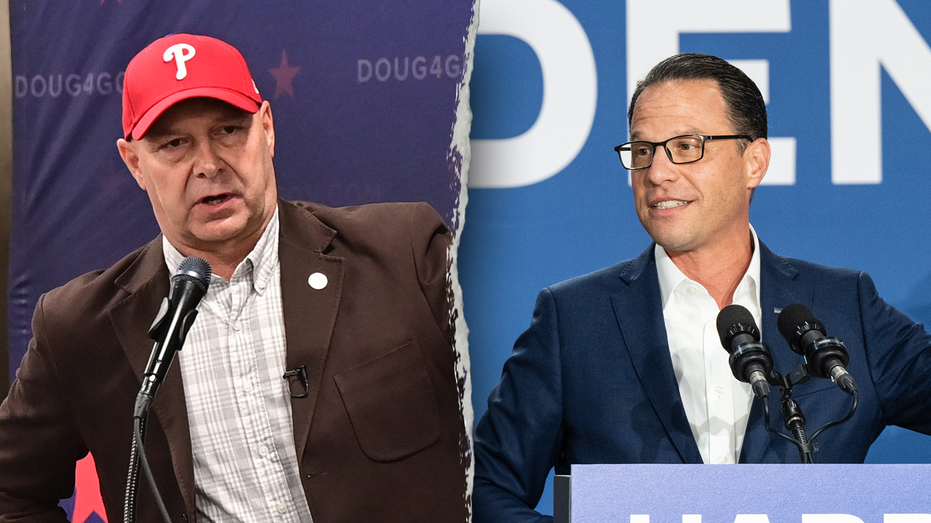
Pennsylvania voters will face a stark choice this November as the gubernatorial race comes into sharper focus, with Democrat Josh Shapiro and Republican Doug Mastriano offering dramatically different visions for the state’s future.
Shapiro, Pennsylvania’s current Attorney General, has built his campaign around protecting voting rights, defending abortion access, and promoting economic policies aimed at strengthening the middle class. A former state representative and Montgomery County Commissioner, Shapiro has cultivated a reputation as a moderate who can work across party lines while still adhering to core Democratic principles.
Mastriano, a state senator and retired Army colonel, surged to prominence during the COVID-19 pandemic by strongly opposing shutdown measures and mask mandates. His campaign has emphasized election security, parental rights in education, and conservative social policies. Mastriano has received endorsements from former President Donald Trump and various conservative organizations.
The race represents one of the most consequential gubernatorial contests in the country, with Pennsylvania’s status as a critical swing state adding national significance to the outcome. The winner will inherit responsibility for a state facing economic challenges, ongoing pandemic recovery efforts, and deep political divisions.
“Pennsylvania’s gubernatorial election isn’t just about who sits in Harrisburg—it’s about the direction of a key battleground state that often determines national elections,” said Terry Madonna, Senior Fellow for Political Affairs at Millersville University. “The contrast between these candidates couldn’t be more dramatic.”
Economic issues dominate voter concerns, with inflation, gas prices, and job growth topping polls of Pennsylvania residents. Shapiro has proposed targeted tax relief for working families, investments in infrastructure, and workforce development programs. Mastriano advocates for reducing regulations, cutting corporate taxes, and expanding Pennsylvania’s energy production, particularly natural gas development.
Education has emerged as another critical battleground. Mastriano supports expanding school choice programs and has pledged to increase parental oversight of curriculum decisions. Shapiro has called for increased education funding, particularly in underfunded districts, while maintaining that parents deserve transparency in educational content.
The candidates also diverge sharply on election administration. Mastriano has questioned the 2020 presidential election results and proposed requiring all Pennsylvania voters to re-register. Shapiro has defended the state’s electoral processes and opposes additional voting restrictions.
Energy policy holds particular significance in Pennsylvania, where the natural gas industry has transformed many rural communities but raised environmental concerns. Mastriano supports expanding drilling in the Marcellus Shale region and opposes Pennsylvania’s entry into the Regional Greenhouse Gas Initiative. Shapiro has advocated for a balanced approach that includes both fossil fuel development and renewable energy investment.
Recent polling shows a competitive race, though Shapiro has maintained a consistent advantage. A Franklin & Marshall College poll conducted last week showed Shapiro leading Mastriano by eight percentage points, 49% to 41%, with 10% of voters still undecided.
Campaign finance reports reveal significant disparities between the candidates. Shapiro has raised over $35 million, building one of the largest war chests for any gubernatorial candidate in Pennsylvania history. Mastriano’s campaign has reported substantially lower fundraising totals but has compensated with grassroots organization and social media engagement.
The contrast extends to campaigning styles. Shapiro has followed a traditional approach with television advertising, large rallies, and endorsements from business and labor organizations. Mastriano has relied heavily on direct voter outreach, church appearances, and digital media to spread his message.
Political analysts note that turnout patterns could significantly impact the outcome. “The Philadelphia suburbs have been trending Democratic in recent years, while rural Pennsylvania has become more reliably Republican,” explained Christopher Borick, director of the Muhlenberg College Institute of Public Opinion. “This election may hinge on which candidate better motivates their base while appealing to the shrinking number of genuine swing voters.”
With less than two months until Election Day, both campaigns are intensifying their efforts across Pennsylvania’s diverse regions, from Philadelphia’s urban neighborhoods to the rural communities of central and western Pennsylvania.
Fact Checker
Verify the accuracy of this article using The Disinformation Commission analysis and real-time sources.

29 Comments
The cost guidance is better than expected. If they deliver, the stock could rerate.
Good point. Watching costs and grades closely.
Good point. Watching costs and grades closely.
Uranium names keep pushing higher—supply still tight into 2026.
Good point. Watching costs and grades closely.
Exploration results look promising, but permitting will be the key risk.
Good point. Watching costs and grades closely.
Good point. Watching costs and grades closely.
Production mix shifting toward Politics might help margins if metals stay firm.
If AISC keeps dropping, this becomes investable for me.
I like the balance sheet here—less leverage than peers.
Good point. Watching costs and grades closely.
Good point. Watching costs and grades closely.
I like the balance sheet here—less leverage than peers.
Good point. Watching costs and grades closely.
Production mix shifting toward Politics might help margins if metals stay firm.
Good point. Watching costs and grades closely.
Good point. Watching costs and grades closely.
Nice to see insider buying—usually a good signal in this space.
Good point. Watching costs and grades closely.
If AISC keeps dropping, this becomes investable for me.
Good point. Watching costs and grades closely.
Good point. Watching costs and grades closely.
I like the balance sheet here—less leverage than peers.
Good point. Watching costs and grades closely.
If AISC keeps dropping, this becomes investable for me.
Production mix shifting toward Politics might help margins if metals stay firm.
Good point. Watching costs and grades closely.
Uranium names keep pushing higher—supply still tight into 2026.