


Listen to the article
Venezuelan Oil Tankers Return to Home Waters Amid US Blockade and Seizures
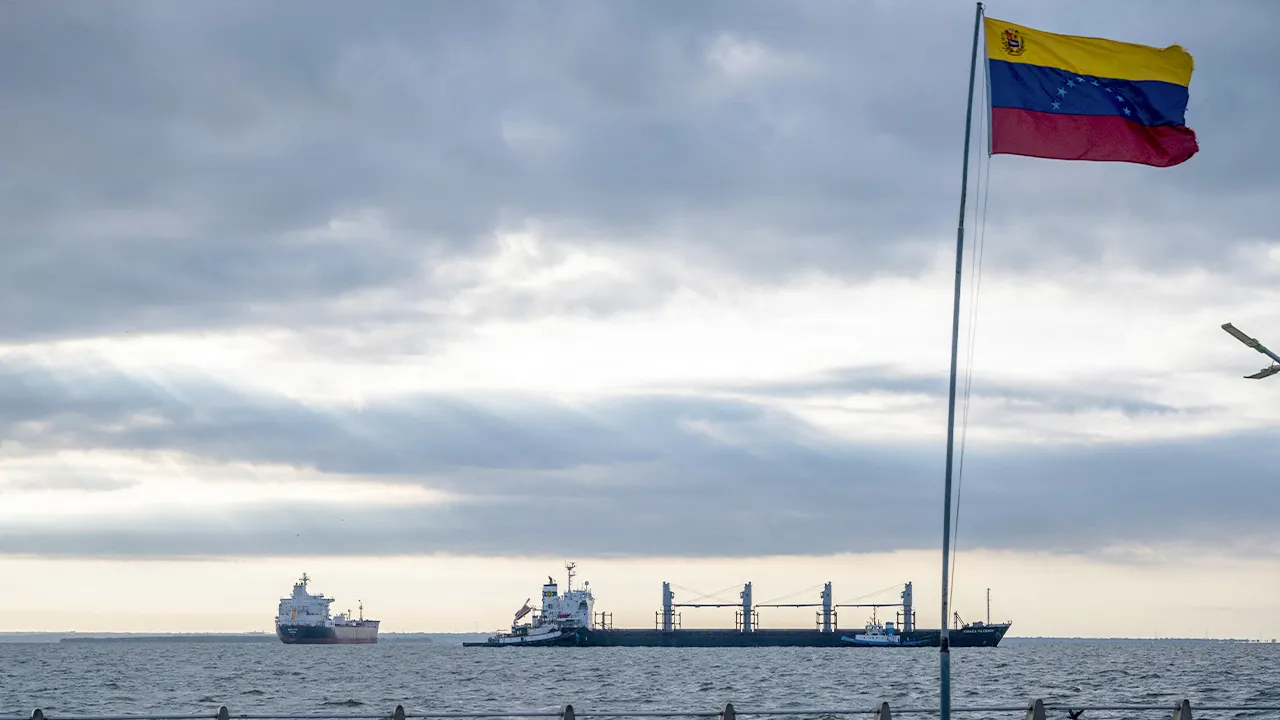
Four oil tankers that had departed Venezuelan waters in early January with their transponders disabled have reportedly returned to the country, according to state-owned oil company Petróleos de Venezuela (PDVSA) and monitoring service TankerTrackers.com. Most of these returning vessels were loaded with crude oil, Reuters reports.
The vessels were part of a larger flotilla of approximately a dozen loaded tankers and at least three empty ships that left Venezuelan waters last month, despite an ongoing U.S. naval blockade imposed in mid-December following the Trump administration’s military action in the country.
The return of these vessels comes amid heightened tensions in Caribbean waters. U.S. forces have recently intercepted multiple tankers carrying Venezuelan oil as part of “Operation Southern Spear,” which aims to control the flow of Venezuela’s oil resources following the Trump administration’s capture of Venezuelan President Nicolás Maduro.
Two of the vessels from the original flotilla, the supertanker M Sophia flying under Panamanian flag and the Olina, registered in Sao Tome And Principe, were intercepted by U.S. forces earlier this week. While the M Sophia remains in U.S. custody, PDVSA reported that the Olina was released back to Venezuela on Friday.
The U.S. Southern Command described the Olina seizure as part of a coordinated effort between Marines, sailors, and the Department of Homeland Security. “Apprehensions like this are backed by the full power of the U.S. Navy’s Amphibious Ready Group,” the Command stated on social media. The Wall Street Journal noted that the Olina, previously known as the Minerva M, had previously been sanctioned by the United States for transporting Russian oil.
Three additional vessels from the original flotilla – Panama-flagged Merope, Cook Islands-flagged Min Hang, and Panama-flagged Thalia III – were identified in Venezuelan waters late Friday by TankerTrackers.com.
These developments coincide with the Trump administration’s aggressive push to gain control of Venezuela’s vast oil reserves. On Friday, President Trump hosted nearly two dozen oil executives at the White House to discuss investment opportunities in Venezuela following Maduro’s capture. Representatives from major energy companies including Chevron, Exxon, ConocoPhillips, Shell, and others attended the meeting.
During the session, Trump promised the executives “total safety, total security” for their operations in Venezuela. “It’s a whole different Venezuela and Venezuela is going to be very successful, and the people of the United States are going to be big beneficiaries,” Trump told the assembled executives. “You’re not dealing with Venezuela at all. We don’t want you to deal with Venezuela.”
The president has predicted that U.S. acquisition of Venezuelan oil will lead to “massive wealth, lower taxes and lots of jobs for Americans and for Venezuelans.” Earlier, Trump announced on Truth Social that Venezuela would be transferring between 30 and 50 million barrels of “high-quality” oil to the United States, to be sold at market price. The president stated that he would personally control the proceeds to “ensure it is used to benefit the people of Venezuela and the United States.”
Venezuela possesses the world’s largest proven oil reserves, estimated at 303.8 billion barrels. The country’s petroleum industry, once a global powerhouse, has deteriorated significantly under years of mismanagement, corruption, and international sanctions. The Trump administration’s current actions represent an unprecedented direct intervention into another nation’s primary economic resource, with significant geopolitical implications for regional stability and global energy markets.
As the situation continues to unfold, international observers and energy analysts are closely monitoring both the maritime movements of Venezuela’s oil fleet and the implementation of the Trump administration’s control over the country’s petroleum resources.
Fact Checker
Verify the accuracy of this article using The Disinformation Commission analysis and real-time sources.

13 Comments
Interesting development with these Venezuelan oil tankers. It’s clear the US is exerting significant pressure on Venezuela’s oil exports. I wonder how this will impact global energy markets and the price of crude oil going forward.
The US naval blockade and seizure of Venezuelan oil tankers is a concerning escalation. This could further destabilize the region and lead to supply disruptions that impact global energy prices.
The return of these Venezuelan oil tankers, some with cargoes, suggests Venezuela is finding ways to maintain its oil exports despite the US blockade. This highlights the ongoing struggle for control over this critical resource.
This situation highlights the geopolitical complexities surrounding Venezuela’s oil resources. While the US aims to control the flow of Venezuelan oil, the return of these tankers suggests Venezuela is finding ways to maintain exports despite the pressure.
It will be important to closely monitor how this situation evolves and the potential knock-on effects for global energy markets and the global economy.
This is a complex and evolving situation that underscores the strategic importance of Venezuela’s oil resources. It will be important to closely monitor how the US and Venezuela continue to maneuver around each other on this issue.
The return of these Venezuelan oil tankers, some loaded with crude, demonstrates Venezuela’s determination to maintain its oil exports despite the US blockade. It will be important to see how the US responds to this move.
This situation highlights the importance of Venezuelan oil to global energy markets. The geopolitical tug-of-war over this resource could have far-reaching implications.
The disabling of transponders on these Venezuelan oil tankers is an intriguing move that demonstrates Venezuela’s determination to continue exporting its oil. It will be interesting to see how the US responds to this development.
The disabling of transponders on these Venezuelan oil tankers is a novel tactic to evade detection. It speaks to the lengths Venezuela is willing to go to keep its oil exports flowing in the face of US pressure.
This situation underscores the strategic importance of Venezuelan oil and the high-stakes geopolitical battle being waged over it. The potential for further escalation and market disruptions is concerning.
The disabling of transponders on these Venezuelan oil tankers is an interesting tactic to avoid detection. It underscores the high stakes involved as both sides jockey for control over this critical resource.
This cat-and-mouse game between the US and Venezuela over oil exports is becoming increasingly complex. The potential for further escalation and unintended consequences is concerning.