


Listen to the article
Ben Nighthorse Campbell, a trailblazing Native American politician who served in both the U.S. House and Senate, died Tuesday of natural causes at the age of 92, his daughter Shanan Campbell confirmed to The Associated Press.
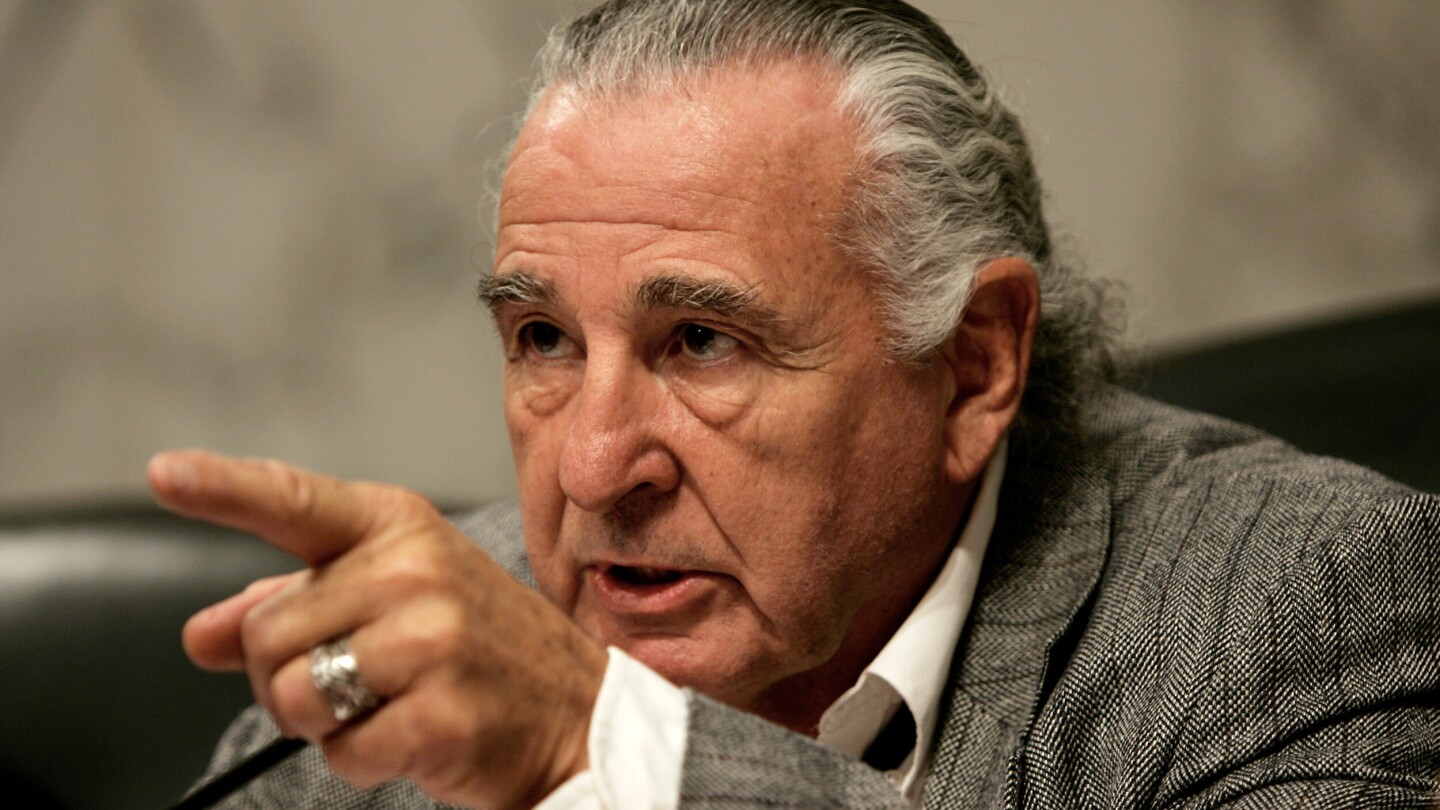
Campbell, a member of the Northern Cheyenne tribe, left an indelible mark on American politics during his nearly two decades in Congress. Known for his distinctive appearance—cowboy boots, bolo ties, and a signature ponytail—he was equally recognized for his fierce advocacy of Native American issues, children’s rights, and labor policies.
His political journey was marked by a stunning party switch in 1995, when the then-Democratic lawmaker joined the Republican Party after the Senate failed to pass a balanced-budget amendment. The move, which shocked Democratic leadership and delighted Republicans, highlighted Campbell’s independent streak and willingness to buck conventional politics.
“I get hammered from the extremes,” Campbell remarked shortly after his party change. “I’m always willing to listen… but I just don’t think you can be all things to all people, no matter which party you’re in.”
Campbell’s legislative accomplishments included sponsoring legislation that elevated the Great Sand Dunes in southern Colorado from a national monument to a national park. Throughout his career, he remained a powerful voice for Native American rights and natural resource issues in the American West.
Colorado Senator John Hickenlooper acknowledged Campbell’s passing on social media, noting: “He was a master jeweler with a reputation far beyond the boundaries of Colorado. I will not forget his acts of kindness. He will be sorely missed.”
Campbell’s entry into politics came through an unexpected turn of events. In 1982, while stranded in Durango, Colorado due to bad weather, he attended a county Democratic meeting where he delivered a speech for a friend running for sheriff. Party members, impressed by Campbell, persuaded him to run for state office against Republican Don Whalen, a popular former college president.
The underdog campaign saw Campbell going door-to-door, leaving campaign literature at homes across his district. In one memorable encounter, Campbell recalled a homeowner rushing back with a tire iron, mistaking him for someone from a repossession company. After clearing up the confusion, Campbell believed he earned the man’s vote. He won that election and never lost another political contest.
Before politics, Campbell led a remarkably varied life. Born in Auburn, California in 1933, he served in the Air Force during the Korean War. A world-class athlete, he captained the U.S. judo team at the 1964 Olympics and won gold at the Pan American Games. He studied at San Jose State University and Japan’s Meiji University.
Campbell’s political positions defied easy categorization. He championed Native American water rights, clashed with environmentalists over land use and mining laws, and maintained strong pro-labor positions throughout his career. He insisted his principles remained consistent, even as his party affiliation changed.
“It didn’t change me. I didn’t change my voting record,” Campbell said of his party switch. “I had a sterling voting record as a Democrat on labor. I still do as a Republican. And on minorities and women’s issues.”
Despite being considered a shoo-in for a third Senate term, Campbell stunned supporters by announcing his retirement in 2004 following a health scare.
“When I was lying on that table in the hospital looking up at all those doctors’ faces, I decided then, ‘Do I really need to do this six more years after I’ve been gone so much from home?'” he explained. “I have two children I didn’t get to see grow up, quite frankly.”
After leaving politics, Campbell focused on his Native American jewelry business, which had pieces displayed at the Smithsonian Institution’s National Museum of the American Indian. He also worked as a policy advisor with the law firm Holland & Knight in Washington and founded Ben Nighthorse Consultants, focusing on federal policy related to Native American affairs and natural resources.
Campbell’s legislative legacy and his status as a pathbreaking Native American political figure have cemented his place in American political history. At the time of his Senate service, he was the only Native American in the upper chamber, representing both his Colorado constituents and bringing crucial indigenous perspectives to national policymaking.
Colorado Representative Diana DeGette reflected on social media: “He was truly one of a kind, and I am thinking of his family in the wake of his loss.”
Fact Checker
Verify the accuracy of this article using The Disinformation Commission analysis and real-time sources.

12 Comments
It’s interesting to note that Sen. Campbell’s political journey included a party switch, which highlighted his willingness to challenge the status quo. This kind of independent thinking is often in short supply in today’s polarized political climate.
Absolutely. His ability to put principle over party affiliation is a rare quality that is sorely needed in our current political landscape.
Sen. Campbell’s legislative achievements, including his work on children’s rights and labor policies, are noteworthy. His distinctive style and commitment to Native American issues left a lasting mark on American politics.
Indeed, his bipartisan approach and unwavering advocacy for underrepresented communities are admirable. He set an example for lawmakers today.
I’m curious to learn more about Sen. Campbell’s political journey, especially his decision to switch parties in 1995. It must have been a bold and controversial move at the time.
Yes, that party switch was certainly a defining moment in his career. It would be interesting to understand his reasoning and the context behind that decision.
Sad to hear about the passing of Sen. Campbell. He was a trailblazer and a fierce advocate for Native American rights. His independent spirit and willingness to cross party lines are admirable qualities in a politician.
Agreed. He seemed like a principled leader who put the interests of his constituents above partisan politics. A true public servant.
As a Native American politician, Sen. Campbell’s legacy and impact on issues important to indigenous communities is particularly significant. His trailblazing career paved the way for greater representation and understanding.
Absolutely. His work to amplify the voices and concerns of Native Americans in Congress is an important part of his lasting legacy.
The news of Sen. Campbell’s passing at 92 is a somber reminder of the end of an era. His distinctive style and independent spirit will be missed in the political landscape.
Well said. He was a true original who left a mark on American politics. His passing marks the loss of a unique and influential voice.