


Listen to the article
Former Harvard President Larry Summers Steps Back from Public Roles Following Epstein Email Revelations
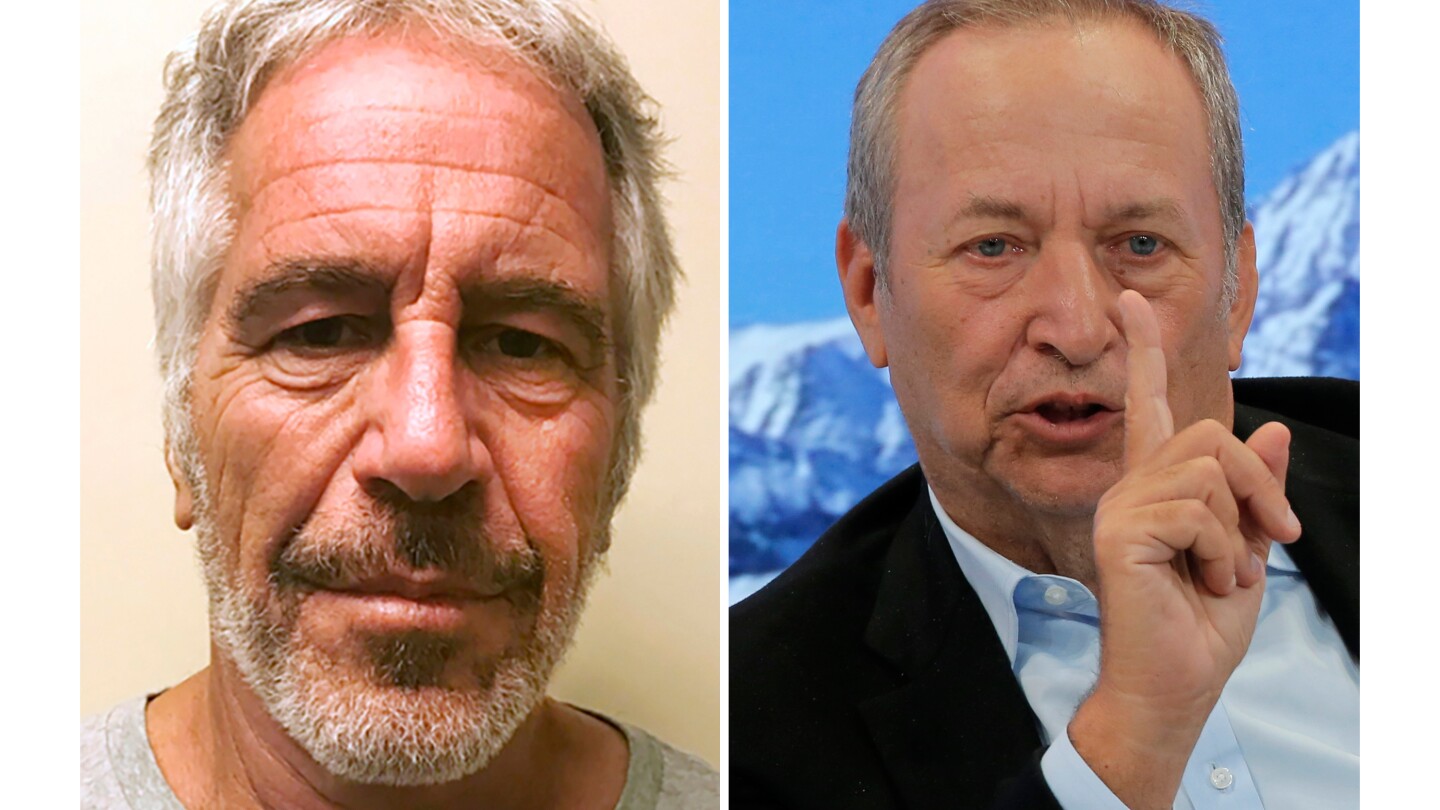
Lawrence Summers, the prominent economist who once led Harvard University and served as U.S. Treasury Secretary, announced he will withdraw from public commitments after emails revealed his continued friendly relationship with convicted sex offender Jeffrey Epstein years after Epstein’s 2008 guilty plea.
“I am deeply ashamed of my actions and recognize the pain they have caused. I take full responsibility for my misguided decision to continue communicating with Mr. Epstein,” Summers said in a statement. He indicated he would continue teaching while working to “rebuild trust and repair relationships with the people closest to me.”
The fallout was swift. The Center for American Progress, a leading progressive think tank in Washington D.C., confirmed Tuesday that Summers was “ending his fellowship at CAP.” Yale’s Budget Lab also announced Summers is no longer serving on its advisory group.
OpenAI, maker of ChatGPT, declined to comment on whether Summers would remain on its board of directors, where he had served since November 2023 as part of an effort to stabilize the organization following internal leadership turmoil. When asked, Summers’ spokesperson Kelly Friendly said she had nothing to add beyond his statement.
The controversy erupted following the recent release of emails between Summers and Epstein dating from years after Epstein’s 2008 conviction for soliciting prostitution from an underage girl. One 2019 email showed Summers discussing interactions with a woman, writing, “I said what are you up to. She said ‘I’m busy’. I said awfully coy u are.” Epstein responded with characteristic spelling errors: “you reacted well.. annoyed shows caring. , no whining showed strentgh.”
When initially confronted about the emails last week, Summers acknowledged that his association with Epstein represented “a major error in judgment” and one of the “great regrets” of his life.
The revelations have drawn political attention at the highest levels. Days before Summers’ announcement, former President Donald Trump posted on his Truth Social platform that he would ask the Justice Department and FBI to investigate Summers’ relationship with Epstein, along with former President Bill Clinton and LinkedIn founder Reid Hoffman. U.S. Attorney General Pam Bondi subsequently ordered a top federal prosecutor to lead the investigation.
Senator Elizabeth Warren of Massachusetts, a former Harvard Law School professor, called for Harvard to sever ties with Summers, telling CNN, “For decades, Larry Summers has demonstrated his attraction to serving the wealthy and well-connected, but his willingness to cozy up to a convicted sex offender demonstrates monumentally bad judgment.” She added that Summers “cannot be trusted” with students.
The controversy highlights the persistent fallout from Epstein’s extensive network of influential connections. Epstein died by suicide in a Manhattan jail in 2019 while awaiting trial on charges of sexually abusing and trafficking underage girls. The recent email disclosures show that many in Epstein’s circle of wealthy and powerful associates continued their relationships with him long after his criminal history became public knowledge.
Harvard student Thomas King called Summers’ relationship with Epstein “shocking” but also “indicative of the kind of political environment that we now live in in 21st century U.S.”
Summers, 68, has held numerous prestigious positions throughout his career. He served as Treasury Secretary from 1999 to 2001 under President Clinton before becoming Harvard’s president from 2001 to 2006. He currently serves as a professor at Harvard and directs the school’s Mossavar-Rahmani Center for Business and Government.
The revelations represent a significant blow to Summers’ reputation as an economic thought leader who has influenced policy and academic discussions for decades. His withdrawal from public roles marks a stunning reversal for a figure who has long been at the center of American economic and academic life.
Fact Checker
Verify the accuracy of this article using The Disinformation Commission analysis and real-time sources.

12 Comments
While Summers’ actions were misguided, his decision to step down from public commitments is a responsible move. It’s important that leaders are held accountable for their choices, especially when they involve associations with individuals who have committed serious crimes.
Well said. Maintaining public trust is crucial for those in positions of power. Summers’ response indicates he recognizes the gravity of the situation and is taking steps to address it, which is a positive sign.
This story is a reminder of the need for diligence and ethical decision-making among public figures. Summers’ continued communication with Epstein, even after the latter’s conviction, raises serious questions about his judgment and integrity. His decision to step back is a necessary first step, but the true test will be in how he works to regain trust and repair the damage.
Agreed. Upholding high ethical standards is essential for those in positions of power and influence. Summers’ response is a start, but the true test will be in his actions moving forward and his ability to regain the public’s trust.
The fallout from these revelations underscores the importance of carefully vetting individuals in key roles, particularly those with ties to controversial figures. It’s a complex issue, and Summers’ response indicates he recognizes the gravity of the situation.
Agreed. Maintaining public trust is critical for institutions and leaders. This case highlights the need for robust ethical guidelines and diligent oversight.
This is a concerning situation involving a prominent public figure. While Summers’ actions were misguided, his decision to step back and focus on rebuilding trust is commendable. Maintaining high ethical standards is crucial for those in positions of power and influence.
You raise a good point. Transparency and accountability are essential, especially for those in leadership roles. It will be interesting to see how Summers handles this moving forward.
Summers’ continued communication with Epstein, even after the latter’s guilty plea, is deeply troubling. This case underscores the need for public figures to be held to the highest ethical standards, especially when it comes to associations with known criminals.
Absolutely. Upholding ethical behavior is essential for those in positions of power and influence. Summers’ decision to step back is a necessary first step, but the true test will be in how he works to regain trust and repair the damage.
This story raises important questions about the ethics and judgment of influential figures. While Summers’ decision to step back is a start, it remains to be seen whether he can effectively rebuild trust and repair the damage done.
That’s a fair assessment. Rebuilding trust after such a high-profile breach will be a significant challenge. Ongoing transparency and accountability will be crucial for Summers moving forward.