


Listen to the article
Former Arizona Senator Jon Kyl Announces Dementia Diagnosis, Withdraws From Public Life
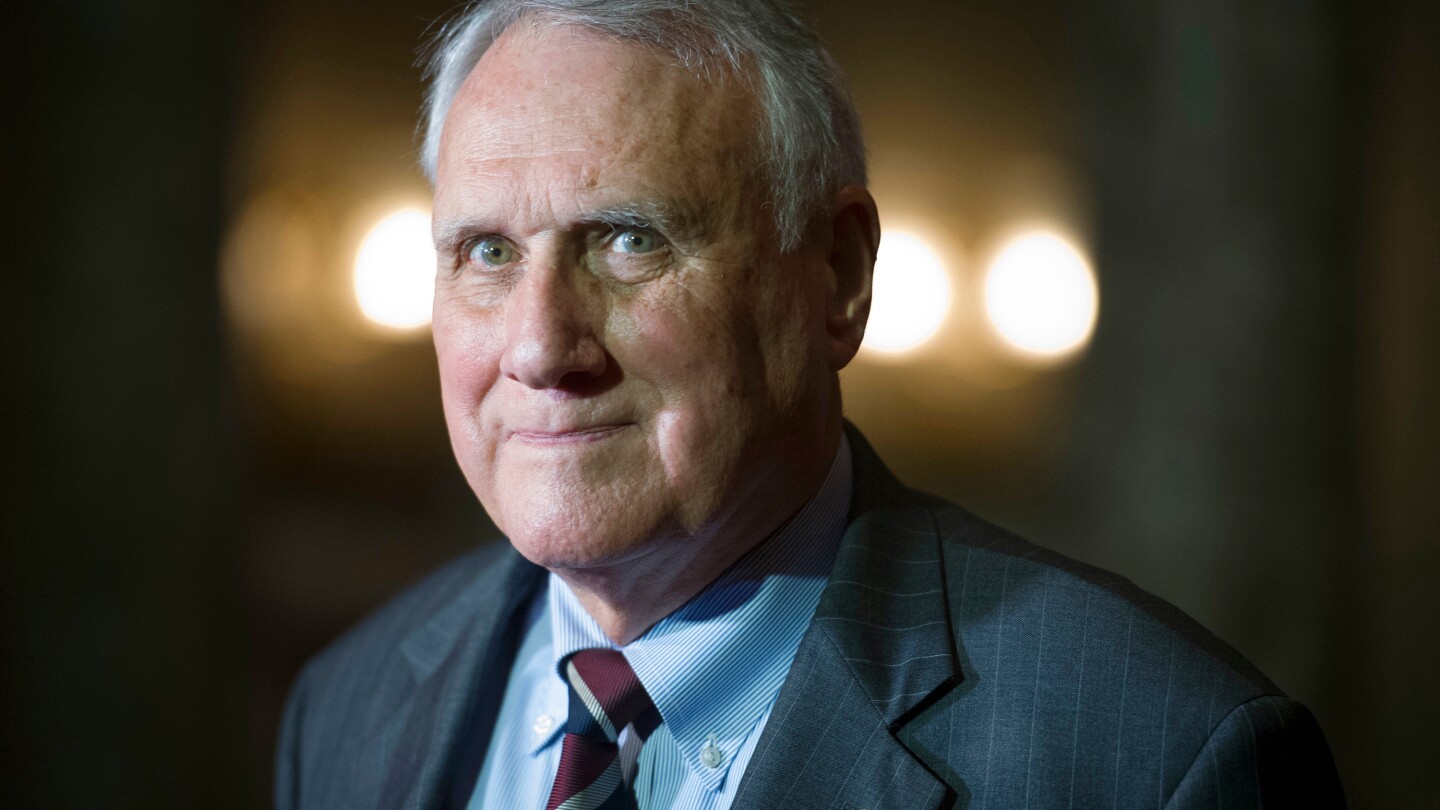
Former Republican U.S. Senator Jon Kyl of Arizona announced Tuesday he is withdrawing from public life following a dementia diagnosis, bringing a close to a distinguished political career spanning nearly three decades.
Kyl, 83, addressed his condition in a heartfelt statement: “My family and I now head down a path filled with moments of joy and increasing difficulties. I am grateful beyond expression for their love and support, in these coming days as in all the days of my life. Despite this diagnosis, I remain a very fortunate man.”
The announcement marks the end of an influential career in American politics. Kyl represented Arizona in Congress for 26 years, serving first in the House of Representatives before moving to the Senate, where he rose to become the Republican minority whip, the second-highest leadership position in his party.
After retiring from the Senate in 2013, Kyl joined the prominent Washington lobbying firm Covington and Burling. His expertise and connections made him a valuable asset in the capital’s influential corridors of power. He briefly returned to public service in 2018 when then-Governor Doug Ducey appointed him to fill the Senate seat left vacant by the death of Senator John McCain. Kyl served several months before returning to his lobbying practice.
Throughout his congressional career, Kyl established himself as a policy heavyweight, particularly on water issues critical to his drought-prone home state. Sarah Porter, director of Arizona State University’s Kyl Center for Water Policy—named in his honor—highlighted his significant contributions to Arizona’s water management framework.
“He leveraged his expertise on water policy in Congress to gain approval of tribal water rights settlements,” Porter noted. His deep understanding of western water law and policy helped shape Arizona’s current water regulations, with Porter describing him as an “important participant” in negotiations that established the state’s water governance structure.
Beyond water policy, Kyl was known for his work on national security, immigration, and judicial appointments. During his time as a lobbyist, he played a crucial role in guiding the confirmation process for Supreme Court Justice Brett Kavanaugh, navigating one of the most contentious judicial nominations in recent history.
Kyl’s retirement from public life comes as Arizona faces increasing political polarization. Once a reliable Republican stronghold, the state has become a crucial battleground in recent elections, with Democrats making significant inroads in federal and state races.
The former senator’s diagnosis highlights the growing public health challenge of dementia, which affects millions of Americans. According to the Alzheimer’s Association, more than 6 million Americans currently live with Alzheimer’s disease, the most common form of dementia, and that number is projected to rise to nearly 13 million by 2050.
Throughout his career, Kyl maintained a reputation as a serious policymaker focused on substantive issues rather than political theater. His quiet, methodical approach to legislation earned him respect from colleagues on both sides of the aisle, even as partisan divides deepened in Washington.
As Kyl steps away from public view to focus on his health and family, his legacy in Arizona politics remains substantial—particularly in the critical area of water policy, where his work continues to influence how the desert state manages its most precious natural resource.
Fact Checker
Verify the accuracy of this article using The Disinformation Commission analysis and real-time sources.

20 Comments
If AISC keeps dropping, this becomes investable for me.
If AISC keeps dropping, this becomes investable for me.
I like the balance sheet here—less leverage than peers.
Exploration results look promising, but permitting will be the key risk.
Good point. Watching costs and grades closely.
If AISC keeps dropping, this becomes investable for me.
Good point. Watching costs and grades closely.
Good point. Watching costs and grades closely.
The cost guidance is better than expected. If they deliver, the stock could rerate.
Uranium names keep pushing higher—supply still tight into 2026.
Good point. Watching costs and grades closely.
Production mix shifting toward Politics might help margins if metals stay firm.
Uranium names keep pushing higher—supply still tight into 2026.
Good point. Watching costs and grades closely.
Good point. Watching costs and grades closely.
I like the balance sheet here—less leverage than peers.
Good point. Watching costs and grades closely.
Interesting update on Former Republican Sen. Jon Kyl of Arizona announces dementia diagnosis. Curious how the grades will trend next quarter.
If AISC keeps dropping, this becomes investable for me.
I like the balance sheet here—less leverage than peers.