


Listen to the article
Former Trump DHS Secretary Warns of Chinese Infiltration in US Healthcare Systems
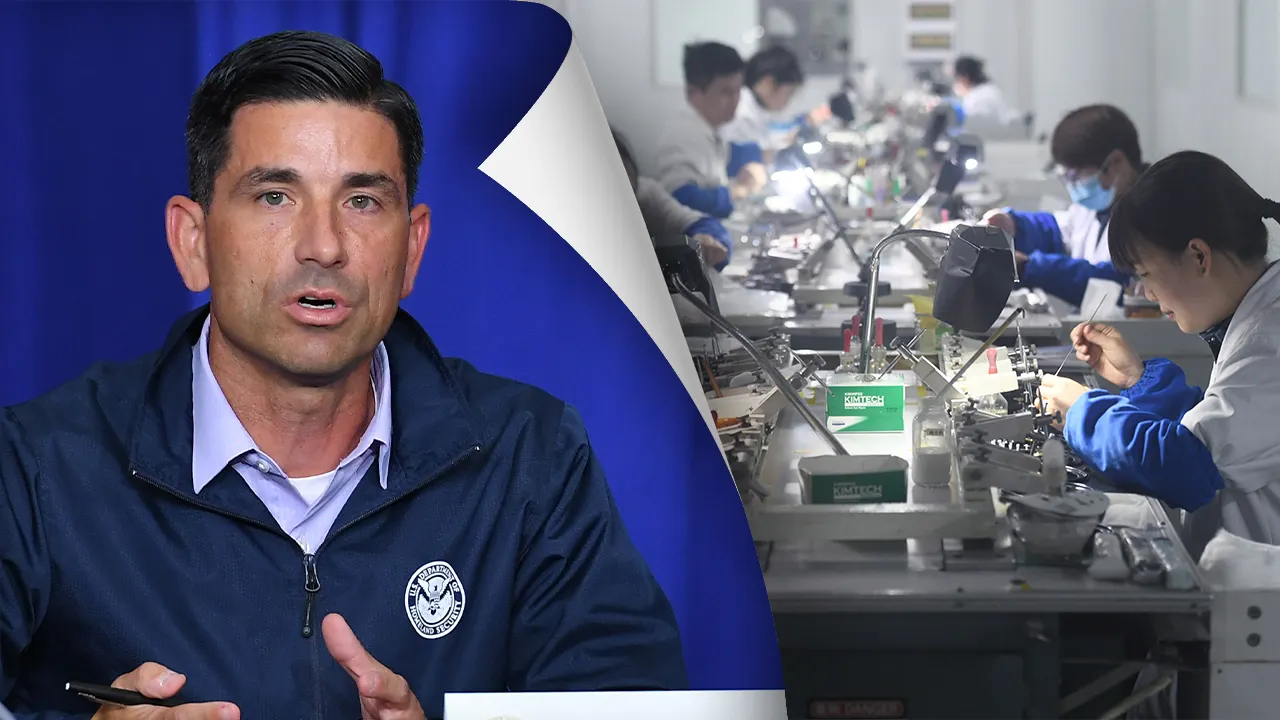
President Donald Trump’s former Secretary of Homeland Security, Chad Wolf, has raised serious concerns about China’s infiltration of American healthcare systems, highlighting what experts describe as a growing national security threat.
The warning comes in the wake of a significant Memorandum of Understanding signed last week between four state attorneys general and Federal Communications Commission Chairman Brendan Carr. The agreement aims to strengthen protections against Chinese infiltration of communications equipment and services used throughout the United States.
On Monday, the Protecting America Initiative (PAI), a conservative nonprofit focused on countering the Chinese Communist Party’s efforts to “sabotage America,” launched a campaign highlighting vulnerabilities in America’s medical technology infrastructure.
“Americans rely on their doctors who take an oath to keep us safe, and first, do no harm. But when critical medical devices are made by Chinese companies, that puts our safety at risk,” Wolf told Fox News Digital. “Chinese medical devices open the door for the CCP to access sensitive health data.”
Earlier this year, both the Food and Drug Administration (FDA) and the Cybersecurity and Infrastructure Security Agency (CISA) issued warnings about a “backdoor” discovered in a popular brand of patient monitoring devices. CISA’s investigation found that this vulnerability allowed the devices to download remote files and transmit them to an IP address associated with a Chinese university. Security experts note that all schools in China operate under national security laws requiring them to support intelligence work when requested by the government.
Florida Attorney General James Uthmeier took legal action in June against Chinese medical device manufacturers that were investigated by the FDA and CISA. Uthmeier accused the companies of selling “compromised” medical devices containing backdoors that could be exploited by malicious actors. Beyond data security concerns, the Florida Attorney General also alleged that these manufacturers were falsely claiming FDA approval for their products.
The Foundation for Defense of Democracies (FDD), a Washington D.C.-based think tank focusing on national security issues, highlighted the expanding problem in an October report. “China’s growing role within the U.S. medical device supply chains is largely due to the combination of Beijing’s industrial policy and the shifting landscape of American healthcare,” the report stated.
According to National Institute of Health estimates from 2019, approximately 9.2 percent of U.S.-imported pharmaceuticals and medical equipment came from China. However, the NIH warned that this figure “likely understates” America’s actual reliance on Chinese medical products due to the complex nature of global supply chains.
“China is both a supplier of raw materials used in medical products and the final point of assembly for goods bound for the United States, obscuring its reach into the American medical system,” the FDD report explained. These figures also fail to account for the critical nature of many Chinese-supplied components, particularly those related to biodefense and managing long-term acute health issues.
The FDD further claimed that China has “exploited” this dependency by deliberately selling compromised technology, placing healthcare providers in the position of “unwittingly and unwillingly” playing “Russian roulette with patient treatment plans.”
The PAI, where Wolf serves as a senior advisor, is advocating for the removal of Chinese medical devices from U.S. hospitals. “It’s time to remove Chinese medical devices from U.S. hospitals and close the data backdoor, because patient privacy and national security are non-negotiable,” Wolf stated.
As tensions between the United States and China continue across multiple sectors, the healthcare industry appears to be emerging as a new front in concerns over national security, data privacy, and supply chain vulnerabilities. Policy experts suggest that addressing these issues will likely require a coordinated approach involving federal agencies, state governments, and healthcare providers.
Fact Checker
Verify the accuracy of this article using The Disinformation Commission analysis and real-time sources.

14 Comments
The threat of Chinese infiltration into US healthcare systems is alarming. We need greater transparency and oversight to safeguard against malicious actors exploiting vulnerabilities in medical supply chains and technology.
Agreed. This is a complex challenge that requires a comprehensive, multi-stakeholder approach to mitigate risks and secure American interests.
This is a complex issue that requires a nuanced, evidence-based approach. I hope policymakers can work together to find effective ways to secure critical US industries without resorting to knee-jerk reactions or xenophobia.
Agreed. Striking the right balance between security and openness will be crucial. A measured, well-informed response is needed to address these challenges effectively.
The threat of Chinese infiltration in US healthcare systems is alarming. I hope the proposed solutions can be implemented swiftly to mitigate risks and safeguard American interests.
As someone with a background in the medical technology industry, I’m deeply concerned by the potential risks highlighted in this report. We must act quickly to shore up security and prevent exploitation by bad actors.
I’m curious to learn more about the specific nature of the threats outlined in this report. What are the key vulnerabilities, and what are the proposed solutions to address them effectively?
This is a timely and important issue that deserves serious attention. I’m interested to learn more about the specific vulnerabilities identified and the proposed policy responses to address them.
Yes, understanding the nuances of this challenge is crucial. A comprehensive, evidence-based approach will be key to developing effective and sustainable solutions.
Protecting critical US industries from foreign adversaries should be a top national security priority. This issue deserves robust public debate and bipartisan policymaking to find durable solutions.
Well said. Maintaining the integrity of our strategic sectors is crucial for preserving American leadership and safeguarding our interests at home and abroad.
Ensuring the security and resilience of critical US industries is paramount. I hope policymakers can work together to address these concerns in a measured, bipartisan manner.
This is a concerning issue that deserves serious attention. Ensuring the integrity of critical US industries and infrastructure is vital for national security. I hope policymakers take swift action to address these vulnerabilities.
Absolutely, we can’t afford to be complacent when it comes to protecting sensitive US sectors from foreign adversaries. Robust security measures are essential.