


Listen to the article
Immigration Officers Shift from Louisiana to Minneapolis in Operational Pivot
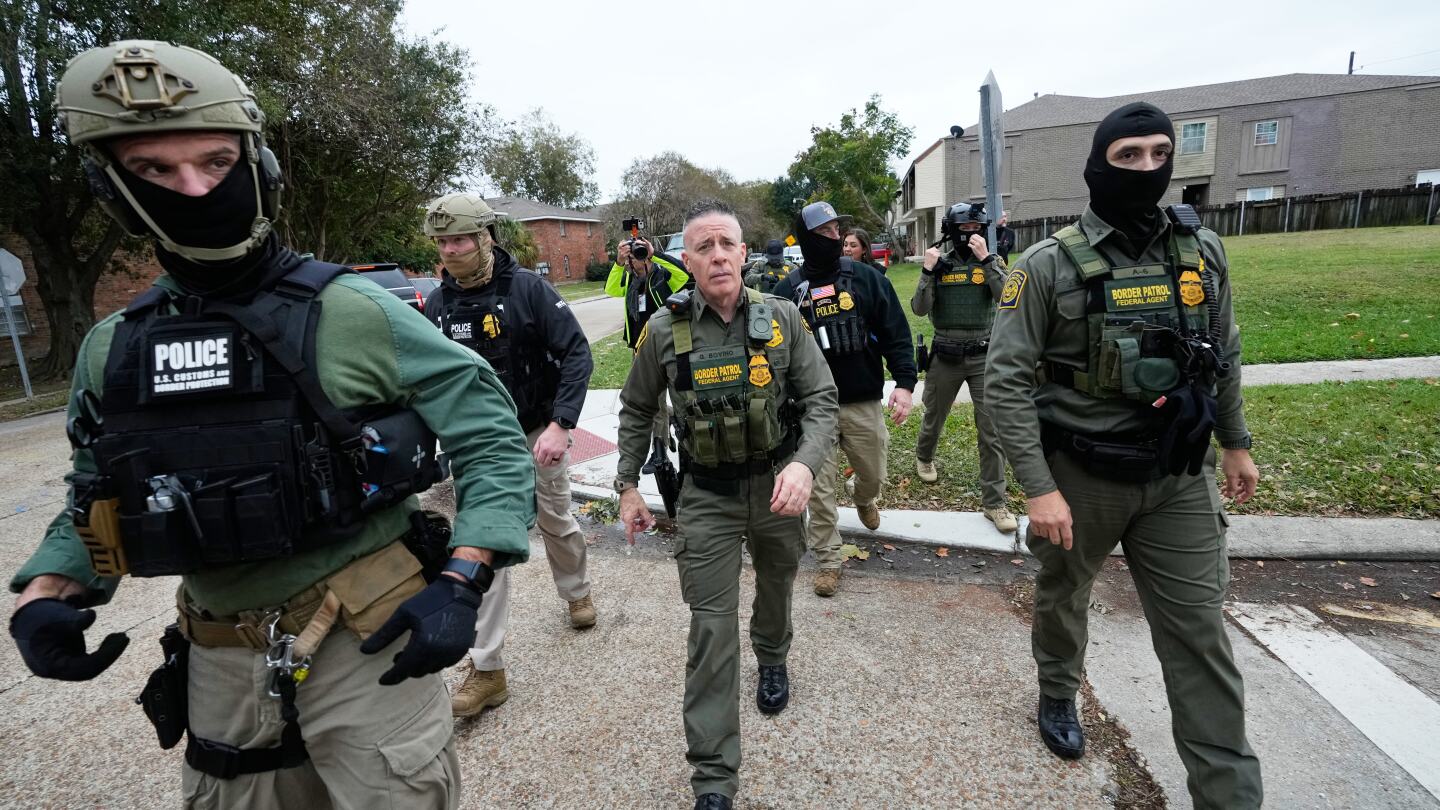
Federal immigration officers are abruptly withdrawing from a controversial Louisiana operation to join an even larger enforcement initiative in Minneapolis, according to documents obtained by The Associated Press.
The Louisiana crackdown, code-named “Catahoula Crunch,” began in December with more than 200 officers deployed to the New Orleans area. Originally scheduled to continue through February, the operation had set an ambitious target of 5,000 arrests but had only achieved around 370 by mid-December, based on Department of Homeland Security figures.
This redeployment appears to prioritize the Trump administration’s massive enforcement operation in Minnesota, which has mobilized over 2,000 officers in what DHS describes as the largest immigration enforcement action in its history. The Minneapolis operation has focused in part on allegations of fraud involving members of the Somali community.
“For the safety of our law enforcement, we do not disclose operational details while they are underway,” DHS stated Friday when questioned about the operational shift. The agency declined to confirm whether the Louisiana deployment was being terminated to reinforce the Minneapolis initiative.
The Minneapolis operation has faced intense scrutiny and public protests, particularly after an Immigration and Customs Enforcement officer fatally shot a woman on Wednesday, further inflaming tensions in the city.
The Louisiana crackdown had similarly stirred controversy, with documents previously reviewed by AP revealing that the majority of those arrested in the initial phase lacked criminal records. Officials also monitored online criticism and protests against the deployment. Videos showing agents arresting or attempting to detain residents circulated widely, including footage of masked men chasing a U.S. citizen near her home.
The operation exposed political divisions in Louisiana. Republican Governor Jeff Landry publicly endorsed the federal immigration crackdown, while Democratic leaders in New Orleans criticized the 5,000-arrest target as unrealistic and expressed concern about enforcement tactics.
In Kenner, a Hispanic enclave outside New Orleans, the immigration operation triggered significant economic disruption as many immigrant-run businesses temporarily closed their doors. Owners feared customers would be racially profiled regardless of their legal status.
“I’m going to wait and see this week,” said Carmela Diaz, a U.S. citizen born in El Salvador, who has kept her Kenner taco restaurant, Taqueria La Conquistadora, closed for over a month despite customer requests to reopen.
The operation in Louisiana was led by Border Patrol Commander Gregory Bovino, who has overseen similar aggressive enforcement initiatives in major metropolitan areas including Chicago, Los Angeles, and Charlotte, North Carolina. Bovino has reportedly been spotted in Minneapolis this past week, suggesting he may be directing aspects of the larger operation there.
While New Orleans officials opposed the immigration crackdown, they have been more receptive to a separate National Guard deployment authorized by President Donald Trump at Governor Landry’s request to address crime concerns. Those troops arrived around the New Year’s Day anniversary of a truck attack on Bourbon Street that killed 14 people.
The shift of resources from Louisiana to Minnesota highlights the administration’s evolving immigration enforcement priorities and its willingness to rapidly redeploy federal officers to areas deemed higher priority. It also underscores the controversial nature of these operations, which have sparked protests and raised concerns about civil liberties and community impact across multiple cities.
As federal immigration enforcement continues to intensify nationwide, immigrant communities and their advocates remain on alert, while local officials grapple with balancing public safety concerns against the economic and social impacts of large-scale enforcement actions.
Fact Checker
Verify the accuracy of this article using The Disinformation Commission analysis and real-time sources.

14 Comments
The redeployment of federal immigration officers from one high-profile crackdown to an even larger one in a different state raises questions about the overall coordination and effectiveness of the administration’s immigration enforcement strategy.
Transparency and oversight are crucial to ensuring these enforcement actions are conducted in a fair, lawful, and humane manner.
The abrupt withdrawal of officers from the Louisiana operation suggests a lack of sustained commitment or a shifting of priorities. I wonder how this will impact the communities and individuals targeted by the original crackdown.
It’s concerning to see such a major reallocation of resources towards an enforcement action focused on allegations of fraud within a specific ethnic community.
The scale and scope of the Minneapolis operation, described as the largest immigration enforcement action in DHS history, is quite remarkable. I wonder what specific intelligence or concerns are driving this unprecedented mobilization of resources.
The lack of transparency around operational details is concerning and makes it difficult to assess the justification and potential consequences of these actions.
The contrast between the relatively modest results of the Louisiana crackdown and the massive scale of the Minneapolis operation is quite striking. I hope these enforcement actions are being driven by credible intelligence and a genuine public safety need, rather than political considerations.
Careful oversight and independent monitoring will be essential to ensure these immigration enforcement efforts respect civil liberties and don’t unfairly target vulnerable communities.
The withdrawal of officers from the Louisiana crackdown suggests they are unable to meet their ambitious arrest targets there. Is this a sign that the administration’s immigration enforcement efforts are overstretched or ineffective in certain regions?
It will be important to closely monitor how these shifting enforcement priorities and tactics impact local communities and civil liberties.
Interesting to see how the federal immigration enforcement priorities are shifting between different locations. I wonder what factors are driving these operational decisions and the perceived need for larger-scale actions in Minnesota versus Louisiana.
The focus on allegations of fraud within the Somali community in Minneapolis raises some concerning questions about potential racial or ethnic targeting.
The decision to redeploy officers from Louisiana to Minnesota suggests a shift in strategic priorities for the administration’s immigration enforcement agenda. It would be interesting to understand the underlying rationale and data driving these geographic shifts.
Maintaining public trust and upholding civil liberties should be paramount concerns as these large-scale enforcement actions are carried out.