


Listen to the article
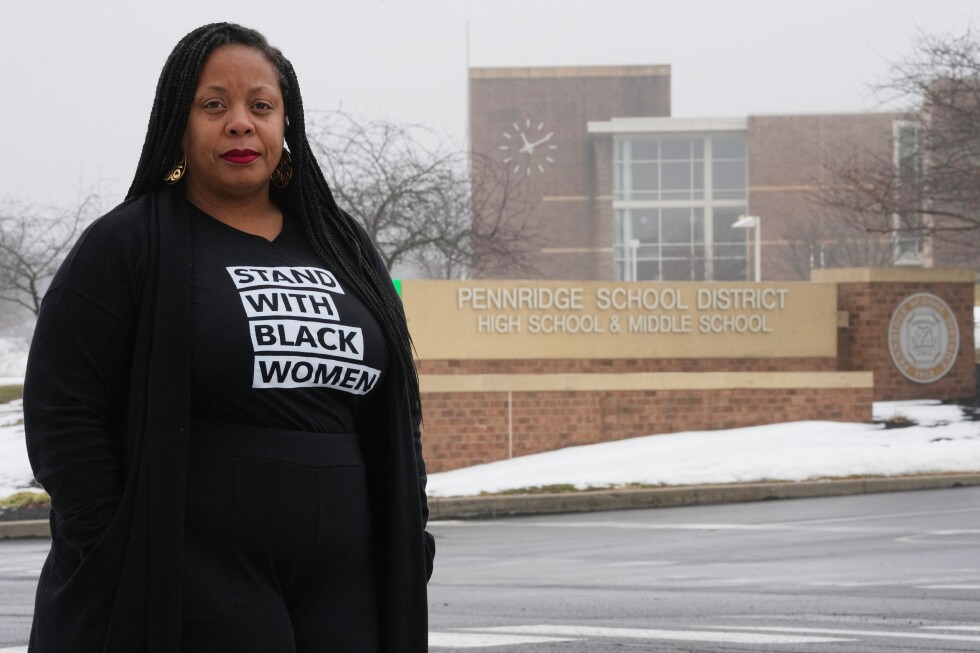
Black students in Pennsylvania’s predominantly white Pennridge School District routinely face racial slurs from classmates who call them “slave,” “monkey,” or worse—often without consequence, according to parents who filed a federal complaint in 2024. Instead of finding relief, their plea became one of thousands languishing in a backlogged federal system, severely undermined by staffing cuts under the Trump administration.
“There was an expectation that something was going to happen,” said Adrienne King, president of the NAACP Bucks County chapter and mother of two daughters in the district. When nothing did, “it’s a very hollow, empty feeling.”
The Education Department’s Office for Civil Rights (OCR), traditionally tasked with investigating discrimination in America’s schools, has seen its effectiveness severely diminished. Following sweeping layoffs that closed entire regional offices in major cities like Philadelphia, Boston, and Chicago, families seeking protection from discrimination increasingly find themselves with nowhere to turn.
This vacuum of federal oversight has sparked a growing movement in Democrat-led states to establish or strengthen state-level civil rights mechanisms for education. Pennsylvania State Senator Lindsey Williams has proposed legislation creating a new state agency modeled after the federal OCR. “If the federal government won’t stand up for our most vulnerable students, I will,” Williams declared when announcing the initiative last fall.
While Williams’ bill faces significant challenges in Pennsylvania’s Republican-controlled Senate, the concept has already drawn interest from lawmakers in other states. Similar proposals have emerged in Maryland and Illinois, signaling a potential nationwide shift toward state-level civil rights enforcement in education.
Pennsylvania advocates are simultaneously working to enhance the role of the existing Pennsylvania Human Relations Commission. While the commission already possesses authority to investigate schools, it has historically focused on employment disputes, with education-related cases comprising just 5% of its workload.
Kristina Moon, an attorney with the Education Law Center in Pennsylvania who represents families in the Pennridge complaint, has begun directing discrimination cases to the state commission instead of federal authorities. “It’s incredibly important for students and families to be aware of any other option available to them,” Moon explained.
The commission appears willing to accept cases stalled at the federal level, but officials acknowledge significant constraints. Staffing has fallen from over 200 to approximately 100 employees, raising questions about the agency’s capacity to handle a potential surge in cases. With more than 300 open federal investigations in Pennsylvania alone, redirecting complaints to state authorities would create considerable pressure.
“It would be tough, I’ll be totally honest,” admitted Desireé Chang, the commission’s education director. “A stark influx would definitely put some weight on our agency. But we would do it because that is what we are charged with doing.”
The Office for Civil Rights was already struggling with backlogs before the Trump administration implemented extensive cuts. Current staff report that lengthy investigations have become rare as they prioritize complaints that can be resolved quickly. Simultaneously, the administration has redirected resources toward challenging schools that accommodate transgender students and athletes, arguing such policies discriminate against cisgender girls and women.
This federal retreat has accelerated state-level initiatives across the country. In Maryland, proposed legislation would empower the state’s Commission on Civil Rights to investigate school discrimination. At a recent hearing, commission officials expressed support for the bill, with General Counsel Glendora Hughes explaining, “Offices have been closed, people have been fired, cases are piling up or not even moving—that’s why we sought to step in that gap and provide Maryland students an option.”
Legal advocacy groups are also filling the void. The Southern Poverty Law Center has sued Louisiana’s St. Tammany Parish School District on behalf of a 10-year-old boy with autism whose classroom time was allegedly reduced from a full day to just two hours—precisely the type of case that would previously have drawn federal attention.
The federal government’s ability to withhold funding from non-compliant schools has historically been a powerful enforcement tool. State proposals vary in their enforcement mechanisms, ranging from mediation and legal orders to primarily providing guidance and training, as with California’s newly established Office of Civil Rights.
Meanwhile, in Pennridge, families continue to struggle with unaddressed discrimination. King reports her daughters still encounter racial slurs and insensitive comments about their hair at school. “I feel as though my girls have normalized a lot of this, but for the sake of survival—middle school is hard,” she reflected. “You just want to be like everybody else.”
Fact Checker
Verify the accuracy of this article using The Disinformation Commission analysis and real-time sources.

9 Comments
This is a disappointing development. The Education Department should be a champion for civil rights, not an impediment. With the federal system in disarray, states will need to fill the void and ensure that no student faces discrimination or harassment in their schools. Families deserve better protection.
The Trump administration’s dismantling of the Education Department’s civil rights division is a serious dereliction of duty. Minority students should not have to shoulder the burden of seeking state-level relief for discrimination that the federal government is failing to address. This is a disturbing trend that requires urgent action.
Racial slurs and discrimination against Black students in schools are completely unacceptable. It’s troubling to see the Education Department’s civil rights office become so dysfunctional under the Trump administration. States must step up to protect the rights of all students, regardless of their background.
It’s disheartening to see the Education Department’s civil rights division become so ineffective under the Trump administration. Racial discrimination in schools is unacceptable, and families should not have to shoulder the burden of seeking state-level protection. This is a troubling development that undermines the rights of all students.
It’s disheartening to see the Trump administration dismantle critical civil rights protections in education. Families deserve a robust federal system to address discrimination, not a weakened office that leaves them without recourse. States must fill this void to ensure equal opportunity for all students.
This is a deeply troubling development. The Education Department’s civil rights office should be a strong, proactive defender of equal opportunity in education, not a dysfunctional entity that leaves families without recourse. States must act to fill this void and ensure justice for all students.
This is deeply concerning. Racial discrimination in schools should never be tolerated. The Education Department’s cutbacks in civil rights oversight are troubling and will only embolden those who seek to marginalize minority students. States need to step up and protect the rights of all students.
The Trump administration’s dismantling of the Education Department’s civil rights oversight is a grave dereliction of duty. Minority students deserve a robust federal system to address discrimination, not a weakened office that forces them to seek state-level relief. This is a disturbing trend that requires urgent attention.
The Education Department’s retreat from civil rights enforcement is deeply concerning. Families shouldn’t have to shoulder the burden of seeking state-level relief for discrimination that the federal government is neglecting. This is a troubling trend that undermines the rights of minority students.