


Listen to the article
In a move drawing criticism from preservationists, the Department of Homeland Security is pushing forward with plans to demolish 17 historic buildings at Washington D.C.’s St. Elizabeths campus, citing urgent security concerns at the former psychiatric hospital complex being converted into the agency’s headquarters.
DHS Secretary Kristi Noem, in a December 19 memo to the General Services Administration, declared the vacant structures “present a risk to life and property” and asserted that “demolition is the only permanent measure that resolves the emergency conditions.” The memo included a security assessment warning that the abandoned buildings could be accessed by unauthorized individuals and potentially used as vantage points for attacks or exploited by “malicious insiders.”
“DHS security and safety assessments have determined these dilapidated, vacant buildings pose unacceptable safety, security and emergency-response risks,” DHS Assistant Secretary Tricia McLaughlin told reporters. “Demolition is the only permanent corrective action.”
The 176-acre West Campus of St. Elizabeths holds significant historical importance. Established in 1855 as the nation’s first federally operated psychiatric hospital, the site has been designated a National Historic Landmark and is listed on the National Register of Historic Places. Its dozens of 19th and early 20th-century buildings represent an important architectural and cultural legacy in the capital.
The federal government declared the West Campus “excess property” in 2001 and transferred it to the GSA, which later designated it as the future consolidated headquarters for the Department of Homeland Security. Over the past 15 years, the site has undergone extensive redevelopment, transforming portions of the historic campus into a high-security complex for the agency.
Of the 17 buildings DHS seeks to demolish, four have already received approval from federal planning bodies. However, the remaining 13 have not undergone required review processes, with officials now attempting to bypass standard procedures by invoking the emergency demolition designation.
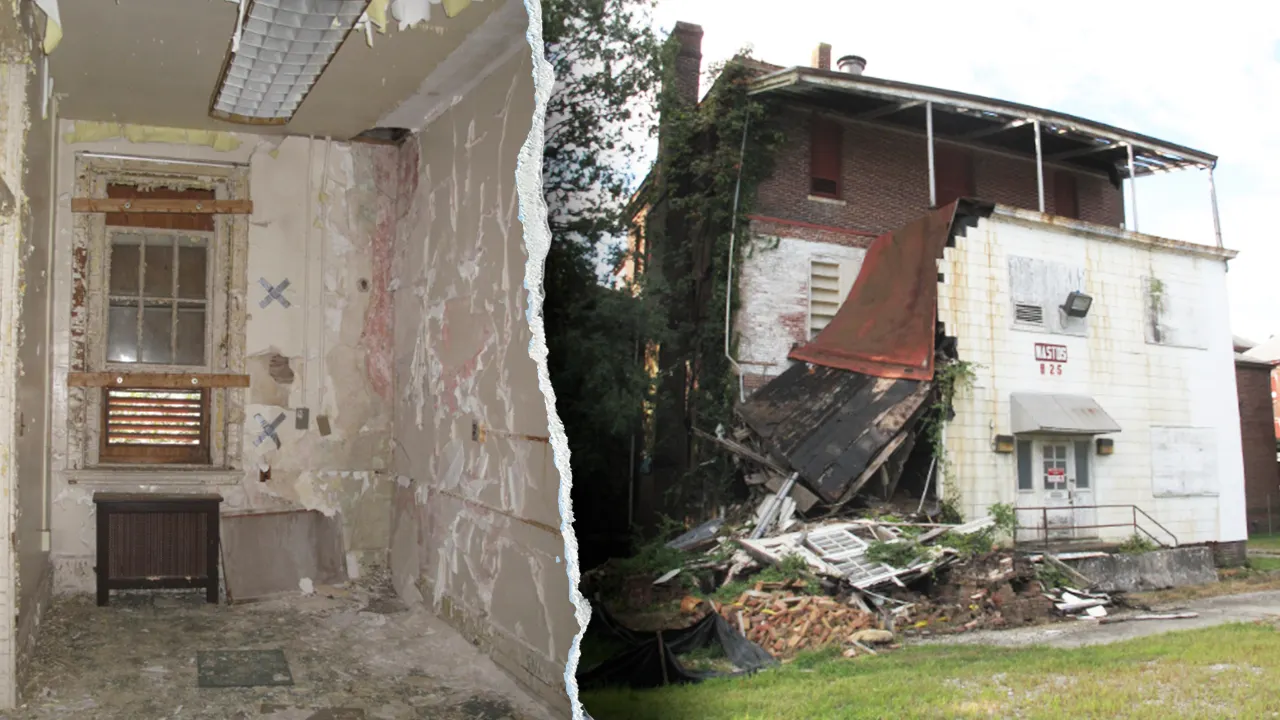
Images released of the buildings reveal severe deterioration, with crumbling interiors, collapsed sections, and structural damage throughout many of the historic structures. Video footage shows peeling paint, missing windows, and other signs of decades of neglect at the campus.
The GSA acknowledged DHS’s security concerns in a statement: “Where buildings pose a threat, demolition may be necessary, and we are currently following all applicable laws and regulations,” said GSA spokesperson Marianne Copenhaver.
However, preservation organizations have mounted strong opposition to the demolition plan, questioning both the timing and legitimacy of the emergency declaration. The National Trust for Historic Preservation and the D.C. Preservation League argue that DHS has failed to provide substantial evidence of an actual emergency that would justify circumventing standard historic preservation review procedures for a National Historic Landmark.
“A unilateral declaration like this is problematic because it bypasses the procedural safeguards designed to ensure stability, legitimacy and fairness,” wrote Elizabeth Merritt, the National Trust’s general counsel, and Rebecca Miller, the Preservation League’s executive director, in a joint letter opposing the move.
Critics have also raised concerns about the timing of the notification process. While DHS declared the emergency on December 19 when Noem signed the memo, the GSA did not notify District officials until the evening of December 23, just before the Christmas holiday, potentially limiting opportunities for challenge or public input.
The controversy parallels another ongoing historic preservation dispute involving federal property. The National Trust for Historic Preservation has also filed a legal challenge against President Donald Trump’s separate plan to demolish the White House East Wing and construct a new ballroom in its place.
As the dispute continues, the future of these historic structures at St. Elizabeths hangs in the balance, highlighting ongoing tensions between security considerations, federal development needs, and historic preservation responsibilities in the nation’s capital.
Fact Checker
Verify the accuracy of this article using The Disinformation Commission analysis and real-time sources.

9 Comments
I’m curious to hear more about the specific security concerns that DHS has identified. Demolition is a drastic measure, so I hope they have compelling evidence to justify it.
While it’s regrettable to lose these historic buildings, DHS can’t ignore serious safety risks. Securing the campus has to take precedence, even if it means demolition.
Demolishing historic buildings is never an easy decision. But if DHS has credible evidence of unacceptable safety and security risks, they may have no choice but to act decisively.
Safety and security should be the top priority, even if it means demolishing these historic structures. DHS has to act decisively to eliminate unacceptable risks.
This is a tough call. On one hand, these buildings have immense historical value. But DHS has a responsibility to safeguard the facility and personnel. Demolition may be the lesser of two evils here.
Interesting dilemma. While preserving historic buildings is important, DHS has to prioritize security and safety concerns. Demolition may be the tough but necessary solution here.
I appreciate the efforts to preserve the historical significance of this site. However, DHS has to put the safety and security of personnel first. Hopefully they can find a solution that minimizes the damage.
This is a tricky situation with no easy answers. DHS has to balance preservation with security needs. I’ll be interested to see how this plays out and what alternative options are considered.
I can understand both sides of this issue. Preservationists want to protect the historic character, but DHS has to ensure the campus is secure. It’s a difficult balance to strike.