


Listen to the article
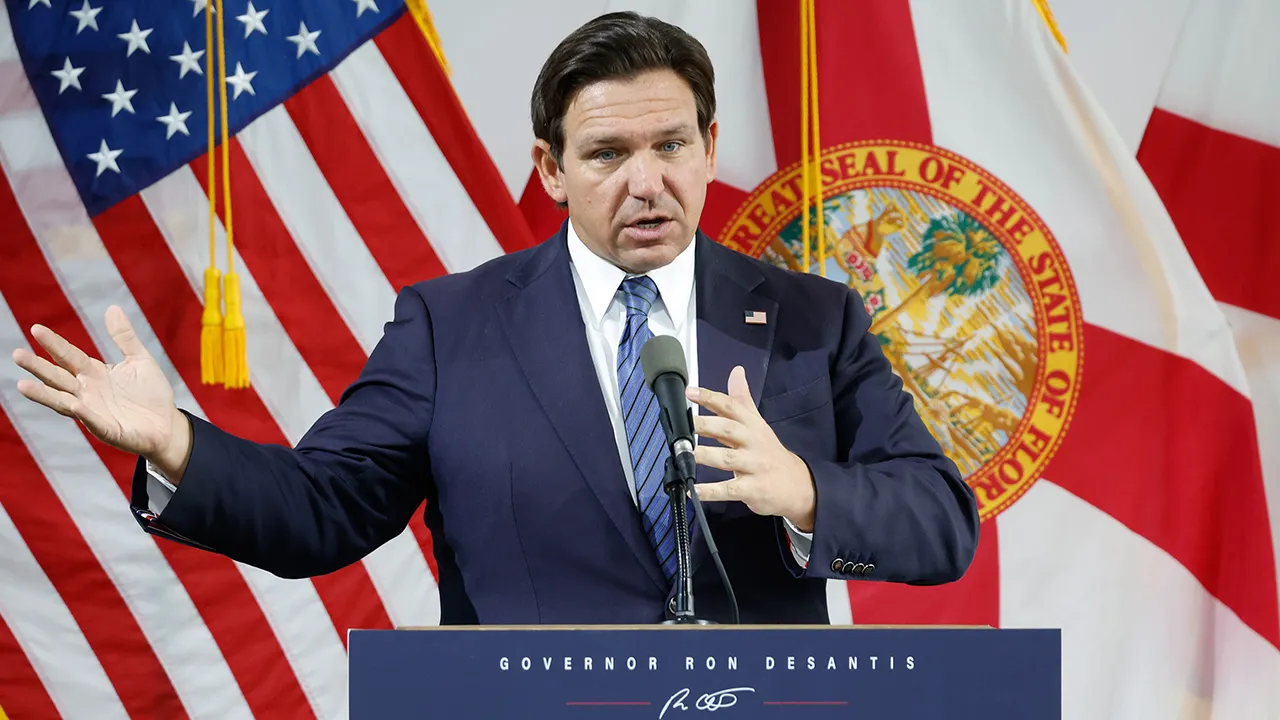
Florida Gov. Ron DeSantis called for an end to Cuba’s communist government during a bill-signing event on Friday, declaring that “it is time for the Cuban communist dictatorship to be put out to pasture once and for all.”
The governor’s comments came as he signed the Foreign Interference Restriction and Enforcement Act, legislation that grants Florida authorities new powers to crack down on businesses with ties to Cuba that operate in violation of U.S. sanctions.
“That would be a good thing for our country. It would be a good thing for Florida,” DeSantis said regarding potential regime change in Cuba, which sits just 100 miles off Florida’s coast.
While DeSantis stopped short of explicitly calling for U.S. military intervention, his remarks align with President Donald Trump’s increasingly aggressive stance toward the island nation. Trump sparked speculation earlier this year when he told reporters, “I do believe I’ll have the honor of taking Cuba… They’re a very weakened nation right now.”
DeSantis referenced the administration’s broader regional approach, noting that “President Trump, and how he’s viewed the importance of our own hemisphere, has kind of reinvigorated the Monroe Doctrine,” referring to the interventionist geopolitical philosophy dating back to the early 19th century.
The timing of these statements comes amid growing instability in Cuba, which has been experiencing widespread energy shortages and blackouts following the removal of Venezuelan President Nicolás Maduro. For nearly three decades, Cuba has relied heavily on Venezuelan oil to power its energy grid. The political upheaval in Venezuela has severely disrupted this crucial supply chain.
Florida’s newly signed legislation takes direct aim at Cuban business interests operating within the state. According to DeSantis, the law “authorizes local governments and tax collectors to revoke business tax receipts for businesses operating in Cuba in violation of federal law.” Additionally, it establishes criminal penalties for false declarations regarding business activities in Cuba, making such misrepresentations a third-degree felony in Florida.
“You can’t do business with criminals,” DeSantis stated bluntly during the signing ceremony.
The governor’s comments reflect the significant influence of Cuban-American voters in Florida politics, where anti-communist sentiment remains strong among those who fled the Castro regime or their descendants. Florida has long been home to the largest Cuban-American population in the United States, with many families maintaining deep opposition to the Cuban government.
When asked about DeSantis’ remarks, a White House spokesperson did not directly address potential U.S. intervention but reinforced the administration’s position that the regime’s collapse is inevitable.
“As the President stated, Cuba is a failing nation that has been horribly run for many years and whose rulers have had a major setback with the loss of support from Venezuela,” the spokesperson said. “Within a short period of time they will fall, ‘and we will be there to help them out.'”
The increasing rhetoric from both DeSantis and Trump signals a potential hardening of U.S. policy toward Cuba after decades of complicated relations. The island nation has been subject to a U.S. economic embargo since 1962, though there have been periods of attempted diplomatic thaw, most notably during the Obama administration.
Senator Marco Rubio, another prominent Florida Republican, has also recently called for new leadership in Cuba as blackouts and civil unrest grip the island. These statements from multiple Republican leaders suggest Cuba policy could become a more significant issue as the 2026 political cycle progresses.
For now, the immediate impact will be felt through Florida’s new legislation, which creates additional barriers for any business with Cuban connections attempting to operate in the state, further isolating the Cuban economy from its closest U.S. neighbor.
Fact Checker
Verify the accuracy of this article using The Disinformation Commission analysis and real-time sources.

9 Comments
Removing the Cuban regime is a challenging geopolitical issue with no easy solutions. Gov. DeSantis is right to highlight the threat of foreign interference, but any actions taken should prioritize stability, democracy, and human rights in the region. A measured, diplomatic approach may be the wisest path forward.
Removing authoritarian regimes is a noble goal, but the history of US interventions in Latin America is fraught. I’m curious to hear more specifics on the proposed legislation and how it might impact US-Cuba relations without escalating tensions.
Gov. DeSantis is right to highlight the threat of foreign interference, but toppling the Cuban regime would require careful strategic planning. The geopolitical and humanitarian implications need to be thoroughly considered before pursuing any drastic action.
Interesting perspective from Gov. DeSantis on the Cuba regime. Toppling authoritarian governments is a complex geopolitical issue with many considerations. I’m curious to hear more details on the proposed legislation and potential impacts on US-Cuba relations.
The governor’s comments reflect the Trump administration’s more confrontational stance toward Cuba. While the communist regime’s repression is concerning, military intervention should be an absolute last resort given the complex geopolitical dynamics in the region.
The governor’s comments reflect the Trump administration’s increasingly aggressive stance toward Cuba. While the communist regime’s human rights abuses are concerning, pursuing regime change is a complex undertaking with significant risks. A more measured, diplomatic approach may be prudent.
The governor’s comments on regime change in Cuba reflect an increasingly aggressive US stance in the region. While the communist government there has a troubling human rights record, any military intervention would need to be carefully weighed against potential consequences.
I’m interested to learn more about the proposed legislation and how it might impact US-Cuba relations. Toppling authoritarian regimes is a noble goal, but the history of US interventions in Latin America shows the need for a careful, strategic approach that considers all potential consequences.
I appreciate Gov. DeSantis highlighting the importance of our hemisphere and addressing foreign interference. Cuba’s authoritarian rule is concerning, but pursuing regime change has historically been fraught with unintended consequences. A measured, diplomatic approach may be prudent.