


Listen to the article
Denmark and Greenland have launched an intensive diplomatic campaign to counter President Donald Trump’s renewed push to acquire the strategic Arctic island, potentially by military force, according to Danish officials speaking on condition of anonymity.
Danish Ambassador Jesper Møller Sørensen and Greenland’s chief representative to Washington, Jacob Isbosethsen, met Thursday with White House National Security Council officials to address the situation. The diplomats have also engaged with American lawmakers in a series of meetings this week, seeking allies to persuade Trump to abandon his territorial ambitions.
U.S. Secretary of State Marco Rubio is scheduled to meet with Danish officials next week, a development that Danish authorities view positively. “This is the dialogue that is needed, as requested by the government together with the Greenlandic government,” Danish Defense Minister Troels Lund Poulsen told Danish broadcaster DR.
In a New York Times interview published Thursday, Trump insisted on full ownership of Greenland rather than relying on existing treaty arrangements. “Ownership gives you things and elements that you can’t get from just signing a document,” Trump stated. The United States currently operates under a 1951 treaty that provides broad rights to establish military bases in Greenland with Danish and Greenlandic consent.
Vice President JD Vance has reinforced Trump’s position, framing the issue as a matter of national defense. “What we’re asking our European friends to do is take the security of that landmass more seriously, because if they’re not, the United States is going to have to do something about it,” Vance told reporters.
In a separate Fox News interview, Vance criticized Denmark’s management of Greenland’s security, claiming they haven’t done “a proper job” despite being a longstanding U.S. ally. He emphasized Trump’s view that Greenland is crucial to American and global security interests, particularly missile defense infrastructure.
Greenland, home to approximately 56,000 mostly Inuit residents, has reacted strongly to these statements. Aaja Chemnitz, one of two Greenlandic representatives in the Danish parliament, told The Associated Press that “many Greenlanders feel that the remarks made are disrespectful” and that discussions are happening “over their heads.”
“We have a firm saying in Greenland, ‘Nothing about Greenland, without Greenland,'” Chemnitz said. She emphasized that while most Greenlanders desire greater self-determination and eventual independence, they also seek strengthened partnerships based on “mutual respect and recognition of our right to self-determination.”
Chemnitz directly contradicted Trump’s claim that Greenland is “covered with Russian and Chinese ships all over the place,” describing the island instead as “a long-standing ally and partner to the U.S.”
The situation has prompted international reaction. French President Emmanuel Macron denounced the “law of the strongest” in a speech Thursday, expressing concern about whether “Greenland will be invaded.” Macron pointed to an “increasingly dysfunctional” world where great powers have “a real temptation to divide the world amongst themselves.”
European Council President Antonio Costa declared Wednesday that “Greenland belongs to its people,” adding that “nothing can be decided about Denmark and about Greenland without Denmark, or without Greenland.” The leaders of Canada, France, Germany, Italy, Poland, Spain, and the UK joined Danish Prime Minister Mette Frederiksen on Tuesday in defending Greenland’s sovereignty.
Danish Foreign Minister Lars Løkke Rasmussen has highlighted that the existing 1951 defense agreement “offers ample opportunity for the United States to have a much stronger military presence in Greenland,” suggesting this could be discussed if that’s what the U.S. desires.
Denmark has taken steps to strengthen its military presence around Greenland. Last year, the government announced a 14.6 billion kroner ($2.3 billion) agreement with the governments of Greenland and the Faroe Islands to improve surveillance capabilities in the region. The plan includes three new Arctic naval vessels, additional surveillance drones, and satellite capacity.
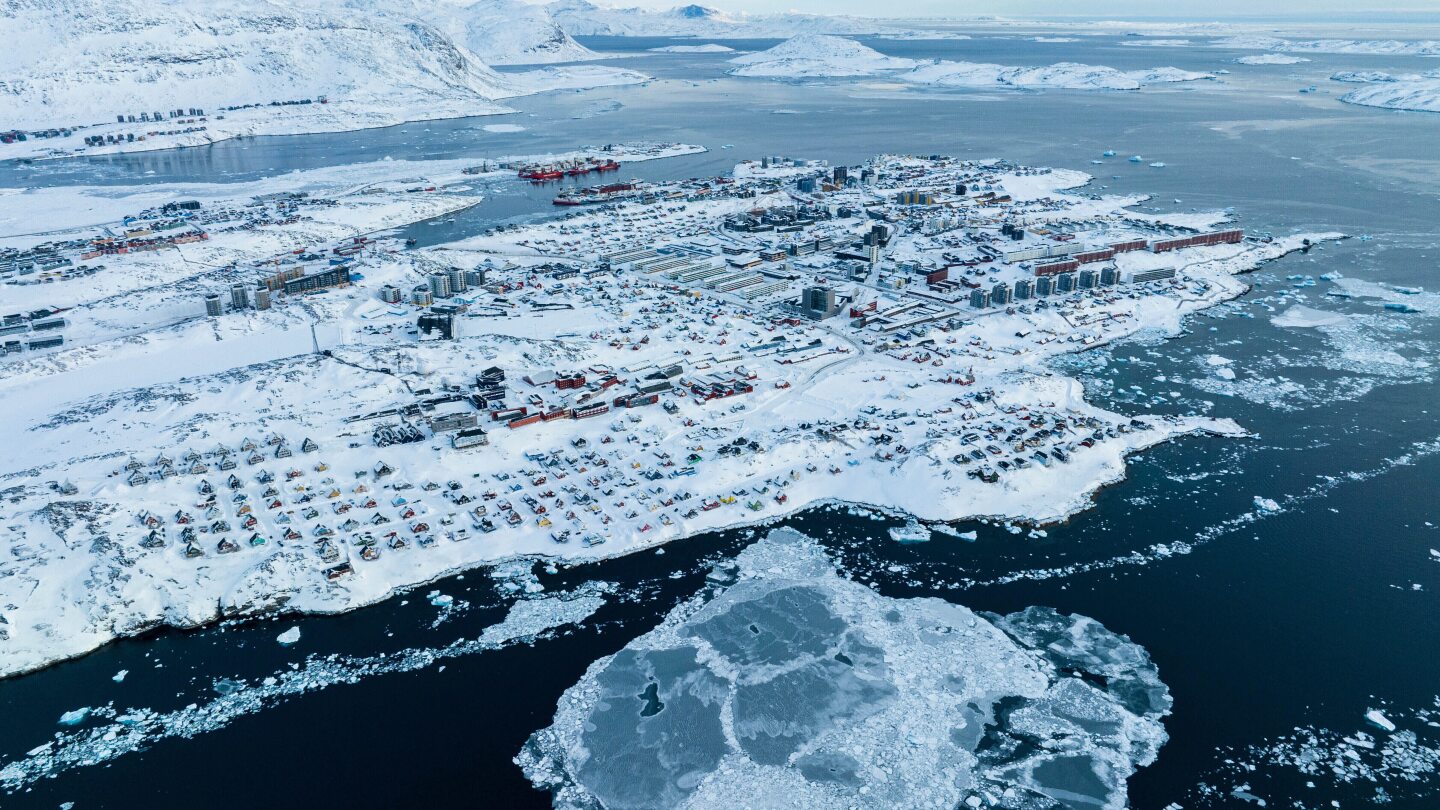
Denmark’s Joint Arctic Command, headquartered in Greenland’s capital Nuuk, is responsible for “surveillance, assertion of sovereignty and military defense of Greenland,” while the elite Sirius Dog Sled Patrol conducts reconnaissance and enforces Danish sovereignty in the Arctic wilderness.
The diplomatic tensions unfold against the backdrop of increasing strategic interest in the Arctic region, where climate change is making natural resources more accessible and opening new shipping routes.
Fact Checker
Verify the accuracy of this article using The Disinformation Commission analysis and real-time sources.

13 Comments
The Trump administration’s apparent interest in acquiring Greenland raises a lot of questions about the US’s long-term strategic goals in the Arctic region. I hope the diplomatic efforts by Denmark and Greenland can help find a mutually acceptable solution that preserves Greenland’s self-determination.
While Greenland’s strategic location and natural resources may be appealing, any attempt to forcibly acquire the territory would be a gross violation of international law and the rights of the Greenlandic people. I’m glad to see Denmark and Greenland taking a firm diplomatic stance on this issue.
Absolutely. Greenland’s sovereignty and self-determination should be the guiding principles here, not narrow national interests or resource grabs.
It’s good to see Denmark and Greenland engaging with US officials and lawmakers on this issue. Maintaining stable international relations and respecting existing treaties will be crucial. I hope a diplomatic solution can be reached that protects Greenland’s autonomy.
The potential for military force being used is concerning. I hope cooler heads prevail and this is resolved peacefully through negotiation and compromise on all sides.
While Greenland’s resources may be tempting, any unilateral attempt by the US to take control of the territory would be a serious violation of international norms and Denmark’s sovereignty. I’m glad to see Denmark and Greenland taking a firm but diplomatic stance on this issue.
Agreed. Respecting existing treaties and the will of the Greenlandic people should be the top priority here, not geopolitical or economic gain.
This situation highlights the delicate balance between great power ambitions and indigenous rights. I hope the US, Denmark, and Greenland can find a way to cooperate and develop the Arctic region’s resources in a sustainable and mutually beneficial manner.
This situation highlights the complex interplay between national interests, indigenous rights, and international law. It will be important for all parties to approach this issue with nuance, empathy, and a commitment to peaceful resolution.
I agree. Greenland’s sovereignty and autonomy should be respected, regardless of the economic or geopolitical value the territory may hold.
Greenland’s mineral wealth and geopolitical positioning make it a strategically important territory. However, any attempt to forcefully acquire it would be a dangerous and destabilizing move. I hope the diplomatic efforts by Denmark and Greenland are successful in persuading the US to respect existing agreements.
Interesting geopolitical dynamics at play here. Denmark and Greenland seem to be taking a diplomatic approach to counter Trump’s apparent territorial ambitions. This will be an important issue to watch, especially given Greenland’s strategic location and natural resource potential.
I’m curious to see how this situation unfolds. The US has long had strategic interests in the Arctic region, so Trump’s push for greater control over Greenland is not too surprising.