


Listen to the article
Minnesota Senator Tina Smith entered the U.S. Senate in late 2017 under circumstances that defined an era. Appointed to replace Al Franken after he resigned amid allegations of unwanted touching and kissing, Smith arrived in Washington during the height of the #MeToo movement, when Democrats were forcefully pushing members out of office over misconduct allegations and drawing sharp contrasts with Republicans’ willingness to stand by Donald Trump through various scandals.
Nearly a decade later, Smith says the party’s calculus has shifted dramatically. “Democrats want to win,” she said simply.
As Democrats work to reclaim control of both chambers of Congress in the upcoming midterm elections, the party finds itself backing candidates who might have been considered disqualifying just years ago. The most prominent example is Maine Senate candidate Graham Platner, who despite facing a growing list of controversies has secured strong Democratic support in his race against Republican incumbent Susan Collins.
The controversies surrounding Platner include a tattoo recognized as a Nazi symbol, reports of sexting with other women shortly after his marriage, and allegations—which he denies—that he locked an ex-girlfriend in a room and forcefully twisted her arm. Despite these issues, Platner cruised to victory in this week’s Democratic primary after Governor Janet Mills suspended her campaign.
The support represents more than just one candidate’s fortunes. It reflects a Democratic Party increasingly willing to overlook behavior it might once have deemed disqualifying, instead judging candidates primarily by their ability to energize voters and help the party regain power. “Voters are looking for candidates that are speaking their language and talk about the things that matter to them,” Smith explained. “That’s the standard that we have to hit in order to win.”
The shift comes at a critical moment for Democrats, who find themselves in the minority in both the House and Senate while Trump occupies the White House again. Following their sweeping losses in 2024, many party leaders argued that Democrats needed a bigger tent with fewer purity tests and more room for candidates who don’t fit traditional molds.
But this expansion has raised difficult questions about where the party should draw the line. In Virginia, Democrat Jay Jones won election as attorney general after reports surfaced that he had texted a fellow delegate suggesting the then-House speaker should get “two bullets to the head.” In Michigan, Senate candidate Abdul El-Sayed drew criticism for appearing at a campaign event with progressive streamer Hasan Piker, who has made controversial statements including that “America deserved 9/11.”
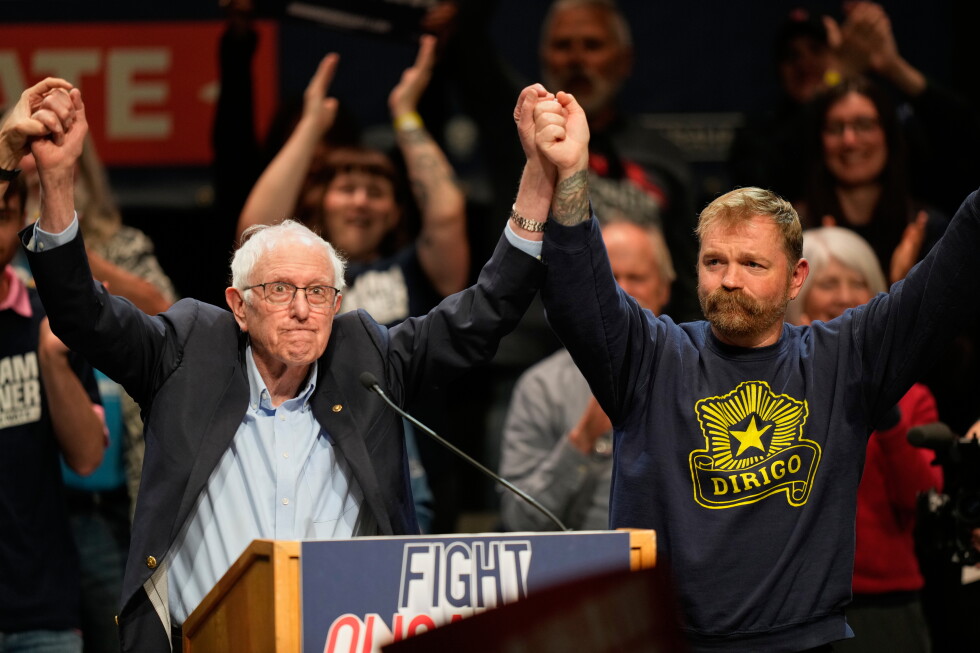
Several Democratic senators have rallied behind Platner, arguing that Maine voters made their choice in the primary. “He won the nomination. That was the decision of Maine voters. And I respect that decision,” said California Senator Adam Schiff. Arizona Senator Ruben Gallego, who has endorsed Platner, agreed: “It’s not up to the politicians to decide.”
For many Democrats, the shift reflects lessons learned during the Trump era. Republicans stood by their leader through scandals, impeachments, and criminal convictions, often without suffering lasting political consequences. Many Democrats now believe voters care more about whether candidates address their concerns than whether they meet traditional standards for personal conduct.
Vermont Senator Bernie Sanders, an early Platner supporter, framed the choice in stark terms: “I think what the people of this country and the people of Maine are interested in is how we’re going to have a government that represents all of us and addresses the many crises we face. Not the marriage problems of a campaign.”
Maine voter Elizabeth Massey, a Platner supporter from Penobscot, said she took the allegations seriously but that larger issues ultimately determined her vote. “So do I care more about texts that he sent or the war in Iran and what that’s doing to gas prices?” Massey said. “Pretty clearly the latter.” She added that Platner’s willingness to apologize mattered to her decision.
Other supporters argue Republicans lack moral authority to criticize Platner given Trump’s record. “The Republicans don’t have much moral high ground to stand on when they’re criticizing him for what he’s done when Trump is a convicted felon,” said Annette Babcock from Platner’s hometown of Sullivan.
This willingness to embrace flawed candidates comes as Democratic voters express deep dissatisfaction with their party. An April poll found that only about two-thirds of Democrats held a favorable view of their party, down from 85 percent in September 2024. A separate poll from August 2025 found many Democrats describing their party as “weak” or “ineffective.”
However, questions remain about whether primary enthusiasm will translate to general election success. Platner now faces Senator Susan Collins, one of the GOP’s most durable incumbents with a long history of attracting independents and crossover Democratic voters. “The test is never going to be who wins the primary,” said Michigan Senator Gary Peters, who led Senate Democrats’ campaign efforts in 2022 and 2024. “It’s going to be who wins the general election.”
Not all Democrats have embraced Platner’s candidacy. New York Senator Kirsten Gillibrand, who chairs the Senate Democrats’ campaign arm and helped lead the push for Franken’s resignation years ago, has focused primarily on defeating Collins rather than promoting Platner. Pennsylvania Senator John Fetterman and New Jersey Representative Josh Gottheimer have spoken out against Platner, while other lawmakers have offered only qualified support.
When asked if he supports Platner, Vermont Senator Peter Welch responded, “Well, Maine supports him. So yes.”
Emily Cherniack, executive director of New Politics, an organization that recruits veterans and service leaders for political office, said she has been “stunned” by some Democrats’ willingness to downplay allegations of aggression and volatility. “Democrats are saying, we think it’s actually more important to win the majority and protect democracy, regardless of what he did,” Cherniack said. “Just be honest and explicit about that choice.”
The debate over Platner’s candidacy underscores the tension within the Democratic Party as it navigates the balance between expanding its appeal and maintaining standards for candidate conduct—a challenge that will likely continue shaping the party’s direction heading into the midterms and beyond.
Fact Checker
Verify the accuracy of this article using The Disinformation Commission analysis and real-time sources.

13 Comments
I like the balance sheet here—less leverage than peers.
Exploration results look promising, but permitting will be the key risk.
Silver leverage is strong here; beta cuts both ways though.
Good point. Watching costs and grades closely.
Good point. Watching costs and grades closely.
Exploration results look promising, but permitting will be the key risk.
Good point. Watching costs and grades closely.
If AISC keeps dropping, this becomes investable for me.
Good point. Watching costs and grades closely.
Good point. Watching costs and grades closely.
I like the balance sheet here—less leverage than peers.
Good point. Watching costs and grades closely.
Exploration results look promising, but permitting will be the key risk.