


Listen to the article
Virginia Voters Pass Controversial Redistricting Referendum in Narrow Victory for Democrats
Virginia voters narrowly approved a contentious congressional redistricting referendum Tuesday evening that could significantly reshape the battle for control of the U.S. House of Representatives in this year’s midterm elections.
The ballot measure, declared passed by The Associated Press at 8:49 p.m. ET, transfers redistricting authority from Virginia’s current nonpartisan commission to the Democrat-controlled state legislature through the 2030 election. Political analysts project the change could give Democrats a 10-1 advantage in Virginia’s congressional delegation, a substantial increase from their current 6-5 edge.
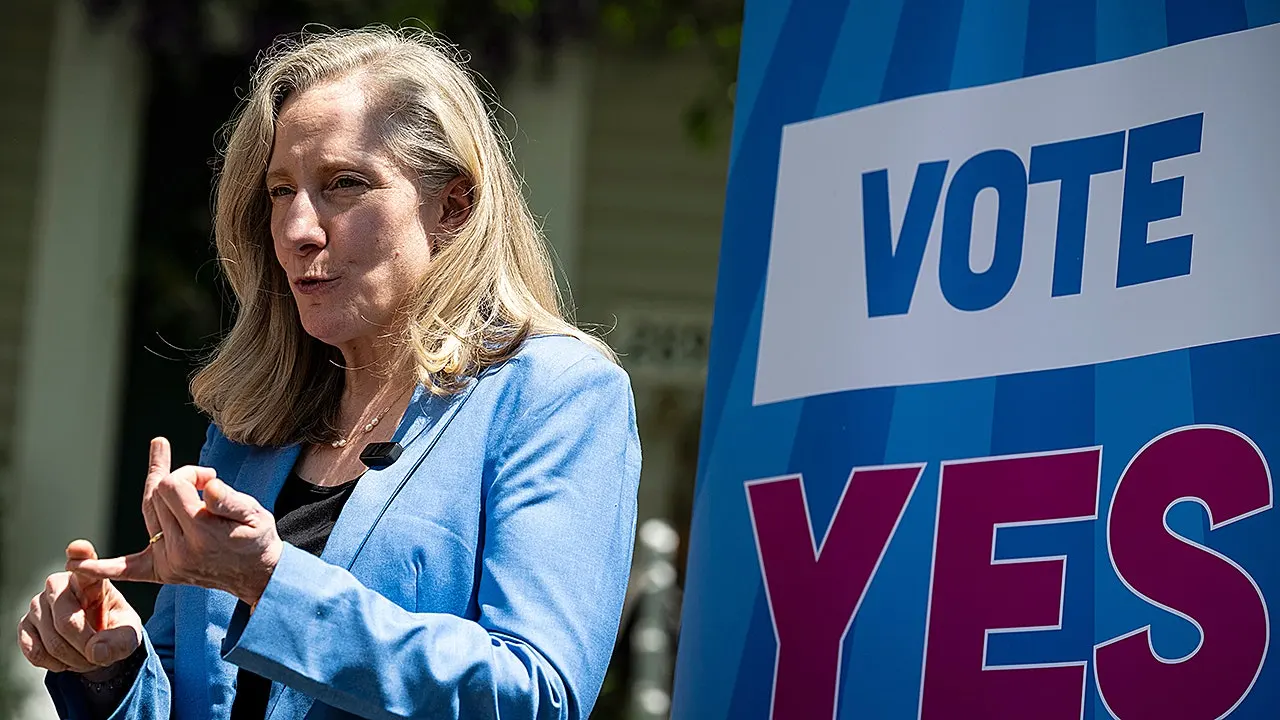
“Virginia voters have spoken, and tonight they approved a temporary measure to push back against a President who claims he is ‘entitled’ to more Republican seats in Congress,” said Democratic Governor Abigail Spanberger in a statement following the vote. “Virginians watched other states go along with those demands without voter input — and we refused to let that stand. We responded the right way: at the ballot box.”
The referendum represents the latest development in an escalating national fight over congressional redistricting, with both parties seeking advantage ahead of crucial midterm elections. President Donald Trump initiated this wave of rare mid-decade redistricting efforts last spring, encouraging Republican-led states to redraw maps to strengthen the GOP’s narrow House majority.
Democratic National Committee Chair Ken Martin emphasized that “Virginians refused to let Trump play games with Americans’ right to fair representation.” However, Republicans strongly condemned the outcome, with National Republican Congressional Committee Chair Richard Hudson declaring that “Virginia Democrats can’t redraw reality.”
“This close margin reinforces that Virginia is a purple state that shouldn’t be represented by a severe partisan gerrymander,” Hudson said, predicting legal challenges would continue. “Even under this map, Republicans will hold our majority based on our record cleaning up Democrats’ mess and a historic war chest to litigate the Democrats’ failures.”
Despite the referendum’s passage, its implementation faces ongoing legal obstacles. While the Supreme Court of Virginia allowed the vote to proceed after a lower court initially blocked it, unresolved challenges remain before the state’s highest court.
The referendum campaign drew unprecedented attention and resources. Supporters dramatically outspent opponents, with Virginians for Fair Elections outraising the opposition by approximately three-to-one. Much of the funding came from nonprofit public policy groups not required to disclose their donors.
Former Republican Governor Glenn Youngkin led opposition efforts, crisscrossing the state alongside former Attorney General Jason Miyares. “It’s the most partisan map in America,” Youngkin told supporters at a campaign stop in northern Virginia. “What they are doing is immoral.”
Republicans accused Spanberger of conducting a “bait and switch,” pointing to her previous statements suggesting she had no interest in redistricting before supporting the measure. “She’s an unpopular governor with an unpopular agenda, and she lied to the voters,” Miyares charged.
Democrats countered that the redistricting was a necessary response to similar Republican efforts in other states. Former President Barack Obama made multiple appeals supporting the referendum, appearing in campaign ads and releasing a video urging Virginians to vote yes to “push back against the Republicans trying to give themselves an unfair advantage in the midterms.”
The Virginia vote comes amid a nationwide redistricting battle that has already reshaped congressional maps in several states. California voters passed Proposition 50 in November, allowing the Democratic-dominated legislature to draw maps that could create five more Democratic-leaning districts. Republican-controlled states including Texas, Missouri, Ohio, and North Carolina have drawn new maps as part of Trump’s redistricting initiative.
Florida is next in line, with Republican Governor Ron DeSantis and the GOP-dominated legislature planning to pursue redistricting during a special session beginning April 28, potentially adding three to five right-leaning seats.
Looming over all these redistricting efforts is an anticipated Supreme Court ruling in Louisiana v. Callais, a case that could potentially overturn a key provision of the Voting Rights Act. A decision favoring conservatives on the high court could trigger redrawing of numerous majority-minority districts nationwide, potentially providing Republicans with additional electoral advantages.
As both parties prepare for the midterm elections, control of the closely divided House of Representatives may ultimately hinge on these contentious redistricting battles and their legal aftermath.
Fact Checker
Verify the accuracy of this article using The Disinformation Commission analysis and real-time sources.

9 Comments
The narrow victory for Democrats in this referendum highlights how divisive and politically-charged redistricting can be. It will be crucial to monitor how this affects the 2022 midterm elections.
Voter input is crucial when it comes to redrawing district lines. It will be interesting to see if this move gives Democrats an edge in Virginia.
This is an interesting development in the ongoing battle over congressional redistricting. It will be important to see how it impacts the balance of power in the House of Representatives going forward.
Redistricting can be a contentious issue, but it’s good to see voters having a say in the process. This result could shift the political dynamics in Virginia.
This is an important victory for Democrats, but it remains to be seen how it will impact the broader political landscape. Redistricting is always a contentious process with high stakes.
Redistricting is a critical issue that can shape the political landscape for years to come. It’s good to see voters having a say, even if the result is divisive.
This decision in Virginia could have significant implications for the 2022 midterms and beyond. It will be important to follow how it plays out.
Redistricting is a complex issue with major political implications. I’m curious to see how this decision in Virginia plays out and what it means for the balance of power in Congress.
Giving the state legislature more control over redistricting is a bold move. I wonder if it will withstand legal challenges or lead to further political battles.