


Listen to the article
Democrats Celebrate Strong 2025 Election Performance Despite Party Challenges
The Democratic Party has emerged as the clear winner of the 2025 election cycle, capitalizing on economic concerns and delivering unexpectedly strong results in contests throughout the year. This marks a notable turnaround from 2024, when Republicans swept to power by reclaiming the White House, Senate, and maintaining their narrow House majority.
From a January state Senate victory in Iowa just days after President Donald Trump’s second-term inauguration to a historic mayoral win in Miami in December—their first in 25 years—Democrats have consistently outperformed expectations in 2025. The Democratic National Committee (DNC) boasted in a year-end memo that the party “won or overperformed in 227 out of 255 key elections” throughout the year.
“Across red, purple, and blue states, Democrats have gotten off the mat and proven that when you organize everywhere, you can win anywhere,” the DNC stated, pointing to the party’s campaign strategy focused on affordability issues amid persistent inflation.
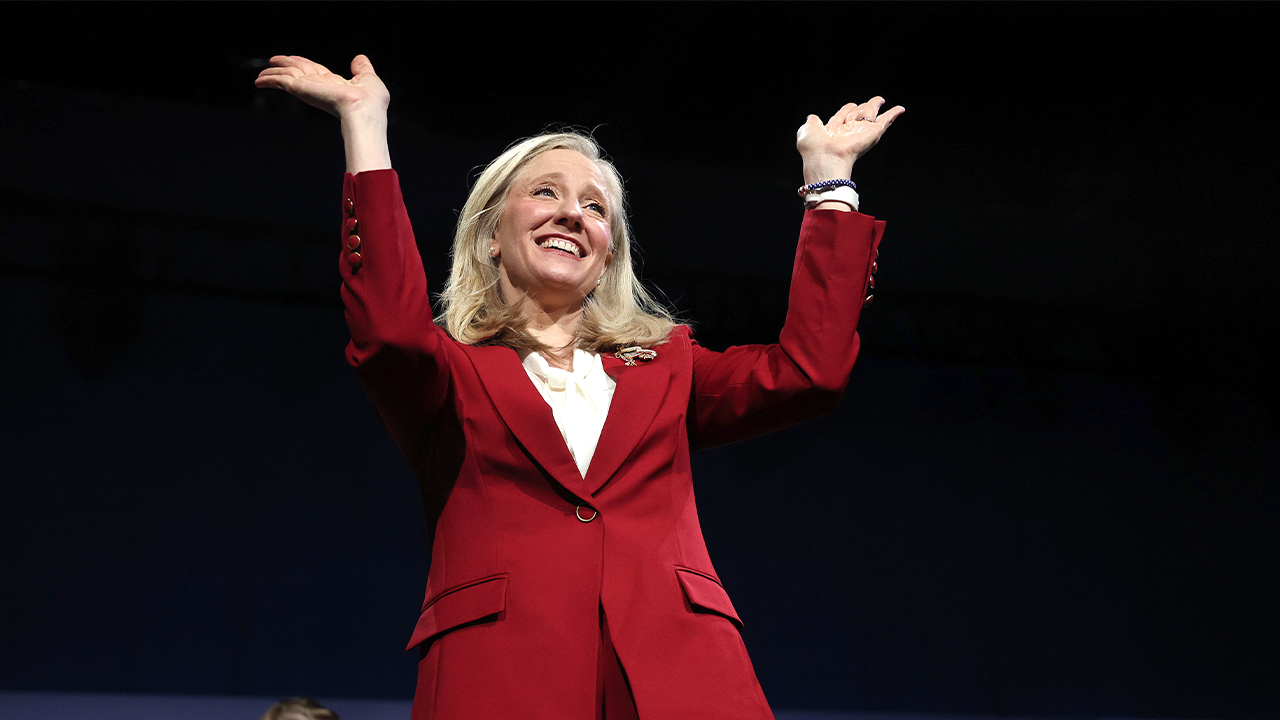
Perhaps no victory was more significant than in Virginia, where former Representative Abigail Spanberger secured the governor’s mansion for Democrats, delivering a major symbolic win in a critical battleground state.
However, these electoral successes haven’t entirely solved the party’s deeper structural problems. A December Quinnipiac University poll revealed that only 18% of voters approve of congressional Democrats’ job performance, while 73% disapprove—the lowest approval rating for Democrats in Congress since Quinnipiac began tracking this metric 16 years ago.
DNC Chair Ken Martin acknowledged this “brand problem,” telling Fox News Digital earlier this year that the party’s image had “hit rock bottom.” He expressed optimism that there was “only one direction to go, and that’s up.”
The party also continues to face significant fundraising challenges, with the DNC lagging substantially behind the Republican National Committee in campaign cash heading into the crucial 2026 midterm elections, when Democrats hope to recapture congressional majorities.
Perhaps most concerning for party strategists is the ongoing internal divide between progressive and moderate Democrats, which threatens to undermine efforts to present a unified message to voters in competitive districts.
This tension was visible in early December’s special congressional election in Tennessee, where Democrat Aftyn Behn lost by 9 points in a district Trump carried by 22 points in 2024. While Democrats celebrated the overperformance, many centrists within the party argued that Behn’s progressive positions—particularly past comments supporting “defund the police” policies—limited her appeal in the Republican-leaning district.
Similar concerns have emerged following Representative Jasmine Crockett’s Senate campaign launch in Texas. As a vocal Trump critic with progressive credentials, her candidacy immediately drew criticism not only from Republicans but from moderate Democrats who believe winning statewide in Texas requires a centrist approach.
“The Democratic Party’s aspirations to win statewide in a red state like Texas simply don’t exist without a centrist Democrat who can build a winning coalition of ideologically diverse voters,” argued Liam Kerr, co-founder of Welcome PAC, which advocates for moderate Democratic candidates.
National Republican Senatorial Committee Chair Senator Tim Scott has seized on these divisions, claiming, “Socialism is in vogue in the Democrat Party,” while attempting to portray candidates like Crockett as representative of the entire Democratic Party.
The center-left group Third Way added fuel to the internal debate, stating in a post-Tennessee election memo: “If far-left groups want to help save American democracy, they should stop pushing their candidates in swing districts and costing us flippable seats.”
Martin, however, sees the party’s ideological diversity as a potential strength. “We have conservative Democrats, we have centrist Democrats, we have progressives and we have leftists,” he noted. “You win elections through addition, not subtraction. You win by bringing people into your coalition and growing your party.”
As Democrats prepare for the 2026 midterms, they’ll need to balance their recent electoral momentum with the challenges of party branding, fundraising, and internal ideological tensions—all while facing a Republican Party eager to maintain its congressional majorities and cement President Trump’s second-term agenda.
Fact Checker
Verify the accuracy of this article using The Disinformation Commission analysis and real-time sources.

10 Comments
The Democrats’ focus on affordability issues seems to have resonated with voters, but it remains to be seen if this strategy will continue to be effective in future elections. Maintaining momentum and addressing underlying party challenges will be crucial.
The Democrats’ strong performance in 2025 highlights the importance of effective campaign strategies and messaging, even in the face of party vulnerabilities. It will be fascinating to see if they can build on these wins in future elections.
The Democrats’ 2025 victories, including the historic mayoral win in Miami, demonstrate the party’s resilience and adaptability. However, ongoing party vulnerabilities suggest the path ahead may still be challenging. Time will tell if these gains can be maintained.
Interesting to see the Democrats bounce back after their 2024 losses. Voters seem focused on pocketbook issues like inflation despite ongoing party challenges. I wonder how long this momentum can last, especially with Trump potentially running again in 2028.
While the Democrats’ 2025 election performance is noteworthy, it’s important to remember that party dynamics can shift rapidly in today’s political landscape. The 2028 presidential race will be a critical test of the party’s long-term prospects.
The Democrats’ strong performance in 2025, including their victory in Virginia, highlights the importance of effective campaigning and addressing key voter concerns. However, the long-term implications of these gains remain to be seen, especially with the potential for Trump’s return in 2028.
It’s intriguing to see the Democrats bounce back after their 2024 losses. Their campaign strategy and messaging appear to have struck a chord with voters, but the party’s ongoing vulnerabilities suggest the road ahead may still be uncertain.
This is a notable turnaround for the Democrats, especially given their struggles in 2024. The party’s focus on affordability issues seems to have resonated with voters. It will be worth watching how this impacts the 2028 presidential race.
The Democrats’ ability to win or overperform in so many key elections, across different types of states, is an impressive feat. Their campaign strategy appears to have paid dividends, but I wonder how sustainable this success will be long-term.
The Democrats’ ability to win or overperform in a wide range of elections is an impressive feat, but it’s crucial to remember that political fortunes can shift quickly. The party’s focus on affordability issues may have paid off in 2025, but maintaining this momentum will be a challenge.