


Listen to the article
House Intelligence Committee Chairman Rick Crawford is set to submit a resolution praising the recent capture of Venezuelan President Nicolás Maduro, using past Democratic statements to highlight what he sees as partisan hypocrisy on the issue.
The Arkansas Republican’s resolution, obtained exclusively by Fox News Digital, compiles statements from numerous Democratic-sponsored bills over the past four years that characterized Maduro as a threat to U.S. national security and called for an end to his leadership in Venezuela.
“All this resolution does is reiterate the overall consensus of Republicans and Democrats in the House of Representatives, evidenced by the legislation introduced over the last four years, that Nicolás Maduro was a threat to the national security of the United States and the well-being of the people of Venezuela,” Crawford said in a statement.
The resolution pointedly contrasts these past positions with current Democratic criticism of the Trump administration’s recent operation that resulted in Maduro’s capture. Many Democrats have characterized the action as an act of war requiring congressional approval.
Crawford’s resolution highlights specific examples of Democratic legislation targeting Maduro, including a bill introduced by Rep. Debbie Wasserman Schultz (D-Fla.) calling for “ending Nicolás Maduro’s usurpation of presidential authorities” and citing his undermining of Venezuela’s electoral process.
Another bill authored by Rep. Haley Stevens (D-Mich.) condemned the Venezuelan government’s kidnapping practices and demanded Maduro’s regime be designated a “state sponsor of wrongful detention.”
The resolution also notes Sen. Elissa Slotkin (D-Mich.) introduced legislation in 2024 that defined Maduro as a “person of concern” engaged in a “long-term pattern or serious instances of activity adverse to the national security of the United States.” Rep. Rosa DeLauro (D-Conn.) included similar language in her own legislation.
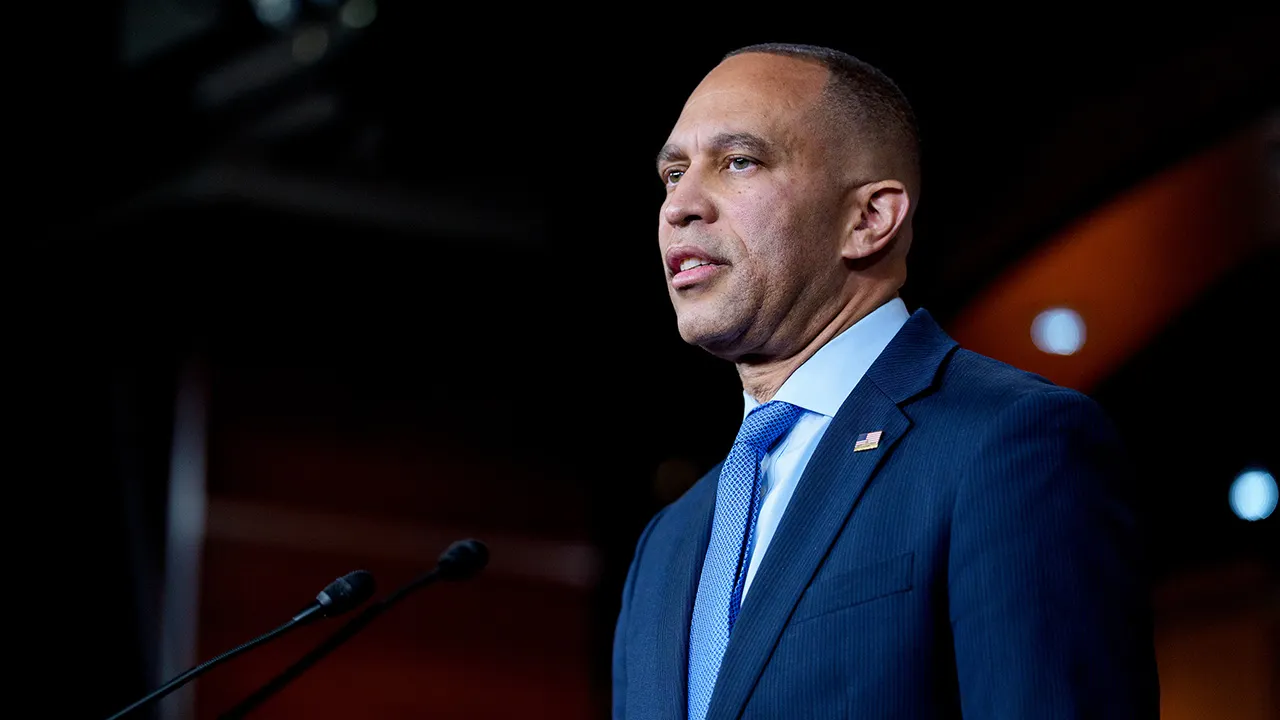
Crawford’s document specifically targets recent statements by House Minority Leader Hakeem Jeffries, who said on social media, “This wasn’t a law enforcement action. They’re lying to the American people when they say that.” It also references Rep. Delia Ramirez’s post claiming “under the guise of liberty, an administration of warmongers has lied to justify an invasion and is dragging us into an illegal, endless war.”
The political context surrounding Venezuela’s situation has evolved dramatically over the years. Venezuela, once one of Latin America’s wealthiest nations with the world’s largest proven oil reserves, has suffered economic collapse under Maduro’s leadership, resulting in millions of refugees fleeing to neighboring countries and the United States. The humanitarian crisis has created regional instability and contributed to migration pressures at the U.S. southern border.
Venezuela’s strategic importance extends beyond migration issues. The country’s vast oil reserves have drawn interest from global powers including Russia and China, who have supported the Maduro regime. Energy analysts note that any shift in Venezuelan governance could potentially reverberate through global oil markets.
Crawford believes the Trump administration’s action aligns with what Democrats had previously advocated. “Democrats have introduced numerous pieces of legislation condemning the Maduro regime, declaring Maduro an illegitimate president, and urging the U.S. to take decisive action,” he said.
“Under President Trump’s leadership, the U.S. took control of the situation to secure our Western Hemisphere neighborhood, sending a powerful message to adversaries around the world, even contemplating nefarious moves in our neighborhood,” Crawford added.
The resolution comes amid ongoing debate about presidential war powers and the extent of executive authority in conducting military operations abroad without explicit congressional authorization.
Fact Checker
Verify the accuracy of this article using The Disinformation Commission analysis and real-time sources.

10 Comments
Interesting to see how past Democratic statements on Venezuela align with Trump’s policy. It highlights the political dynamics at play. I wonder if this will change the current criticism of the recent action against Maduro.
Good point. It will be important to see if this leads to a shift in the Democratic position or if they maintain their criticism despite the precedent.
I’m curious to see how this resolution plays out. It seems the goal is to highlight hypocrisy, but will it actually lead to any meaningful shift in the debate over Venezuela policy?
That’s a good question. Partisan politics can often obstruct progress, so I hope this at least encourages a more constructive dialogue, even if it doesn’t change the overall dynamic.
This is a complex geopolitical issue without easy answers. While I don’t agree with all of Trump’s Venezuela policy, I appreciate the effort to find bipartisan consensus on addressing the Maduro regime’s threats to the region.
Agreed, it’s a nuanced situation. Reasonable people can disagree on the right approach, but finding common ground is crucial when dealing with threats to stability and security.
The use of past statements to counter current criticisms is an interesting tactic. It will be important to see how the facts and context around those statements are interpreted and whether they truly support the current administration’s actions.
That’s a fair point. The details and nuance behind the past statements will be key to evaluating their relevance to the current situation.
While I appreciate the desire for bipartisanship on Venezuela, I’m concerned that this resolution may just end up being more political theater than a genuine effort to find common ground. Hopefully the substantive policy debates can move forward constructively.
I share your concern. Partisan posturing often gets in the way of productive policymaking. The key will be whether this leads to meaningful dialogue and compromise, rather than just scoring political points.