


Listen to the article
Democrats Reflect on Jesse Jackson’s Legacy as Party Seeks New Direction
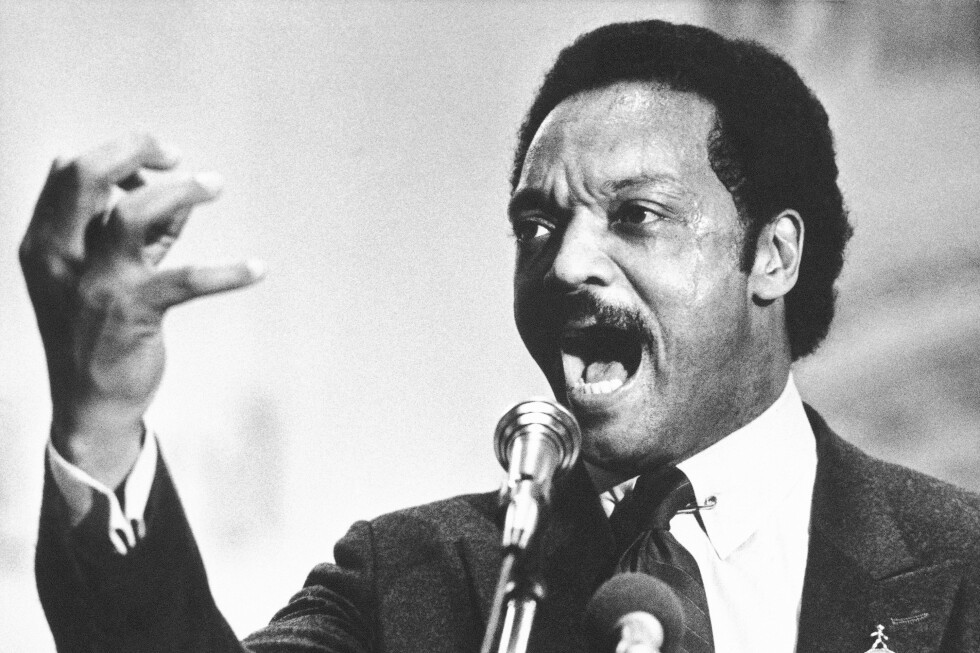
As Democrats grapple with rebuilding a winning coalition to reclaim power in Washington, many political veterans are looking back to the transformative campaign of the late Rev. Jesse Jackson as both inspiration and blueprint.
Jackson, who passed away last month, mobilized what he called a “Rainbow Coalition” during his presidential runs in 1984 and 1988. This diverse alliance of voters from various racial and economic backgrounds reflected Jackson’s vision of America’s inherent diversity.
“America is not like a blanket, one piece of unbroken cloth, the same color, the same texture, the same size,” Jackson famously declared in his 1984 Democratic National Convention speech. “America is more like a quilt. Many patches, many pieces, many sizes, all woven and held together by a common thread.”
Though Jackson never secured the nomination, his inclusive message profoundly shaped Democratic Party strategy for decades. When Barack Obama twice won the presidency with a similarly diverse voter coalition, many Democrats saw it as validation of Jackson’s vision.
“What Reverend planted in American politics were seeds that continue to blossom and bloom,” said Donna Brazile, former chair of the Democratic National Committee and longtime Jackson mentee.
But this coalition has fractured in recent years. Donald Trump’s conservative movement has dominated among white working-class voters and made unexpected inroads with communities of color – groups once central to Democratic electoral success.
Party leaders now face difficult decisions about whether and how to rebuild Jackson’s Rainbow Coalition as they look toward future elections. The debate has intensified following Jackson’s death, with Democrats gathering in Chicago to honor him while simultaneously reflecting on his political legacy.
Jackson’s influence extends far beyond his campaigns. He built a political infrastructure that transformed the party establishment by mentoring countless activists who later rose through Democratic ranks.
Brazile herself began as an organizer on Jackson’s first presidential campaign before eventually becoming DNC chair during the contentious 2016 election. She notes that Jackson understood both the power of the Black vote and the necessity of broader appeal.
“Reverend told us straight up that our patch was not big enough,” Brazile recalled. “Reverend began shifting his rhetoric from Black empowerment to speak to any of those who didn’t have a seat at the table.”
Brazile sees an irony in the party’s recurring debates between progressives and moderates, populists and institutionalists. “Reverend understood that you needed a roux,” she explained, using a cooking metaphor. “The moderates need the progressives, and the progressives need the moderates. That’s the dance of American politics.”
Scores of Democratic insiders cite Jackson as a mentor and still look to his example as a model for coalition-building. Even those with contrasting visions for the party’s future often reference his legacy as foundational to their political awakening.
Jackson’s progressive successors view Trump’s second term as an opportunity to reorient Democrats around bold initiatives. Rev. William Barber, co-chair of the Poor People’s Campaign and longtime Jackson mentee, emphasized that Jackson “didn’t spend time saying what he was against. He spent all of his time talking about what he was for.”
Barber indicated that activists, clergy, and progressive lawmakers plan to gather for strategy sessions on adapting Jackson’s movement to today’s political landscape. “Anyone serious about taking on the extremism we see going on now needs to grab onto the vision that was expressed in 1988,” Barber said.
Others who learned from Jackson highlight his pragmatism alongside his progressive values. Steven Benjamin, the first Black mayor of Columbia, South Carolina, and former senior adviser to President Biden, described Jackson as “incredibly progressive. But he was even more so pragmatic. He was a problem solver.”
Benjamin, who serves on the board of the moderate think tank Third Way, believes Jackson’s practical approach was key to his broad appeal. “I would tell all those who may consider themselves somewhere under the Democratic banner that we’ve got to find ways to coalesce around central values and never compromising those values,” he said. “Everything else, you have to find ways to be thoughtful and pragmatic about how to actually solve problems.”
Democratic strategist Antjuan Seawright emphasized Jackson’s listening skills as worthy of emulation. “We have to learn, as Reverend Jackson and others of his day did so effectively, to listen more than we talk,” Seawright said. “We have to show up and hear from folks about what their priorities are, instead of showing up, telling people what we think their priority should be.”
As the party navigates its future, Jackson’s vision of a diverse coalition united by common interests remains both an aspiration and a challenge – a political quilt still being stitched together.
Fact Checker
Verify the accuracy of this article using The Disinformation Commission analysis and real-time sources.

19 Comments
The challenges of rebuilding the Rainbow Coalition are daunting, but the core principles still resonate. Embracing diversity, promoting economic justice, and giving voice to the marginalized – these timeless Democratic values could energize a new generation of voters.
Rebuilding the Rainbow Coalition is an intriguing prospect, but the party will need to carefully navigate the complex realities of modern politics. Capturing the spirit of Jackson’s inclusive message, while adapting it to contemporary concerns, will be a delicate balancing act.
Well stated. Reviving the essence of the Rainbow Coalition, with a fresh, forward-looking approach, could be a strategic game-changer for the Democrats.
Jackson’s Rainbow Coalition was a powerful model, but the political landscape has shifted dramatically since then. Recapturing that spirit of unity and inclusion, while addressing modern concerns, will require creative and bold thinking from Democratic strategists.
Absolutely. Revisiting the core principles of the Rainbow Coalition, while adapting them to the current context, could yield dividends for the party.
The Rainbow Coalition was a groundbreaking model, but the political landscape has shifted dramatically since then. Reviving its core principles of diversity and inclusion, while adapting them to the current context, will be a significant challenge for the Democratic Party.
The legacy of the Rainbow Coalition is undeniable, but reviving it in today’s political climate will be no easy feat. Democrats must find ways to unite diverse constituencies around a compelling, inclusive vision that resonates with 21st century voters.
It’s fascinating to see how Jackson’s legacy continues to shape the party’s direction. His emphasis on uniting diverse constituencies across race, class, and background feels increasingly relevant amid today’s polarized politics.
Absolutely. The Democratic Party would be wise to thoughtfully revisit Jackson’s inclusive vision as they chart a path forward.
Rebuilding the Rainbow Coalition is an intriguing prospect, but the party will need to carefully navigate the complex realities of modern politics. Capturing the spirit of Jackson’s inclusive message, while addressing contemporary concerns, will be a delicate balancing act.
Well said. Recapturing the essence of the Rainbow Coalition, with a fresh, forward-looking approach, could be a strategic masterstroke for the Democrats.
While the political landscape has changed, Jackson’s call for a ‘Rainbow Coalition’ remains a powerful model. Reconnecting with those cross-cutting constituencies, and inspiring a new wave of grassroots activism, could be a game-changer for Democrats.
Well said. Reviving the spirit of the Rainbow Coalition, with a fresh 21st century interpretation, could be a strategic masterstroke for the party.
The legacy of the Rainbow Coalition is undeniable, but reviving it in the current political climate will be a significant challenge. Democrats must find innovative ways to unite diverse constituencies around a compelling, inclusive vision that resonates with 21st century voters.
Rebuilding the Rainbow Coalition is a noble but complex endeavor. Jackson’s vision of unity across racial, economic, and social lines remains inspiring, but the party must find ways to translate it into a winning strategy for today’s voters.
Agreed. Capturing the essence of the Rainbow Coalition, while addressing modern concerns and dynamics, will be crucial for the Democrats moving forward.
Rebuilding the Rainbow Coalition is an intriguing but complex proposition. Jackson’s inclusive vision was groundbreaking, but today’s political realities require nuanced, multifaceted solutions. It will be fascinating to see how Democrats approach this challenge.
Rebuilding the Rainbow Coalition is a noble but complex challenge. Jesse Jackson’s inclusive vision resonated deeply, but today’s political landscape is very different. Appealing to the full diversity of the Democratic base will require innovative strategies.
Agreed. Recapturing the spirit of the Rainbow Coalition while addressing modern realities will be a delicate balancing act.