


Listen to the article
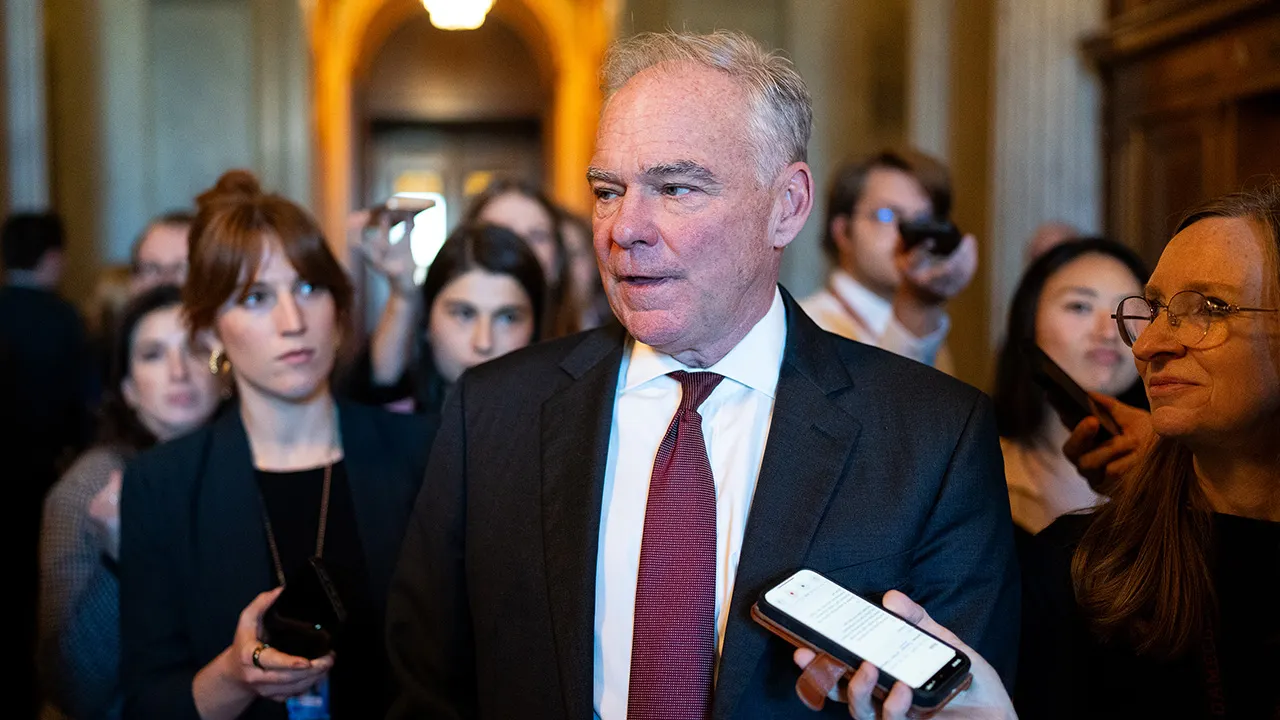
Democrats secured protections for federal workers in the government shutdown deal that ended the nation’s longest funding lapse, according to Virginia Sen. Tim Kaine, who played a key role in brokering the resolution that passed the Senate on Sunday.
While Democrats failed to achieve their primary goal of extending the expiring Obamacare COVID-era subsidies during the 41-day standoff, Kaine highlighted the importance of provisions he negotiated to prohibit reductions in force (RIFs) for federal employees.
“Why did they finally give me the moratorium on mischief on RIFs? They needed my vote,” said Kaine, who was among eight Democrats who broke with party leadership to advance the legislation.
The bill that cleared the Senate’s filibuster hurdle will fund the government through January 30. It includes three of the government’s 12 year-long spending bills, covering the legislative branch, agriculture, and Veterans Affairs and military construction.
Kaine suggested recent Democratic electoral victories in Virginia, New Jersey, New York, and California may have influenced Republicans to be more amenable to his demands regarding federal workforce protections.
The agreement prohibits the Trump administration from conducting mass federal worker layoffs until at least January 30 and requires the government to reinstate employees who were let go during the shutdown with back pay. This protection holds particular significance for Virginia, which has the third-largest federal workforce of any state, according to research by the Library of Congress.
“I went to Sen. Schumer at the start of this and told him, ‘Here’s where I am, and here’s where I’m likely to be. I’m with you for a long time, but if there’s a path forward that can help this federal workforce, which is so huge in Virginia, you have to know I’m going to be real sensitive to that,'” Kaine said, describing his conversations with Senate Minority Leader Chuck Schumer.
The restrictions against workforce reductions could extend beyond the January expiration of the spending bill. Kaine explained that the provision “automatically comes into the next CR” and “stays in unless it’s affirmatively repealed,” potentially offering longer-term job security for federal workers.
Democratic leadership, led by House Minority Leader Hakeem Jeffries and Senate Minority Leader Chuck Schumer, had prioritized securing at least a one-year extension of Obamacare subsidies set to expire at the end of the year. The shutdown began when Democrats refused to support a funding bill without these healthcare provisions.
The 41-day shutdown stands as the longest in U.S. history, surpassing the previous 35-day record during the Trump administration in 2018-2019. Federal agencies were forced to furlough thousands of employees and curtail numerous government services, creating widespread disruption across multiple sectors of the economy.
When asked if the prolonged government shutdown was worth it given the outcome, Kaine responded affirmatively from the perspective of federal employees: “To federal employees who are not going to be traumatized by RIFs going forward? Yeah,” he said.
The breakthrough came after weeks of partisan gridlock that had paralyzed Washington and threatened to extend into the holiday season. The House is expected to take up the Senate-passed measure in the coming days, with passage likely to send the bill to President Trump’s desk for signature.
While the agreement represents a compromise that fell short of Democrats’ healthcare goals, the workforce protections represent a significant policy achievement for federal employee advocates who had raised concerns about potential mass layoffs under the current administration.
Fact Checker
Verify the accuracy of this article using The Disinformation Commission analysis and real-time sources.

10 Comments
Interesting to see how the shutdown deal played out. Protecting federal workers from layoffs seems like a reasonable compromise, even if the broader policy goals weren’t fully achieved. Curious to see if this sets a precedent for future negotiations.
Yes, it will be interesting to see how this plays out in future budget talks. Preventing layoffs is important, but the broader policy goals shouldn’t be forgotten either.
Preventing federal layoffs is a laudable goal, but I’m curious to know more about the broader implications of this deal. Were any other concessions made, and how does it impact the overall policy landscape? These details will be important to assess the full impact.
Good point. The job protections are a positive, but the broader tradeoffs and long-term effects should be closely examined. A comprehensive understanding of the deal is needed to evaluate its true merits and drawbacks.
Preserving federal jobs is important, so I can understand the senator’s perspective on this. At the same time, it’s concerning that the primary policy goals weren’t achieved. Hopefully this is just a temporary setback and the broader issues can be addressed soon.
That’s a fair point. The job protections are a positive outcome, but the unresolved policy goals are still a concern. Striking the right balance will be key going forward.
The shutdown was certainly disruptive, but if this deal did indeed prevent federal layoffs, that’s a meaningful outcome. It will be interesting to see how this plays out in future negotiations and whether it sets a precedent for compromise.
This seems like a pragmatic solution that prioritizes preserving jobs over partisan gridlock. While the Obamacare subsidies weren’t extended, the protection for federal workers is a significant win. Kudos to the senators who reached this compromise.
Agreed, the job protections are a positive outcome amidst the broader political tensions. Hopefully this spirit of compromise can continue in future negotiations.
The shutdown was certainly disruptive, but if this deal prevented federal layoffs, that’s a meaningful accomplishment. It will be worth watching how this plays out in the longer term and whether it influences future budget negotiations.