


Listen to the article
A rift has emerged within the Democratic Party following the recent end to the longest government shutdown in U.S. history, with progressive lawmakers openly criticizing moderate senators who voted with Republicans to pass a budget deal.
The shutdown, which lasted more than 40 days and is estimated to have cost the government between $7 billion and $14 billion, left approximately 1.4 million federal employees without paychecks, according to the largest federal workers’ union. The impasse ended when eight Senate Democrats broke ranks and provided Republicans with the votes needed to pass a budget that will keep the government funded until the end of January.
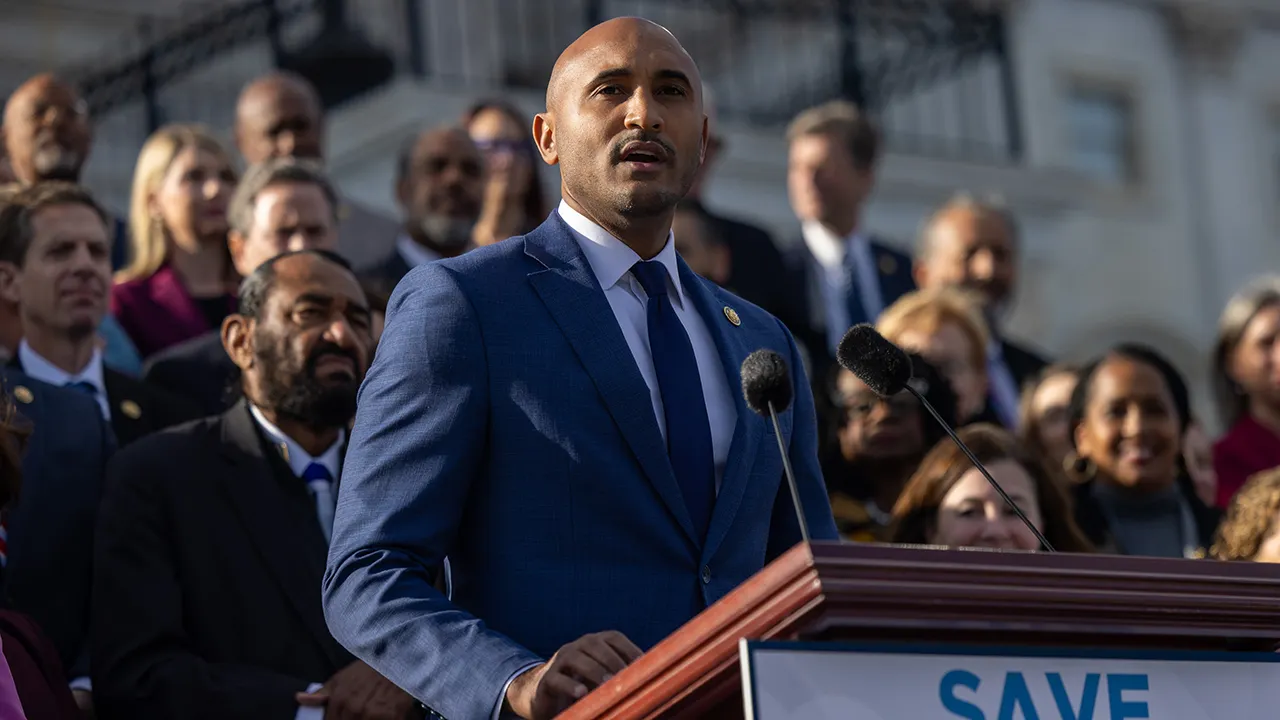
“I think they are rightfully disappointed,” said Rep. Shomari Figures, D-Ala., referring to the party’s progressive base. “We took on this fight for more than 40 days to make healthcare more affordable, being one of the primary goals that we had in this fight. To see us give in now at the end is something that’s incredibly frustrating, incredibly disappointing for myself included.”
The compromise deal included a promise for a mid-December vote on extending the Affordable Care Act subsidies that are set to expire at year’s end. However, many progressives viewed this concession as insufficient, given their broader healthcare agenda.
Rep. Shri Thanedar echoed this sentiment, stating, “We needed to stay fighting. The stronger our resolve to fight, the more successful we would have been.” He added that it appeared “there was always some people in the U.S. Senate that were never on board to continue this fight.”
The Progressive Caucus, in a letter authored by Rep. Ilhan Omar, D-Minn., condemned the agreement, arguing it fails to address rising healthcare premiums or prevent coverage losses. Even the Democratic Congressional Campaign Committee, the party’s primary House campaign arm, instructed lawmakers to hold Republicans “accountable” for the shutdown, signaling lingering frustration within party leadership.
The internal discord has prompted some Democrats to capitalize on the anger. According to Politico, Rep. Ro Khanna began fundraising efforts that referenced the frustration within the Democratic base over the compromise.
Rep. Figures didn’t mince words about what he perceived as a lack of courage among some colleagues: “We had a moment right now where we needed fighters. As we say in Alabama, we need big dogs right now. We don’t need porch puppies. If you’re not here for this fight, if you’re not willing to be engaged in this and willing to lay it on the line for people that are counting on us, then you need to reconsider it.”
Not all Democratic representatives were willing to directly criticize their Senate colleagues. Rep. Sarah Elfreth, D-Md., took a more measured approach, acknowledging constituent concerns without directly addressing party infighting.
“I can’t speak for the base, I can say that a lot of people are rightfully concerned about skyrocketing healthcare costs, in addition to skyrocketing housing costs, grocery costs,” Elfreth said. “Anybody getting ready for Thanksgiving right now is seeing that. And we haven’t been able to resolve that. We haven’t gotten the Republicans to even come to the table.”
Republicans have seized on the Democratic discord. White House Press Secretary Karoline Leavitt commented that “now the knives are out,” while conservative political commentator Josh Holmes characterized the situation as evidence that “the Democratic Party is entirely shattered in this ideological battle.”
The government shutdown and its resolution highlight the ongoing tension between progressive and moderate factions within the Democratic Party, particularly over healthcare policy priorities and negotiation tactics. With the current funding agreement only extending through January, these internal disagreements could resurface as another potential budget deadline approaches.
This episode also demonstrates the practical challenges Democrats face in advancing their policy agenda in a divided government, where differing tactical approaches within their own ranks can sometimes be as significant an obstacle as opposition from Republicans.
Fact Checker
Verify the accuracy of this article using The Disinformation Commission analysis and real-time sources.

17 Comments
I like the balance sheet here—less leverage than peers.
Good point. Watching costs and grades closely.
Good point. Watching costs and grades closely.
I like the balance sheet here—less leverage than peers.
Good point. Watching costs and grades closely.
I like the balance sheet here—less leverage than peers.
I like the balance sheet here—less leverage than peers.
Exploration results look promising, but permitting will be the key risk.
Good point. Watching costs and grades closely.
Good point. Watching costs and grades closely.
Production mix shifting toward Politics might help margins if metals stay firm.
Exploration results look promising, but permitting will be the key risk.
Uranium names keep pushing higher—supply still tight into 2026.
Good point. Watching costs and grades closely.
Good point. Watching costs and grades closely.
If AISC keeps dropping, this becomes investable for me.
Good point. Watching costs and grades closely.