


Listen to the article
Three Florida Republican lawmakers are pressing the Trump administration to fully sever commercial ties with Cuba after successful moves to block oil imports have pushed the communist nation to the brink of economic failure.
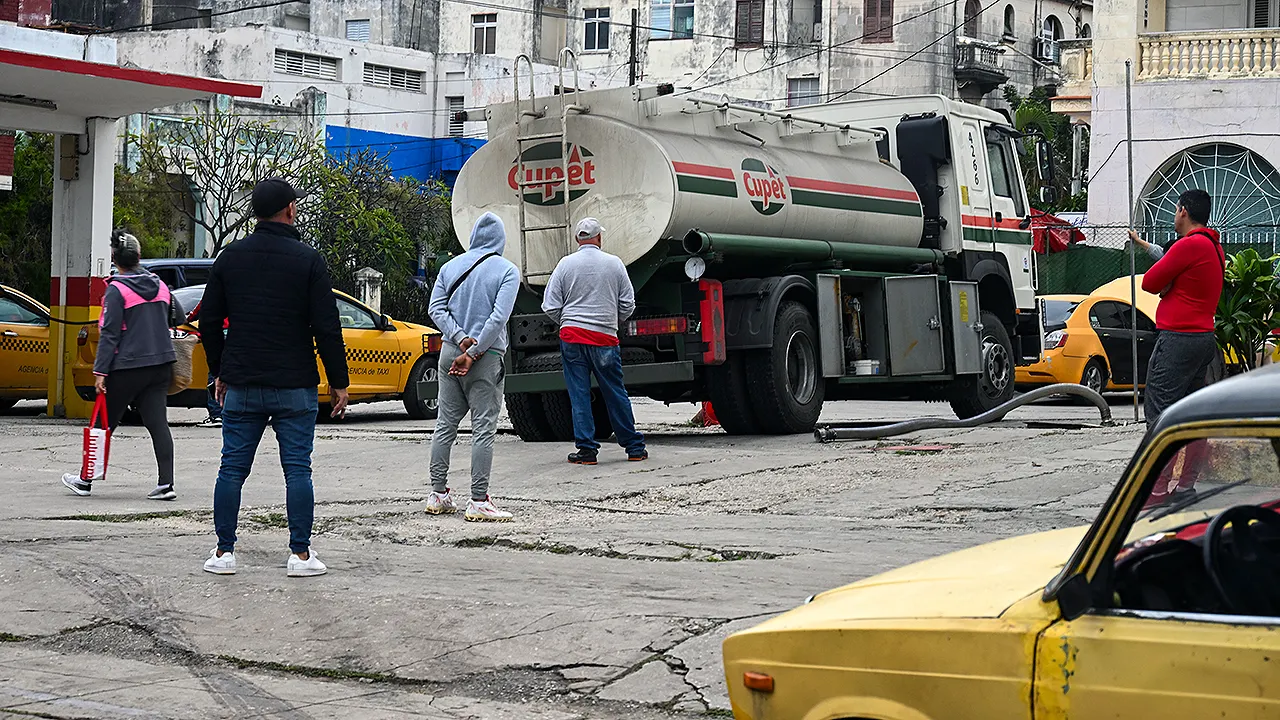
Representatives Carlos Giménez, Mario Díaz-Balart and María Elvira Salazar, who represent districts with large Cuban-American populations, are demanding that the Commerce Department revoke export licenses that they claim directly benefit the Cuban regime rather than its citizens. Their call comes as Cuban President Miguel Díaz-Canel warned that the country is “close to failing” and may exhaust its oil supplies within 15 days.
In a letter addressed to Commerce Under Secretary Jeffrey Kessler and Treasury’s Office of Foreign Assets Control Director Bradley Smith, the lawmakers expressed concern about U.S. businesses “engaged in disturbing commercial activity with entities controlled by the regime in Cuba,” which remains designated as a State Sponsor of Terrorism.
The representatives provided a 50-page document detailing manifests of goods cleared for export to Cuba, including luxury cars and Jacuzzi tubs, which they claim are shipped directly to addresses controlled by the regime, such as those on the Plaza de la Revolución in Havana.
“Such activity risks undermining the central objectives of U.S. sanctions policy and contradicts the intent of Congress as reflected in U.S. law,” the lawmakers wrote, specifically citing the Cuban Liberty and Democratic Solidarity (LIBERTAD) Act of 1996. This legislation, one of the most stringent sanctions laws imposed on Cuba, mandates that U.S. sanctions remain in place until “concrete progress is made toward democratic governance, the rule of law, and respect for fundamental freedoms.”
While Díaz-Canel has labeled the U.S.-imposed oil blockade as “genocidal” and “fascist,” the Florida representatives view it as a positive development in pressuring the regime and are now seeking to close what they describe as the remaining “commercial valves” of support.
Andrés Martínez-Fernández, a Latin America policy analyst, noted that while restricting food and medicine exports requires careful consideration, many of the goods currently cleared for export from Miami often end up benefiting regime officials rather than ordinary Cubans.
“A lot of these categories of, you know, like you say expensive cars and even talking about, like, cement — we’re exporting building products — and everything’s crumbling in Cuba except for the houses of the government officials and their regime collaborators,” he explained.
Martínez-Fernández added that the current export situation likely doesn’t represent any “purposeful oversight” or deliberate neglect of potential pressure points by the administration. “The reality is that we’re doing a lot at the moment… It’s not a press-a-button-and-cut-everything-off. You have to go through everything,” he said.
In their letter, the lawmakers are calling for Commerce to conduct a comprehensive review of all active licenses authorizing commercial or financial dealings with Cuban state entities and to revoke any that provide economic benefits to regime-controlled entities.
They also want enhanced scrutiny of future licensing requests related to Cuba to ensure alignment with both “the letter and the intent of U.S. law.” Despite their criticism of these specific export permissions, the lawmakers expressed support for President Donald Trump and Secretary of State Marco Rubio’s “decisive action” against the Cuban regime.
The potential tightening of sanctions comes at a critical moment for Cuba, which has struggled economically for decades under the weight of U.S. sanctions and its state-controlled economy. The oil blockade represents one of the most effective pressure campaigns in recent years, as Cuba has traditionally relied on subsidized oil from allies like Venezuela to maintain its economy.
The Commerce Department has not yet responded to requests for comment on the manifest of exportable goods identified by the lawmakers.
Fact Checker
Verify the accuracy of this article using The Disinformation Commission analysis and real-time sources.

12 Comments
This is a delicate situation that requires a thoughtful, evidence-based approach. Knee-jerk policy decisions could have far-reaching and unintended consequences for the Cuban people.
Well said. Any actions taken should be thoroughly evaluated to ensure they align with humanitarian concerns and promote long-term stability in the region.
The pressure on the Trump administration to tighten the embargo is understandable, but the potential impact on ordinary Cubans cannot be ignored. A more nuanced strategy is needed to address this complex issue.
The potential depletion of Cuba’s oil supply is undoubtedly a serious issue, but the proposed solutions must be carefully considered for their broader implications. Unintended consequences should be a top priority.
This is a complex geopolitical issue with significant economic implications. While the US embargo on Cuba has had far-reaching effects, it’s crucial to consider the humanitarian impact on the Cuban people as well as the broader regional dynamics.
You raise a good point. The US needs to carefully balance its foreign policy goals with the potential consequences for ordinary Cubans who are already facing hardship.
While the Republican lawmakers’ concerns about U.S. businesses profiting from dealings with the Cuban regime are valid, the humanitarian consequences of further restricting access to essential resources must be weighed carefully.
Exactly. Any policy decisions should be driven by a comprehensive understanding of the potential impacts, both intended and unintended.
The depletion of Cuba’s oil supply is a serious concern that could further destabilize the country’s economy. However, the proposed solutions must be weighed against their potential humanitarian costs.
Agreed. Any policy decisions should prioritize the well-being of the Cuban people and avoid exacerbating their suffering.
While the Republican lawmakers’ demands may have political motivations, the issue of U.S. businesses profiting from dealings with the Cuban regime is concerning. A more nuanced approach is needed to address these complex matters.
That’s a fair assessment. Balancing economic, political and humanitarian considerations is always a challenge in these situations.