


Listen to the article
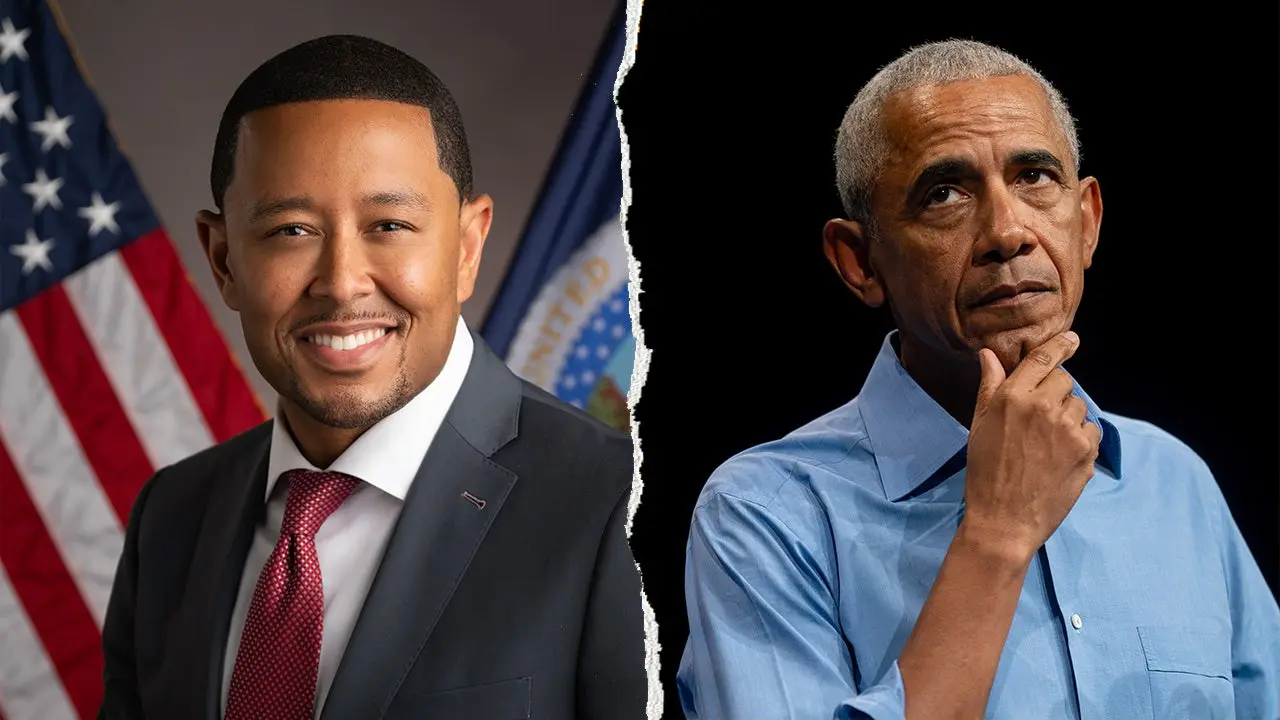
In a sharp rebuke to former President Barack Obama’s criticism, Oklahoma’s first African American House Speaker Tahrohon Wayne “T.W.” Shannon has challenged the notion that the Supreme Court’s recent Voting Rights Act ruling will harm minority representation in American politics.
The high court’s 6-3 decision on Wednesday struck down Louisiana’s 6th Congressional District, which had been redrawn in 2024 to create a predominantly Black electorate. The ruling established that states may not use race as a determining factor either to disenfranchise voters or to help minority communities support their preferred candidates.
“What the Supreme Court really did is say that you can’t fix discrimination by discriminating against people. Race should not be a deciding factor when it comes to redistricting,” Shannon told Fox News Digital. Currently running for lieutenant governor in Oklahoma, Shannon sees the ruling as a positive step toward removing racial considerations from American politics.
Obama took to social media platform X to express his dismay, calling the ruling “disastrous” and arguing that the Court was “abandoning its vital role in ensuring equal participation in our democracy and protecting the rights of minority groups against majority overreach.”
Shannon, who has broken racial barriers in his political career, strongly disagrees with this characterization. “This idea that you must have a racially drawn district in order to win and compete is just nonsense,” he stated, pointing to his own electoral success as evidence.
“The entire country is just kind of tired and disappointed in the Obamas and their constantly whining about how awful and racist America is,” Shannon added, suggesting that such rhetoric only inflames “racial division” rather than addressing meaningful solutions.
Shannon’s political journey stands in contrast to the concerns raised by Democrats about the ruling. At 27, he was elected to the Oklahoma House of Representatives in what he describes as a “majority-white district” where voters “elected me overwhelmingly.” He later made history as the first Republican to win in his district before being chosen by “a predominantly white legislature” to lead the Oklahoma State House.
The Supreme Court case has reignited a fundamental debate about how electoral districts should be drawn and what role, if any, race should play in that process. Democratic critics warn the ruling could be manipulated to dilute minority voting power under the guise of race-neutral factors. They argue that the Voting Rights Act was specifically designed to protect minority communities from having their votes systematically marginalized.
However, Shannon and other conservatives view the decision as consistent with a colorblind approach to governance and elections. They contend that qualified candidates can win regardless of district demographics if they present compelling ideas and leadership.
While acknowledging that racism still exists in America, characterizing it as “sin” tied to the human condition, Shannon offered his perspective on addressing racial issues: “The things that made this country great are three. I call them the three C’s. It’s capitalism, it’s the Constitution, and it’s Christianity. The way you fix racism is by having more believers exercising the freedom that exists within Jesus Christ.”
The ruling represents the latest in a series of decisions by the Court’s conservative majority that have reshaped the interpretation of civil rights legislation, particularly the Voting Rights Act of 1965. In 2013, the Court struck down the formula determining which states needed federal “preclearance” before changing voting laws, and in 2021, it upheld Arizona voting restrictions that critics argued disproportionately affected minority voters.
As states prepare for the next round of redistricting following the 2030 census, this latest decision will likely influence how mapmakers approach their task and how courts evaluate challenges to district boundaries across the country.
Fact Checker
Verify the accuracy of this article using The Disinformation Commission analysis and real-time sources.

9 Comments
This ruling could have far-reaching consequences for the mining and energy sectors, particularly around permitting and environmental regulations. I’ll be closely following how it plays out.
Regardless of one’s political leanings, this is an important decision that deserves careful analysis. I hope the discussion can remain civil and focused on the substance of the ruling.
Interesting take on the Supreme Court’s voting rights ruling. While views may differ, it’s important to consider multiple perspectives on such complex issues.
Agreed, this is a nuanced topic without easy answers. I’ll have to look into the specifics of the ruling and its potential impacts.
While the debate around voting rights is highly charged, I think it’s crucial to avoid knee-jerk reactions and instead seek to understand the nuances of this decision and its potential impacts.
As an investor in mining and energy equities, I’ll be watching to see how this ruling may impact industry regulations and political dynamics around resource development. Curious to hear others’ thoughts.
The debate around racial considerations in redistricting is a long-standing and contentious one. I’m curious to hear more about the court’s reasoning and how it may affect minority representation going forward.
Valid point. This ruling could have significant implications, both positive and negative, that warrant close examination.
The Supreme Court’s move to limit the use of race in redistricting is a complex issue. I’d encourage looking at objective analysis from legal experts and nonpartisan organizations to better understand the implications.