


Listen to the article
Congressional Spending Powers Emerge as Flashpoint in ICE Controversy
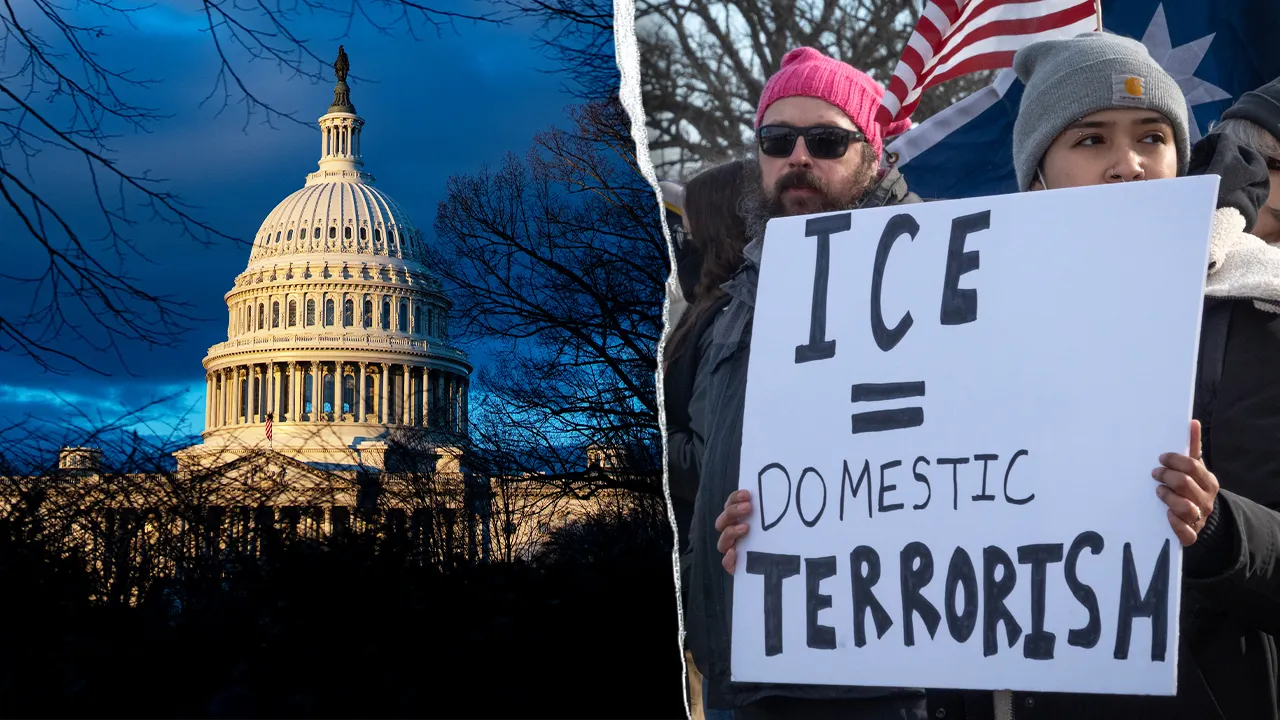
A growing political battle is brewing in Congress over federal spending and oversight powers, particularly regarding Immigration and Customs Enforcement (ICE) following a fatal shooting in Minneapolis.
The controversy centers on constitutional powers granted to Congress in Article I, Section 9, which states: “No Money shall be drawn from the Treasury, but in Consequence of Appropriations made by Law.” This provision gives Congress ultimate authority over federal spending—a power that progressive Democrats are now considering leveraging against ICE.
The catalyst for this debate is the killing of Renee Nicole Good by an ICE agent in Minneapolis, which has sparked outrage among liberal lawmakers. Rep. Jasmine Crockett (D-Texas) emotionally addressed Congress: “A child has lost her mom. And y’all want to pretend that it is OK. I am asking if there is anyone that will stand for the very people that elected us and sent us to Congress?”
Some progressive Democrats are proposing using Congress’s appropriations authority to restrict ICE funding or potentially force policy changes. Rep. Jamie Raskin (D-Maryland), the ranking Democrat on the House Judiciary Committee, advocates for such an approach: “We should use every means at our disposal to do it, including the appropriations process.”
This strategy could involve cutting funding, limiting expenditures, or including specific language to forbid certain activities or direct how agencies operate. Some progressives have gone further, suggesting slashing ICE funding altogether or even using the threat of a government shutdown as leverage.
With the next funding deadline looming at 11:59 p.m. EST on January 30, 2026, Republicans have expressed strong opposition to any shutdown threats. House Speaker Mike Johnson (R-Louisiana) told Fox News, “I am concerned about that. I think that’s a terrible idea,” while expressing confidence that lawmakers could avoid such a scenario.
Senator Eric Schmitt (R-Missouri) was more blunt, calling any potential shutdown over ICE “weapons-grade stupid.”
Significantly, Democratic leadership appears reluctant to engage in another funding confrontation after last fall’s 43-day government shutdown. House Minority Leader Hakeem Jeffries (D-New York) and Senate Minority Leader Chuck Schumer (D-New York) have carefully sidestepped questions about using appropriations to target ICE.
When asked directly if ICE should be abolished, Schumer only replied, “I have lots of problems with ICE,” before declining to elaborate further despite repeated follow-up questions from reporters.
The current appropriations situation adds complexity to the debate. Congress has yet to address funding bills for the Pentagon, State Department, and Department of Homeland Security for fiscal year 2026. Funding for nine distinct sections of the federal government, including DHS, expires on January 30.
The House recently approved a “minibus” spending package for energy, water, Interior, Commerce, Justice, and science programs. The Senate is expected to align with these bills, but a continuing resolution (CR) will likely be needed to maintain funding for other government areas past the January 30 deadline.
Rep. Alexandria Ocasio-Cortez (D-New York), a longtime ICE critic, acknowledged the political realities faced by Democratic leadership: “They’re responsible for leading an entire caucus that elects members from across the country. So, they’re in a different position.” However, she noted that funding for ICE “exploded virtually overnight, and we are seeing the ramifications of it in terms of the abuse of power that is happening.”
This controversy represents a significant political challenge for Democrats. The Minnesota ICE shooting has energized their base, with many demanding aggressive action similar to protests seen last winter. Yet party leaders appear wary of triggering another government shutdown that could undermine their midterm election strategy.
As January 30 approaches, the question remains whether Democratic leadership will maintain their cautious approach or yield to mounting pressure from progressives demanding more forceful action against ICE.
Fact Checker
Verify the accuracy of this article using The Disinformation Commission analysis and real-time sources.

30 Comments
The cost guidance is better than expected. If they deliver, the stock could rerate.
Good point. Watching costs and grades closely.
Good point. Watching costs and grades closely.
If AISC keeps dropping, this becomes investable for me.
I like the balance sheet here—less leverage than peers.
Good point. Watching costs and grades closely.
Interesting update on Congressional Tensions Rise Following ICE-Involved Shooting in Minnesota. Curious how the grades will trend next quarter.
Good point. Watching costs and grades closely.
Interesting update on Congressional Tensions Rise Following ICE-Involved Shooting in Minnesota. Curious how the grades will trend next quarter.
Good point. Watching costs and grades closely.
Good point. Watching costs and grades closely.
If AISC keeps dropping, this becomes investable for me.
Good point. Watching costs and grades closely.
Good point. Watching costs and grades closely.
Uranium names keep pushing higher—supply still tight into 2026.
Good point. Watching costs and grades closely.
Good point. Watching costs and grades closely.
Nice to see insider buying—usually a good signal in this space.
Silver leverage is strong here; beta cuts both ways though.
Good point. Watching costs and grades closely.
Good point. Watching costs and grades closely.
Uranium names keep pushing higher—supply still tight into 2026.
Good point. Watching costs and grades closely.
Good point. Watching costs and grades closely.
I like the balance sheet here—less leverage than peers.
Silver leverage is strong here; beta cuts both ways though.
Good point. Watching costs and grades closely.
Good point. Watching costs and grades closely.
If AISC keeps dropping, this becomes investable for me.
Good point. Watching costs and grades closely.