


Listen to the article
Congress Ends Record 42-Day Government Shutdown with Bill Headed to Trump’s Desk
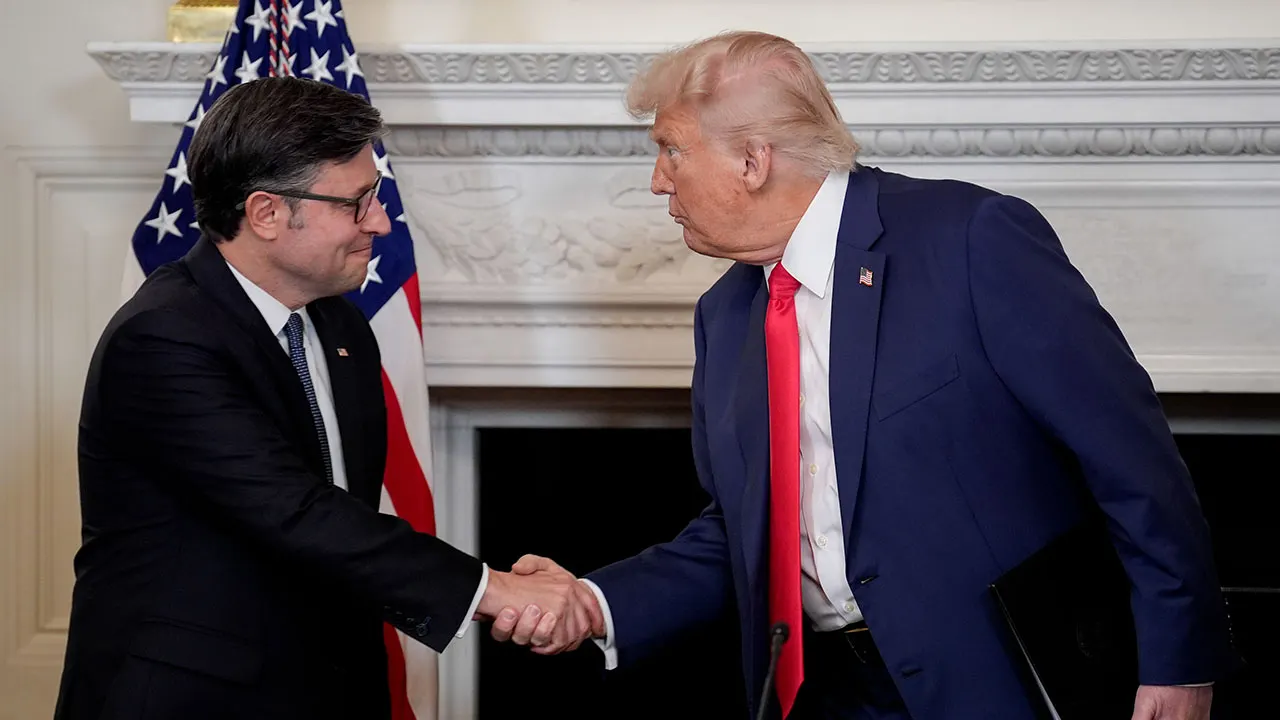
A bill to end America’s longest government shutdown passed in the House of Representatives Wednesday evening, concluding a fiscal standoff that has paralyzed Congress since October 1. The White House confirmed President Donald Trump will sign the legislation at 9:45 p.m., officially reopening federal agencies after 42 days without funding.
The House approved the measure by a vote of 222 to 209, with six Democrats crossing party lines to join all but two Republicans in supporting the bill. The Democratic representatives who broke ranks were Tom Suozzi of New York, Henry Cuellar of Texas, Adam Gray of California, Marie Gluesenkamp Perez of Washington, and Don Davis of North Carolina.
Republicans on the House floor erupted in cheers when the final tally was announced, while most Democrats quietly exited the chamber. The scene reflected the partisan tensions that have defined the weeks-long impasse.
House Speaker Mike Johnson expressed relief before the vote, telling reporters, “We believe the long national nightmare will be over tonight. It was completely and utterly foolish and pointless in the end.”
The funding bill extends government operations until January 30, providing lawmakers additional time to negotiate a longer-term deal for fiscal year 2026. It also includes full-year funding for three departments: Agriculture, Veterans Affairs, and the legislative branch. Nine appropriations bills remain to be completed.
House Majority Leader Steve Scalise said the Appropriations Committee, led by Chairman Tom Cole, would be “working overtime” to finish the remaining bills. When asked if they could meet the January deadline, Cole expressed confidence: “I think we can.”
The shutdown’s resolution came after the Senate passed the bill with bipartisan support in a 60-40 vote, with eight Democrats joining Republicans. The Senate compromise included a side agreement guaranteeing Democrats a future vote on extending enhanced Affordable Care Act subsidies, which are set to expire this year.
House Democrats, led by Minority Leader Hakeem Jeffries, largely opposed the bill due to its failure to address these healthcare subsidies. “House Democrats are here on the Capitol steps to reiterate our strong opposition to this spending bill because it fails to address the Republican healthcare crisis, and it fails to extend the Affordable Care Act tax credits,” Jeffries stated.
Democratic Representative Shomari Figures criticized the deal, saying Republicans offered little more than “a handshake deal to take a future vote” on the healthcare subsidies. “We all know that a future vote is the equivalent of asking two wolves and a chicken to vote on what’s for dinner. It is dead on arrival.”
Republican Study Committee Chairman August Pfluger countered that Democrats had prolonged the shutdown with little to show for it. “They literally got absolutely nothing except for a total and complete surrender, that accomplished nothing more than hurting American families,” he said.
Some drama threatened Republican unity earlier Wednesday when several GOP members expressed concern about a last-minute provision allowing senators whose communications were tapped during former Special Counsel Jack Smith’s investigation to sue the federal government for $500,000 each. Representatives Chip Roy, Austin Scott, and Morgan Griffith voiced reservations but ultimately voted for the bill after Johnson promised separate legislation next week to repeal the provision.
Only Representatives Thomas Massie of Kentucky and Greg Steube of Florida voted against the bill on the Republican side, with Steube telling reporters, “I’m not voting to send Lindsey Graham half a million dollars.”
The shutdown’s effects had grown increasingly severe across the nation. Air traffic controllers and TSA agents working without pay were forced to take second jobs, causing flight delays and cancellations at major airports. Millions of Americans relying on federal benefits faced uncertainty as program funding neared depletion.
With the bill’s passage, federal workers can expect to receive backpay soon, and government services will resume normal operations after the president’s signature.
Fact Checker
Verify the accuracy of this article using The Disinformation Commission analysis and real-time sources.

20 Comments
This shutdown has caused a lot of disruption and uncertainty. Hopefully Congress can work together better going forward to avoid such prolonged impasses.
Yes, these political gridlocks are never good for the country. We need our government functioning efficiently to address important issues.
While the shutdown is over, the political fallout may linger. I wonder how this will impact upcoming budget negotiations and policy debates.
Good observation. The shutdown could make future compromise and cooperation even more difficult. Congress needs to focus on governing responsibly.
This shutdown has been a mess. I’m curious to see if there will be any lasting impacts on key industries and the economy as a whole.
Good point. Prolonged shutdowns can definitely disrupt business operations and consumer confidence. The full fallout may take time to assess.
This was a pointless and damaging political standoff. I’m glad it’s over, but I hope Congress learned an important lesson about the consequences of their actions.
Absolutely. Shutdowns damage public faith in government and are extremely disruptive. Lawmakers need to find better ways to resolve differences.
The end of the shutdown is welcome news, but I hope Congress uses this as an opportunity to reform the budget process and prevent such impasses.
Agreed. Structural changes are needed to the budget and appropriations system to make the government more resilient to partisan conflicts.
It’s a relief to see the government reopening, but this whole saga has been a troubling display of partisan dysfunction. I hope lessons are learned.
Agreed. These kinds of standoffs erode public trust and make it harder for the government to address important challenges. Lawmakers need to do better.
It’s good to see the government reopening, but this whole situation highlights the need for Congress to find ways to compromise and put partisan politics aside.
Agreed. Shutdowns are extremely costly and damage public trust in institutions. Lawmakers need to focus on governing responsibly.
While the immediate crisis is over, I hope Congress uses this experience to enact reforms that prevent such prolonged shutdowns in the future.
Absolutely. Structural changes to the budget process and better mechanisms for resolving partisan conflicts could help avoid these kinds of debacles.
This shutdown has been an embarrassment. I’m glad it’s over, but I worry about the lasting damage to the credibility of our democratic institutions.
That’s a valid concern. Repeated crises like this undermine faith in government and make it harder for the system to function effectively.
While I’m glad the shutdown is over, I hope Congress learned a lesson about the consequences of political brinkmanship. We need more bipartisanship and less grandstanding.
Absolutely. Shutdowns are not an acceptable negotiating tactic. Lawmakers should work to prevent this from happening again in the future.